
Business
Solar uptake tests DisCos’ revenue model as grid supply falters

• Billed electricity drops 9.9% as 370 solar firms spring up in six years
• REA says reliable power fuels jobs, boosts business earnings
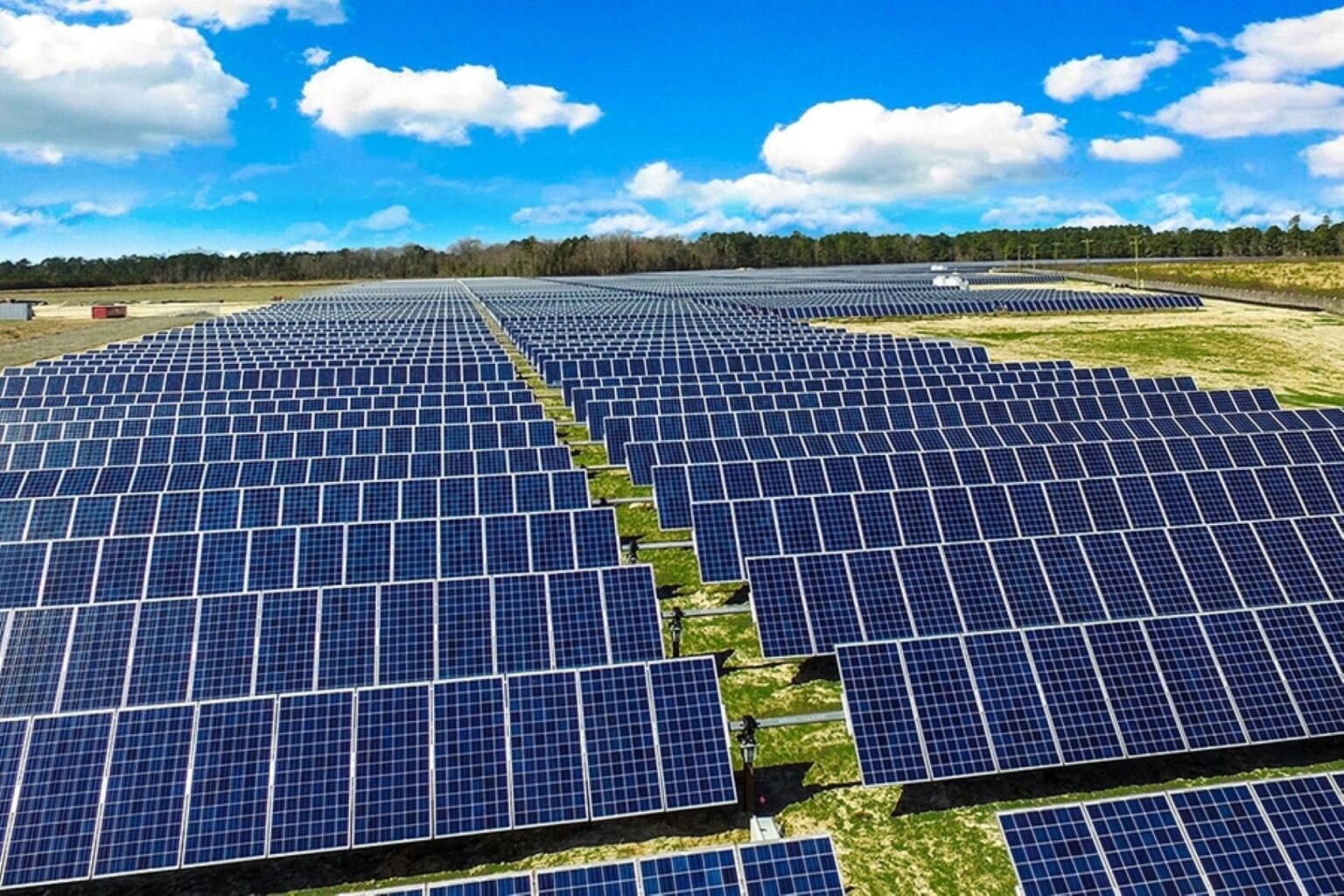
Nigeria’s electricity market is at a turning point as solar mini-grids, rooftop installations and other decentralised power solutions spread across homes and businesses frustrated by unreliable grid supply.
For distribution companies (DisCos), the development presents a growing commercial risk: customers may remain physically connected to the grid while increasingly meeting their daily electricity needs through generators, solar systems or mini-grids. This makes the grid a backup rather than the main energy source for many Nigerians.

Solar energy still accounts for just 1.6% of Nigeria’s total energy mix, highlighting the untapped potential. IRENA estimates Nigeria could generate up to 210 GW if only one per cent of suitable land were used for solar infrastructure.
According to Outbrand Consulting, Nigeria’s cumulative installed solar capacity reached 385.7 MW after adding 63.5 MW of new capacity in 2025, adding that the country could add more than 550 MW of new solar capacity before 2029 under moderate growth scenarios, driven by a national grid that consistently underdelivers.
Recent data from the Nigerian Electricity Regulatory Commission (NERC) show pressure on distribution companies.
DisCos billed 5,812.31GWh of electricity to end-use customers in the second quarter of 2026, down 9.9 per cent from 6,449.82GWh in the corresponding quarter of 2025.
NERC also reported that the 11 DisCos received electricity valued at N946.57 billion during the quarter but billed customers N744.67 billion, implying billing efficiency of 78.67 per cent. They collected N603.64 billion from the amount billed, a collection efficiency of about 81 per cent.
The Commission said aggregate technical, commercial and collection losses stood at 36 per cent, far above its 16.92 per cent benchmark. Yet revenue collected rose from N564.71 billion in Q2 2025 to N603.64 billion in Q2 2026, an increase of 6.9 per cent.
While there is no national data establishing a direct causal link between solar adoption and the decline in billed electricity, industry operators and consumers say persistent outages, high generator costs and the spread of solar systems are changing how households and businesses use the grid.
For many consumers, prepaid credit lasts longer not because consumption has fallen, but because supply is intermittent. Olaosebikan Solomon, a resident of Ejigbo, Lagos State, said the N5,000 he loads on his prepaid meter can last more than a month because electricity is unavailable for long periods.
“Imagine using N5000 for over a month when the light isn’t stable and whenever it comes, I use all my electricity fittings and even AC, but because it’s either once in three days or once in a week. Is that supply?” he queried.
His experience reflects a wider dilemma: customers pay for grid electricity but cannot depend on it for daily needs. Many therefore spend more on petrol for generators or consider solar installations.
The shift to solar, however, remains costly. Panels, inverters and batteries require substantial upfront investment, putting complete systems beyond the immediate reach of many households.
In Ifo, Ogun State, Hameed Bamkefa said he was acquiring solar equipment through instalments.
“I have paid part payment and they would install it tomorrow. I have six months to balance up; at least I won’t bother about electricity from the grid and I won’t even buy much on the prepaid anymore because we need the light more at night, but we don’t get it”, he said.
Olanrewaju Hafsat of Osogbo, Osun State, said she had acquired a battery to power basic appliances. In Egan-Igando, Lagos, Chinedu Molokwu said he was also seeking an alternative to unreliable supply, while Abimbola Adekanmi said repeated outages had caused food in her freezer to spoil.
For businesses, unreliable power means generator fuel and maintenance costs, interrupted operations and losses from perishable goods. Some consumers are therefore calling for government-backed financing, bulk procurement and affordable instalment schemes to widen access to solar equipment.
Aggregated industry data from the private sector and the Manufacturers Association of Nigeria (MAN) put Nigeria’s yearly spending on generator fuel at about $14 billion, making solar attractive despite its high initial cost. The country is projected to add 1.7GW of solar capacity by the end of 2026—nearly 40 per cent of current grid supply—driven by households, businesses and mini-grid projects.
Market indicators also point to rising demand. GOGLA reported that Nigeria’s solar-energy-kit sales in the first half of 2025 were 33 per cent higher than in the same period of 2024, while its 2025 investment dataset recorded about $114 million in off-grid solar investment in Nigeria, the largest recipient country in the dataset.
The Rural Electrification Agency (REA) is expanding decentralised projects to communities and businesses underserved by the national grid. In Kano State, it commissioned two solar mini-grids—in Ballagaza, Gabasawa Local Government Area, with 195.2kWp capacity, and Marayar Rogo, Warawa Local Government Area, with 73.2kWp—serving a combined 2,214 connections.
REA’s Managing Director Abba Aliyu said reliable electricity would support homes and businesses in milling, welding, tailoring, cold storage and other activities, including a primary healthcare centre that previously had no electricity.
“The cost of unreliable electricity is felt every day by businesses that depend on generators to keep working. For me, expanding energy access means placing generation capacity where it can support livelihoods and make the greatest economic difference,” Aliyu said.
The projects involve investment by Alfuttaim Nigeria Limited, which will own and operate the systems, with part of the cost subsidised by the REA through the World Bank-backed Distributed Access through Renewable Energy Scale-up (DARES) programme.
Aliyu said the REA had signed about 380 grant agreements under the Nigeria Electrification Project, commissioned more than 150 hybrid solar mini-grids and deployed approximately 1.45 million solar home systems. He added that the $750 million DARES programme is expected to support 1,350 mini-grids, including 250 interconnected mini-grids, and provide new electricity access to about 17.5 million Nigerians.
By April 2026, more than 830,000 solar home systems had been deployed under DARES across the six geopolitical zones, providing electricity access to about 3.9 million Nigerians, according to the REA.
The expansion of solar is already creating friction with DisCos where customers install systems but retain grid connections for backup. A complaint by Lekki resident Raphael Awoseyin has brought the issue into public focus.
In posts on X dated October 19 and updated on October 21, Awoseyin said he installed an 18kW solar system at Lekki Phase 1, Lagos, while retaining Ikeja Electric as backup supply. According to his account, Ikeja Electric field staff inspected his prepaid meter after observing low or no consumption and suspected a bypass or meter fault.
He said the company issued a disconnection notice and charged him N112,606 for loss of revenue. Awoseyin said he demonstrated that the meter recorded consumption when his inverter was bypassed and the property drew power from the grid. He further claimed that, after the complaint gained attention and NERC reportedly referred the matter to Ikeja Electric, three managers contacted him, apologised and promised to replace his meter with a smart meter.
The allegation raises questions about how DisCos assess low consumption by solar-equipped customers who remain connected to the grid. It remains an individual complaint, however, and does not establish a wider practice by Ikeja Electric or other DisCos.
Industry figures cited in the report suggest Nigeria has more than 11,000 rural telecom base stations, with more than 40 million litres of diesel estimated to be consumed monthly to power a large proportion of them. Aliyu said plans were underway to integrate electricity and telecommunications infrastructure to expand digital access and improve service reliability, especially in rural areas.
For DisCos, the challenge is no longer only to supply electricity, but to remain relevant to customers who can increasingly generate part or all of their own power. Their response may determine whether solar complements the grid or progressively replaces it.
Speaking on recent grid collapse and persistent poor supply, Chief Executive Officer of the Centre for the Promotion of Private Enterprise (CPPE), Muda Yusuf, warned that prolonged disruption would raise operating costs, erode profit margins and undermine job creation.
“The implication is obvious. The implication is that you will spend more energy because when you don’t have the public power supply, you have to fall back on the use of diesel, on the use of petrol or the use of gas and this is a damn very expensive business.” He said the duration of the disruption would determine the severity of the economic consequences.
“So, when your cost of energy is very high, it affects your margin; it affects your ability to keep the business afloat. It affects profitability and ability to create jobs. But it depends on how long it takes to fix this problem. If they’re able to fix it within a day or two, the pressure on business may be less, but if it is longer, the pressure will be very, very significant. So that is what it is,” he added. (Guardian)
-

 Metro24 hours ago
Dangerous spices: How melted nylon additive keeps plantain chips crunchy
-
Politics23 hours ago
2027: God Has Granted My Request To Continue – Tinubu
-
Business3 hours ago
$19.7b hot money dominates inflows to Nigeria as FDI remains below $1b
-
World News24 hours ago
Plane crashes near Trump’s Florida home, 9 dead
-
News23 hours ago
N70,000 allowance showdown: Civil servants fire back at TUC
-
Sports24 hours ago
Kimi Antonelli becomes youngest Formula One world champion at age 20
-
Metro23 hours ago
MURIC Demands Suspension Of Law School Exams Over Hijab Ban, Threatens Protest
-
Business23 hours ago
Binance hack exposes risks in Nigeria’s $59bn crypto market