News
Why you should reject Tinubu’s fresh $7.7bn loan request – Atiku tells Senate

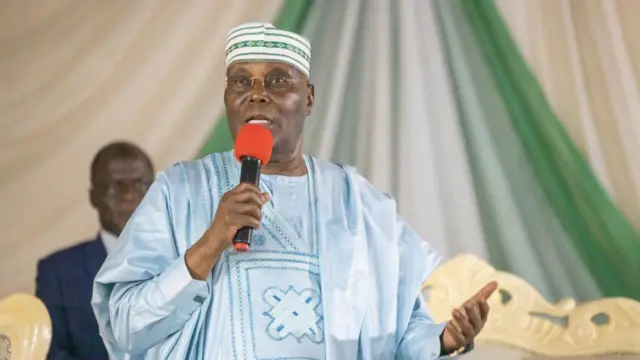
Former Vice-President Atiku Abubakar has urged the Nigerian Senate to reject President Bola Tinubu’s fresh $7.7 billion external loan request, raising concerns over the country’s rising debt burden, the cost of borrowing and the long-term implications for the economy.
Atiku’s position centres on the argument that Nigeria cannot continue accumulating external debt without providing convincing evidence that previous borrowings have translated into measurable economic benefits for citizens.
The former vice-president is also questioning the government’s borrowing strategy at a time when Nigerians are grappling with high living costs, inflationary pressures and concerns about the country’s fiscal sustainability.
Atiku specifically identified several issues he believes lawmakers must address before approving the facility.

Five reasons Atiku wants the Senate to reject the loan
1. Rising debt burden: He warned that additional foreign borrowing would increase Nigeria’s financial obligations and leave future administrations with heavier repayment responsibilities.
2. Lack of transparency: He questioned why the government was seeking approval before disclosing the final interest rates, repayment periods and other borrowing conditions.
3. Unclear project allocations: He wants the government to provide a comprehensive list of projects to be financed, including their individual costs and expected benefits.
4. Questionable economic management: Atiku argued that the removal of petrol subsidy and other economic reforms should have been accompanied by stronger fiscal discipline rather than continued reliance on borrowing.
5. Limited evidence of returns: He questioned the infrastructure and social welfare benefits Nigerians have received from previous government borrowing.
He also called on international lenders and financial institutions to suspend fresh lending to the Tinubu administration until it provides transparent loan terms, a credible repayment strategy and evidence of the benefits of previous loans.
What exactly is Tinubu asking for?
The $7.707 billion request, equivalent to approximately ₦10.79 trillion at the budget exchange rate, was contained in a presidential letter dated October 26, 2026.
The request replaces an earlier proposal seeking $20.52 billion and €1.045 billion in external borrowing.
According to the government, the revised external borrowing will form part of the financing for the 2026 budget deficit.
The proposed financing structure includes:
₦18.4 trillion in domestic borrowing.
₦10.79 trillion in external borrowing.
A total new borrowing provision of ₦29.2 trillion.
An estimated budget deficit of ₦31.4 trillion.
The government says the funds will support projects in defence, security, transportation, agriculture, power, education and healthcare. It also expects the foreign currency inflows to support external reserves and exchange-rate stability.
The bigger economic question
The controversy raises an important question about Nigeria’s borrowing strategy: should the government continue borrowing to finance infrastructure and budget deficits, or should it first demonstrate that existing debts are producing sufficient economic returns?
Borrowing is not necessarily bad for an economy. Countries borrow to finance infrastructure, expand productive capacity and stimulate economic growth. However, the sustainability of such borrowing depends on the cost of debt, the returns on funded projects, revenue generation and the government’s ability to repay.
For the Senate, the central issue is whether the proposed $7.7 billion facility has sufficiently transparent terms, identifiable projects and a credible repayment plan.
Atiku wants the Senate to reject the request. The government, meanwhile, maintains that external financing is necessary to implement the 2026 budget.
-

 News2 hours ago
Amidst heatwave, electricity supply shortage bites harder
-
News2 hours ago
Soldier, pregnant woman killed, 15 abducted in Taraba
-
News2 hours ago
State police: Six assemblies face Nov 15 approval deadline
-
Business2 hours ago
Airfares jump by 200% ahead of festive season
-
Politics2 hours ago
ADC says Atiku’s Sokoto rally turnout shows growing discontent with Tinubu
-
Sports2 hours ago
Nigeria defeat Brazil to reach first-ever women’s U-17 World Cup final
-
Politics2 hours ago
2027: Obasanjo’s son backs Tinubu’s re-election
-
News22 hours ago
Niger Abduction: I Sent Pupils Home, But They Ran Into Bandits – Teacher