World News
Trump Moves to Protect Oval Office From Future Presidents, Declares It National Monument

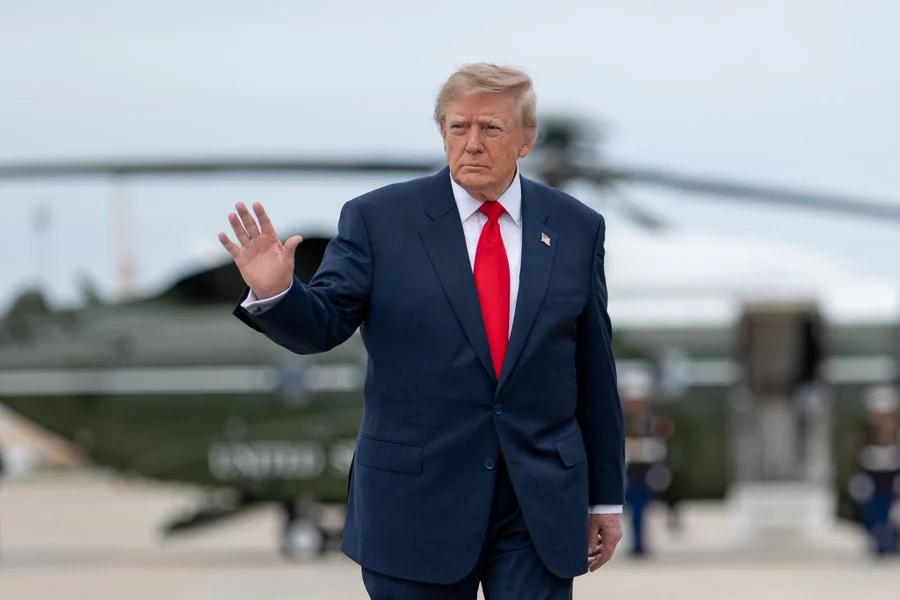
US President Donald Trump has moved to restrict future alterations to the White House’s iconic Oval Office, signing a presidential proclamation designating the room and adjoining presidential spaces as a national monument.
Trump signed the proclamation on Thursday, November 5, 2026, declaring the Oval Office, the Outer Oval Office and the Cabinet Room protected historic structures under the Antiquities Act.
The move is intended to preserve the architectural character of the presidential spaces and make substantial structural alterations more difficult for future administrations.
Speaking during the signing, Trump said the designation would prevent future presidents from demolishing or fundamentally changing the historic office.

“We’re making it a national monument, and it will not be allowed to be touched by anybody, destroyed, ripped down by stupid people, in order to build something in a slightly different shape,” he said.
Under the proclamation, the US Department of the Interior, through the National Park Service, will oversee preservation efforts and develop a management plan to protect the rooms’ historical and architectural features.
The document also requires documentation, review and consideration of alternatives before any action that would substantially alter or demolish the protected spaces.
Trump’s decision comes after he undertook extensive renovations to the Oval Office during his second presidential term, introducing prominent gold decorations, gilded mirrors, ornamental features and other elaborate furnishings.
The transformation has attracted considerable public attention, with supporters viewing the renovations as an expression of Trump’s preferred aesthetic, while critics have questioned the scale and style of the changes.
However, the proclamation does not completely prevent future presidents from changing the office. It expressly preserves presidential authority to redecorate, select furnishings and undertake ordinary operational and security modifications that do not substantially impair its historic character.
It also does not introduce a requirement for congressional approval before every major alteration, contrary to some interpretations of Trump’s announcement.
The development comes just days after the Republican Party suffered significant setbacks in the November 3 midterm elections, with Democrats securing control of both chambers of Congress.
Although the White House has presented the designation as a historic preservation measure, its timing has attracted attention because it could complicate efforts by future administrations to substantially redesign the presidential workspace.
The Oval Office has served as the principal working office of the US president in its present location since the administration of Franklin D. Roosevelt in the 1930s.
For Trump, the designation represents an attempt to give the historic presidential space additional protection beyond its existing recognition as part of the White House National Historic Landmark.
-

 News12 hours ago
₦70,000 Transport Allowance Shows Tinubu Cares About Workers – Oshiomhole
-
News12 hours ago
We’re Being Harassed Over Yahaya Bello’s Case – EFCC
-
News12 hours ago
Coup: Court rejects suspects’ torture claims, admits statements
-
Business12 hours ago
Lagos summons power operators over erratic electricity supply
-
Business12 hours ago
Power outage, low credit slow businesses — NESG
-
Politics12 hours ago
2027: INEC Chair Raises Alarm Over Voter Apathy, Says Poll Will Hold As Scheduled
-
Politics12 hours ago
Despite Court’s Ruling, Crowd Flood Birnin Kebbi Rally For Atiku
-
News12 hours ago
South Africans Leading Drug Trafficking Cartel In Nigeria – NDLEA