
Business
Borrowers drown in debt, loan apps battle defaults

Operators of microfinance banks and digital lending platforms have called for stricter screening of loan applicants and improved sharing of borrowers’ records among lenders to curb rising loan defaults.
The operators said the absence of a reliable system for checking borrowers’ existing debts had allowed some individuals to obtain loans from multiple platforms without repaying previous ones.
This comes as rising living costs are pushing more Nigerians to turn to digital loan applications to pay for food, rent, school fees and medical bills.
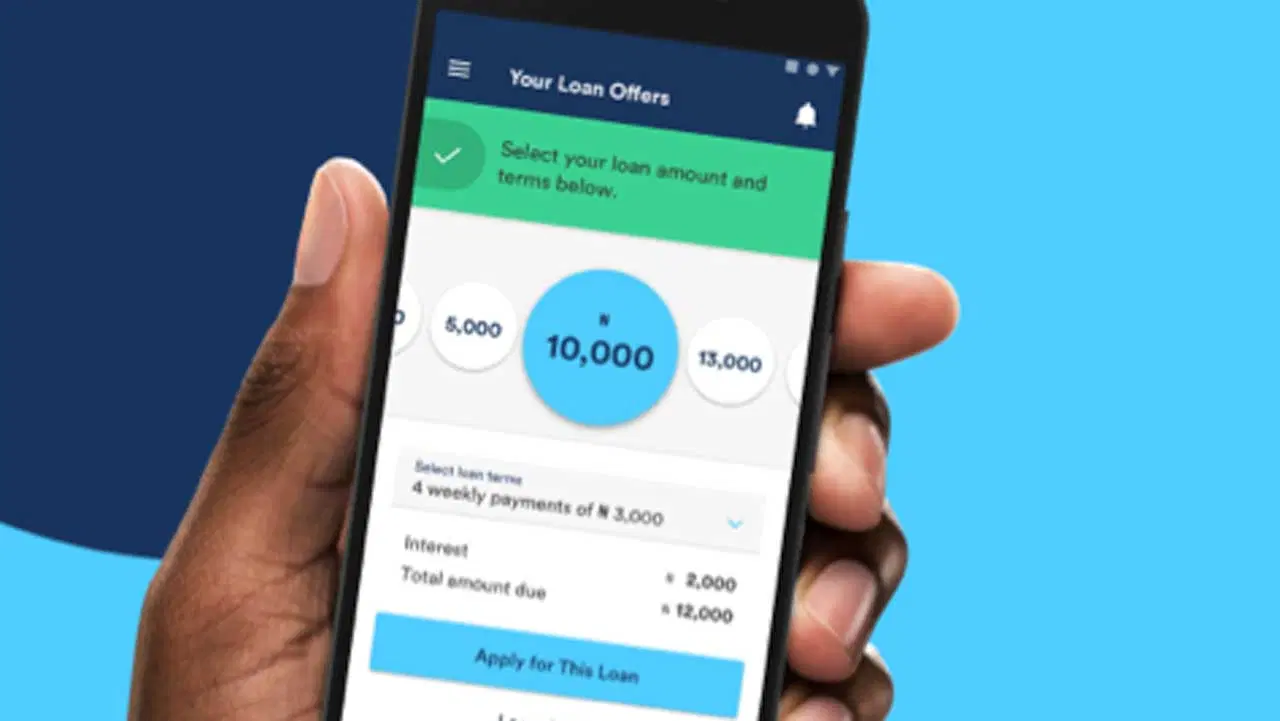
Saturday PUNCH gathered that some borrowers face effective charges of up to 50 per cent monthly, further worsening their financial difficulties as they struggle to repay loans obtained to meet basic household needs.

A company registration statement filed with the United States Securities and Exchange Commission by OPay on October 9, 2026, disclosed that the digital banking platform wrote off $113.15m in loans in the first half of 2026, while $113.80m of its outstanding $415.33m loan book was overdue.
Similarly, a 2024 survey by Innovations for Poverty Action found that 37 per cent of digital credit users were unable to repay at least one loan, while 17 per cent reduced their food spending to meet repayment obligations.
EFInA also reported that 45.8 per cent of formal credit users experienced some level of repayment stress.
The figures have raised concerns among digital lending platform operators and microfinance banks, who say increasing defaults, weak credit checks and poor sharing of borrowers’ records are exposing lenders to mounting losses.
The Chief Executive Officer of XchangeBox, Abiola Jimoh, said digital lenders should prioritise businesses with identifiable sources of income rather than granting unsecured loans for household expenses.
Jimoh, who is also a board member of a microfinance bank, PayRep, said small and medium-scale enterprises operating in established business sectors offered better prospects for loan recovery.
“If you finance an SME on my system, for example, there is a 90 per cent chance you will get your money back. We are not financing someone to go and use the money for food,” he said.
Jimoh described loans granted through mobile applications as risky because lenders often had little information about how borrowers intended to use the money or their capacity to repay.
He also raised concerns about the growing number of unlicensed lending platforms, saying some operators might be granting loans from outside the country without adequate regulatory supervision.
Jimoh identified poor sharing of borrowers’ records among lenders as a major reason some individuals were able to obtain multiple loans without settling existing debts.
According to him, many digital lenders failed to conduct comprehensive checks on applicants’ Bank Verification Numbers before approving loans.
He called for a system that would enable banks, microfinance institutions and digital lenders to access updated borrowing and repayment records before granting loans.
Similarly, an official of an online lending and financial services platform, Monibac, who spoke with Saturday PUNCH on condition of anonymity, called for a central database containing individuals’ borrowing and repayment records across financial institutions.
He said the absence of such a database allowed borrowers to obtain loans from different platforms without existing lenders knowing about their outstanding debts.
“If a customer owes me N10,000, or if he owes OPay N10,000, we won’t know. But if we have a very good credit bureau that caters to individuals, not just businesses, when a customer requests a loan, we can check his loan and transaction records before granting it,” he said.
The founder of a loan management systems company, Lendsqr, Deji Olowe, blamed weak enforcement of credit regulations and inadequate consequences for borrowers who defaulted.
He said the country’s weak credit reporting system had encouraged some borrowers to default without fear of losing access to future loans.
“What you are seeing in the credit industry is the culmination of the decay we have in Nigeria. When people don’t pay their loans and nothing happens to them, they will continue not to pay their loans,” he said.
Olowe added that lenders often increased interest rates to cover losses from unpaid loans, making customers who repaid their loans bear part of the cost.
However, he faulted digital lenders for failing to report defaulting borrowers to credit bureaus despite the availability of reporting arrangements.
An official of Moniepoint, who spoke on condition of anonymity because he was not authorised to speak to the media, also warned that rising loan defaults threatened the survival of digital lending companies.
The official said the volume of unpaid loans reported by major operators, including OPay, underscored the need for urgent action.
“The issue of borrowers defaulting on loan payment has been a perennial problem in the fintech ecosystem.
“If something urgent is not done, this attitude of people not paying back loans may kill a lot of fintechs and online loan platforms,” he said.
A senior source at OPay, who asked not to be named because he was not authorised to speak publicly, told Saturday PUNCH that $113.80m of the platform’s outstanding $415.33m loan book was overdue, representing 27.4 per cent.
“The company wrote off about $113.15m between January and June 2026 alone. This also affects how the company pursues its debtors. We are in business to make profits,” he said.
An economist who tracks fintech in the country, Femi Ogunade, said the proportion of overdue loans indicated mounting repayment risks for lenders.
He said more than one in every four naira lent by the platform was overdue, warning that a significant portion might not be recovered.
“When defaults rise, lenders raise interest to cover losses. When interest rises, more borrowers default. It is a vicious cycle,” Ogunade said.
The economist explained that digital lenders relied on borrowers’ Bank Verification Numbers, transaction histories and behavioural data to assess creditworthiness, determine interest rates and enforce repayment.
Unlike conventional bank loans, he said, many digital loans did not require collateral, guarantors or payslips, while applications could be approved within minutes.
Findings by Saturday PUNCH, however, revealed that borrowers who defaulted faced harassment, public shaming and alleged misuse of their personal information.
We take loans for survival — Nigerians
For many Nigerians, borrowing through digital loan applications has become a means of meeting basic household needs as rising living costs continue to outstrip their earnings.
A trader, Adeola Bakare, 34, who operates at Mile 12 Market in Lagos, said she borrowed N18,000 from OPay to pay her daughter’s school fees.
She said the money was credited to her account within 12 minutes, but she was required to repay N22,500 within 14 days. Unable to meet the deadline, Bakare said she obtained another loan from a different application to settle the first.
“I borrowed to pay school fees. To pay back, I borrowed again. Now I am owing two apps,” she said.
A 29-year-old ride-hailing driver, Segun Okiki, also said he borrowed N30,000 in September to buy food and pay for his mother’s medication.
He said he repaid N42,000 but subsequently obtained another N50,000 loan from a different application in October.
Okiki said he worked from 6am to 10pm but struggled to meet his financial obligations because of loan repayments.
Similarly, a nurse at a private clinic, Chidinma Okafor, said she had relied on three lending applications since March to meet household expenses.
She said she earned N120,000 monthly, paid N45,000 in rent and spent about N2,500 daily on transportation.
Okafor said she usually borrowed N40,000 at the beginning of each month to buy foodstuffs, repaid the money from her salary and subsequently borrowed again.
A consumer rights advocate, Faith Alekhina, said many Nigerians were turning to loan applications because their earnings could no longer cover basic expenses.
“People are not borrowing because they are irresponsible. They are borrowing because the economy has made it impossible to live on wages alone. The loan app is the last resort before hunger,” she said.(Punch)
-

 Politics21 hours ago
Imam Removed Over Alleged Tinubu Support Tenders Apology
-
News21 hours ago
Nigeria’s External Debt Rises To $145bn As World Bank Flags Costly Borrowing
-
Business20 hours ago
Kenyan tribunal dismisses consumer group’s petition against Dangote’s planned refinery
-
 News20 hours ago
Court Sentences Killers Of Kano Housewife, 6 Children To Death
-
Politics20 hours ago
No court ruling can keep me off 2027 ballot — Atiku
-
News3 hours ago
Power supply to improve in 72 hours — Minister
-
Politics3 hours ago
Naira would have become worthless without reforms – Tinubu
-
 News20 hours ago
FG Struggles to Prove N50,000 Cash Relief Reached Poorest Nigerians