
News
Rather Than Seek Asylum, I Chose To Face Abacha – Obasanjo

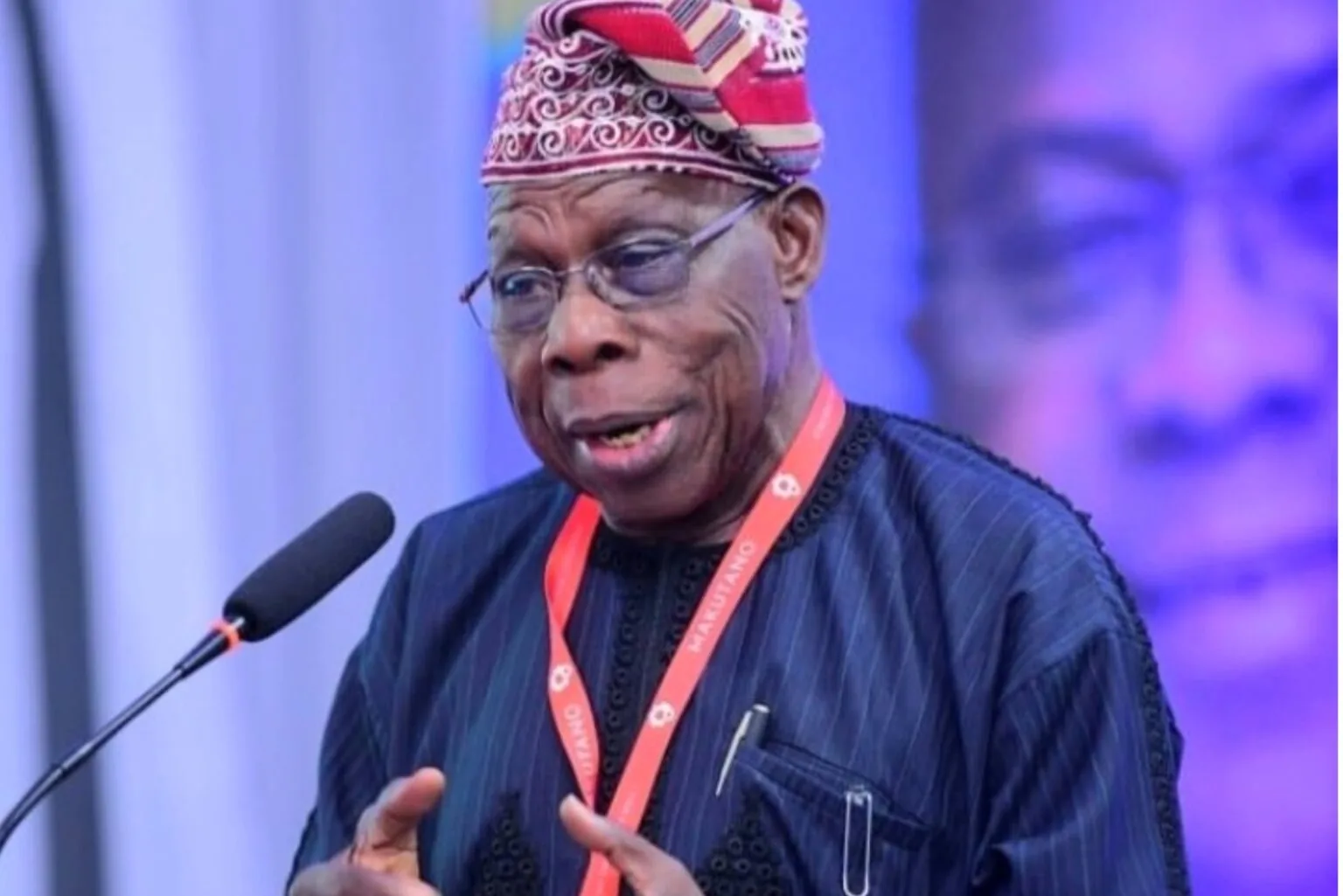
Former President Olusegun Obasanjo has recounted how he personally drove to a police station to surrender himself after receiving information that the military government of the late General Sani Abacha had ordered his arrest.
Obasanjo disclosed this while recalling his experience during the Abacha regime.
He was detained and sentenced to life imprisonment over an alleged coup plot in 1995.
Recounting the circumstances surrounding his arrest, the former president said he opted to present himself to the police rather than wait for security operatives to track him down.

Speaking in pidgin English, the former president said, “Na my own car I use drive myself go police station.
His account recalls one of the most controversial episodes of Abacha’s military rule.
Several prominent military officers and civilians were arrested following allegations of a plot to overthrow the then government.
Obasanjo was among those implicated in the alleged conspiracy, which also involved the former Chief of General Staff, Major General Shehu Musa Yar’Adua.
Before his arrest, Obasanjo had travelled to Copenhagen, Denmark, in 1995 to attend the World Social Summit in his capacity as a United Nations Human Development Ambassador.
While he was abroad, the then United States Ambassador to Nigeria, Walter Carrington, reportedly contacted him, warned that he risked arrest if he returned home and offered him political asylum in the US.
Obasanjo, however, rejected the offer, maintaining that he had committed no offence that warranted fleeing his country.
In a condolence message following Carrington’s death in 2020, the former president recalled that decision and its consequences.
“I came back and was arrested and imprisoned by Abacha,” he said.
Obasanjo was subsequently tried before a military tribunal and sentenced to life imprisonment over the alleged coup plot.
Yar’Adua also received a life sentence and died in detention in December 1997.
His imprisonment attracted international condemnation.
Prominent world figures and organisations mounted pressure on the Abacha government for his release.
Former United States President Jimmy Carter was among those who intervened.
Obansanjo recalled that Carter visited Nigeria and appealed directly to Abacha on his behalf.
He was subsequently released in June 1998, following Abacha’s sudden death.
He went on to emerged as the presidential candidate of the Peoples Democratic Party and won the 1999 election, returning Nigeria to civilian rule after years of military government.
He served as president from 1999 to 2007, having previously governed the country as military Head of State between 1976 and 1979.
Daily Trust reports that the 1995 alleged coup case was one of the most controversial episodes of Abacha’s military dictatorship.
The arrests extended beyond Obasanjo and Yar’Adua to include several military officers and civilians.
The trial before a military tribunal attracted criticism over due process and the credibility of the allegations.
Abacha had seized power on November 17, 1993, overthrowing the Interim National Government headed by Ernest Shonekan after the annulment of the June 12, 1993 presidential election won by MKO Abiola.
The detention of Obasanjo was particularly significant because he was not merely a former head of state but also a prominent international figure.
His imprisonment became part of the wider international human rights controversy surrounding Abacha’s government.
Yar’Adua’s death in custody in 1997 further intensified criticism of the regime.
Following Abacha’s death in June 1998, Abdulsalami Abubakar initiated a transition programme that led to the 1999 elections and the return to civilian government. (Daily trust)
-

 News10 hours ago
418 killed, 227 kidnapped in eight weeks – Police
-
News10 hours ago
LG autonomy: EFCC probes 774 chairmen’s spending
-
Politics10 hours ago
2027: APC targets Obi’s stronghold in Lagos
-
Politics10 hours ago
INEC Removes 1.6m Records From Voters’ Register, Identify Officials Responsible
-
News10 hours ago
‘Your entire generation will pay’ — Obasanjo fumes over Nigeria’s increasing debt
-
 News10 hours ago
Rising food prices: Workers turn to ‘mama put’ restaurants for affordable meals
-
Politics10 hours ago
Betara’s N1bn for Borno APC legislators
-
Metro10 hours ago
UK man convicted of fraud for secretly working five government jobs at once