
Politics
Manifesto: Tinubu reforms will be difficult to reverse by 2031 – APC

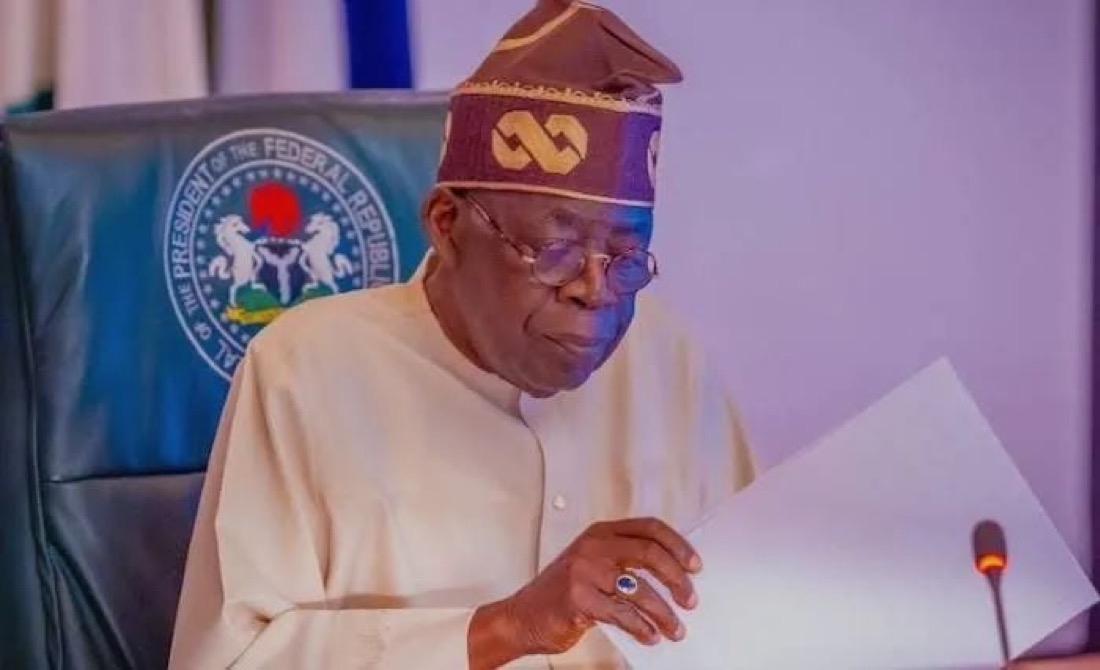
The Federal Government has expressed confidence that President Bola Tinubu’s economic reforms will deliver lasting benefits, insisting that they would be difficult for any future administration to reverse by 2031, as the All Progressives Congress unveiled its manifesto for the 2027–2031 period.
The Minister of Information and National Orientation, Mohammed Idris, stated this at the manifesto launch, where he urged Nigerians to support the administration’s policies and challenged journalists to balance criticism with positive reports of government achievements.
Other dignitaries who spoke at the event included the Chief of Staff to the President, Femi Gbajabiamila; Minister of Solid Minerals Development, Dele Alake; Minister of Budget and Economic Planning, Atiku Bagudu; and House of Representatives member, Abdulmumin Jibrin.
Idris said Tinubu’s economic reforms would be almost impossible for any future administration to reverse by 2031, urging Nigerians to support the President’s drive towards economic prosperity.

Idris also challenged journalists to balance their criticism of the government with positive reports of its achievements, insisting that responsible journalism should not focus exclusively on the negative aspects of the country.
He said the manifesto demonstrated the administration’s intention not only to account for its achievements in the last three and a half years but also to outline its priorities for another four-year term.
“Indeed, this manifesto is a further demonstration of the kind of vision that the APC government under the able leadership of President Bola Ahmed Tinubu is demonstrating,” he said.
Responding to concerns that the reforms were benefiting only a few wealthy Nigerians, Idris cited improvements in security, the Nigeria Education Loan Fund scheme, and the country’s economic indicators as evidence of their wider impact.
He particularly referenced the Abuja-Kaduna highway, saying motorists could now travel between the two cities without the fear of encountering bandits and kidnappers that previously made the route dangerous.
The minister also cited the 1.6 million beneficiaries of the NELFUND scheme, arguing that the initiative had enabled students from less privileged backgrounds to pursue tertiary education despite their parents’ inability to meet tuition and living expenses.
He said the scheme was designed to ensure that admission into higher institutions was not determined by the financial circumstances of applicants’ families.
On the economy, Idris said Nigeria’s removal from the Financial Action Task Force’s increased monitoring list in the last quarter of 2025 and improved assessments by international credit rating agencies demonstrated growing confidence in the country.
He also cited declining inflation, rising gross domestic product and improved foreign exchange liquidity, saying foreign investors could now repatriate their funds provided they complied with legal requirements.
The minister acknowledged that the country was not yet where it ought to be economically but maintained that the reforms had established the foundation for future prosperity.
“Some people say that yes, reforms are working, but we don’t know who it is benefiting. And I think every Nigerian is benefiting. And that is why we are saying today that yes, we have laid the foundation for reforms, and we are progressively going towards a period of prosperity.
“And as Mr Alake said, by 2031, it will be almost impossible for anybody to reverse this course,” he said.
On his part, Gbajabiamila said Tinubu remained committed to building a Nigeria that works for everyone through reforms aimed at promoting shared prosperity, improving living standards and expanding opportunities for citizens.
Gbajabiamila, who described the manifesto as a social contract between the government and Nigerians that must be fulfilled, said it was designed to translate the gains of ongoing reforms into tangible improvements in the lives of citizens, noting that its key priorities include security, affordable living, improved electricity supply and accountable governance.
“For the work we have done so far and our commitments for the years ahead, at the heart of this manifesto is my firm conviction that every Nigerian should be able to share in the country’s prosperity. Your country should give your best efforts a fair chance.
“A manifesto, in its strictest sense, is simply a contract between the people and their leaders. It is an inviolable contract, and we take the strict interpretation of what a manifesto represents as gospel under this administration.
“Our people already work hard. They rise early, travel long distances and make sacrifices so that their children can go further than they did. A nation worthy of such efforts must make it possible for honest work to produce a decent life.
“That is what we mean by a Nigeria that works for everyone. It means parents can meet their families’ needs and still put something aside for tomorrow. It means a young person can look ahead with a reasonable expectation that ability and effort will open doors,” he stated.
Gbajabiamila said the APC manifesto guarantees equal access to public services, irrespective of political affiliation.
He continued, “In 2023, President Bola Ahmed Tinubu took responsibility for a country facing problems that could no longer be deferred. He confronted the subsidy burden and a distorted foreign exchange system. He chose to begin difficult repairs whose benefits would take time to reach everyone.
“Those decisions have now placed real pressure on households. We must speak honestly about that experience because the people living through it deserve to be heard. Nobody should have to pretend that life is easy at the moment.
“But we believe Nigeria can improve, and the President was right to act. Leaving those problems untouched would have continued to weaken our ability to invest in the future.”
Gbajabiamila said the Tinubu administration was focused on ensuring that ongoing reforms translated into tangible improvements in the lives of Nigerians.
He described Tinubu as a leader who prioritises the future of coming generations over electoral gains, saying his decisions reflected a commitment to long-term national development.
“Through NELFUND, students are receiving loans that pay their institutional fees and help meet their living costs. For a family struggling with the cost of education, that support can make the difference between keeping a young person’s ambition alive and allowing it to wither.
“The tax reforms have provided relief for lower-income earners and qualifying small companies. The Electricity Act has opened the way for states to establish and regulate their own electricity markets.
“These changes give us practical means to widen opportunities and improve services, provided we follow through with the discipline they require.
“This manifesto sets out what we intend to achieve through these changes. Its four pillars bring together security and a more affordable life, supported by the energy infrastructure that productive work requires. They also commit us to a government that answers to the people it serves,” he said.
Gbajabiamila said the APC manifesto seeks to improve farmers’ productivity through better security, storage facilities and road infrastructure, noting that coordinated government interventions would boost earnings and reduce food costs.
He said the manifesto targets halving the number of out-of-school children by 2031 and installing seven million additional electricity meters to improve access to education and power.
The Chief of Staff added that the plan also proposed expanded health insurance coverage to protect families from financial hardship arising from medical expenses.
Meanwhile, the APC Presidential Campaign Council hailed Tinubu for demonstrating courage in tackling Nigeria’s economic challenges, particularly through the removal of fuel subsidy and the unification of the foreign exchange market, despite the potential political consequences of the policies.
The APC PCC spokesperson and Minister of Solid Minerals, Alake, speaking at the event, said Tinubu prioritised national interest over personal political ambition in implementing difficult economic reforms.
He argued that the removal of the fuel subsidy and reforms in the foreign exchange market required courage and determination, given the entrenched interests that benefited from the previous arrangements.
He stated, “Regardless of the political consequences, or even the President’s own political situation and aspirations, he carried out genuine structural reforms. And that is the kind of person Bola Ahmed Tinubu is. He does not think of himself; he thinks of the nation, and that is what a statesman should do.
“Ordinary politicians will think of the next election and avoid contentious policies that could probably mar their political aspirations. But not President Bola Ahmed Tinubu, because he puts the nation ahead of himself.
“He did not think, ‘Oh, these policies might bring some pain or challenges or cause some unease among the public, so they could affect my political aspirations. I won’t implement them.’ No, he didn’t do that. He put the nation first, before his own desires. And that’s why he was able to look at those problems straight in the face and confront them.
“He removed the fuel subsidy, as you all know. Fuel subsidy had been one of the pillars of Nigeria before 2023. He removed it. Removing the fuel subsidy might superficially look simple to everyone, but it is not.”
Alake alleged that powerful interests had exploited the fuel subsidy regime through smuggling, fraudulent claims and other illicit practices, adding that those benefiting from the system were resisting the Federal Government’s decision to remove the subsidy.
“It takes a man of courage, a man of grit, brains and brawn, to withstand the pressure of the cabal, which would fight back, and they are fighting back over the removal of the fuel subsidy.
“The same thing goes for the foreign exchange situation, where we had multiple foreign exchange dynamics and operations.
“Some people, as you all know, would sit in their gardens or backyards without lifting a finger, simply because they had connections with CBN authorities or top government officials. With just a phone call, they would obtain millions of dollars at the official rate and, without leaving their seats in their gardens, send the money to the Bureau de Change.
“In the twinkle of an eye, they would become billionaires while sitting in their backyards, making no contribution to production in the economy to shore up the naira. And, of course, the result, as you all knew, was a free fall.
“President Bola Ahmed Tinubu looked that problem in the face, confronted it and normalised the situation,” Alake said.
The Minister of Budget and Economic Planning, Bagudu, assured Nigerians that the economic reforms introduced by the President would translate into improved living conditions and prosperity for ordinary citizens, particularly hardworking Nigerians and vulnerable groups.
Bagudu, who chairs the APC 2027 Manifesto Unveiling Committee, said that although the administration had recorded progress in implementing its economic policies, more needed to be done to ensure Nigerians feel the benefits of the reforms.
“All of us, the ministers, alongside the Vice President, have reason to be proud of the last Nigerian Economic Summit. This is because the private sector unanimously acknowledged that Mr President had delivered on the promises he made. They are doing well, announcing investments in Nigeria commensurate with what he promised and what he has delivered.
“But, as we all know, even before anybody tells him, Mr President acknowledges that we have done well. However, until we deliver and ensure that every Nigerian feels the impact of prosperity, especially hardworking Nigerians and those who need support, we still have work to do.”
Bagudu recounted how Tinubu, during his campaign in Zamfara State, directed a State House official to give money to a struggling carrot seller whose sales had been poor, describing the gesture as evidence of the President’s concern for ordinary Nigerians.
He said Tinubu remained committed to ensuring that his policies improved citizens’ livelihoods, adding that the APC communications team and other officials had worked hard to develop the party’s 2027 manifesto.
Bagudu added, “But the APC manifesto for our President does not end with a team. The manifesto belongs to all Nigerians who are members of his team and believe in the profundity of his message.
“What you are going to see certainly includes some elements that you have already seen, as well as a broader vision. For Mr President, if Brazil can become a $2tn economy, why can’t Nigeria?
“So, Mr President, without being influenced by any outsider, said, we should confront our reality and address these challenges. As I have said, he was not concerned about the next election but about prosperity.
“Indeed, we are seeing the benefits of having a leader who has a profound understanding of what Nigeria can become and is courageous enough to lead us towards that reality.”
Bagudu said Nigeria was recording sustained economic growth, with inflation declining and the exchange rate showing signs of improvement despite prevailing economic challenges.
The member representing Kiru/Bebeji Federal Constituency in the House of Representatives, Jibrin, speaking at the event, said Tinubu had delivered infrastructure projects that previous administrations failed to complete.
In a goodwill message, Jibrin said successive governments that spent between three and eight years in office failed to complete the two major road projects in the North.
He stated, “My brother here, in the Ministry of Works, also did a fantastic job in terms of infrastructure, particularly if I may be biased towards the northern part of the country, where some people claim we have been shortchanged. That is not true.
“At least, this is a government that has been in office for three years. I have no problem with previous administrations. Perhaps, if I do, it is only in my mind; I am not saying it publicly. Officially, I have no problem with them. But we had governments that spent eight years, five years, three years and another eight years in office. None of them completed the Abuja-Kaduna Road. None completed the Kaduna-Kano Road.
“This government, in less than three years, completed the Kaduna-Kano Road. By November or December, this same government is expected to conclude the Abuja-Kaduna Road. Dawanu is the largest agricultural market in Kano. The government has made a substantial commitment to the Dawanu Market. It is the largest agricultural market in West Africa.
“The government is also completing the Maradi Corridor of the railway, which passes through Dawanu. These are all deliberate actions being taken by this administration.”(Punch )
-

 News23 hours ago
‘Your entire generation will pay’ — Obasanjo fumes over Nigeria’s increasing debt
-
Metro3 hours ago
Court scolds EFCC, discharges Mompha over alleged N6 billion money laundering
-
Politics24 hours ago
INEC Removes 1.6m Records From Voters’ Register, Identify Officials Responsible
-
 News24 hours ago
Rising food prices: Workers turn to ‘mama put’ restaurants for affordable meals
-
Business23 hours ago
Rice prices rise as foreign brands hit N90,000
-
Metro24 hours ago
UK man convicted of fraud for secretly working five government jobs at once
-
News3 hours ago
FG raises the alarm over carbide-ripened fruits, paracetamol-treated meat in markets
-
Business3 hours ago
NERC Approves N30bn To Meter Band A, B Customers