African News
Eswatini gives foreign businesses 12 months to leave under new empowerment act

Foreign owned businesses are being shut down across Eswatini as the government cracks down on foreign owned enterprises.
The move follows Parliament’s approval of the Citizen Economic Empowerment Act, aimed at increasing ownership and participation by emaSwati, as citizens are known, BBC reports.
The law came after complaints from local traders that foreign businesses were encroaching on traditional retail markets and threatening livelihoods.
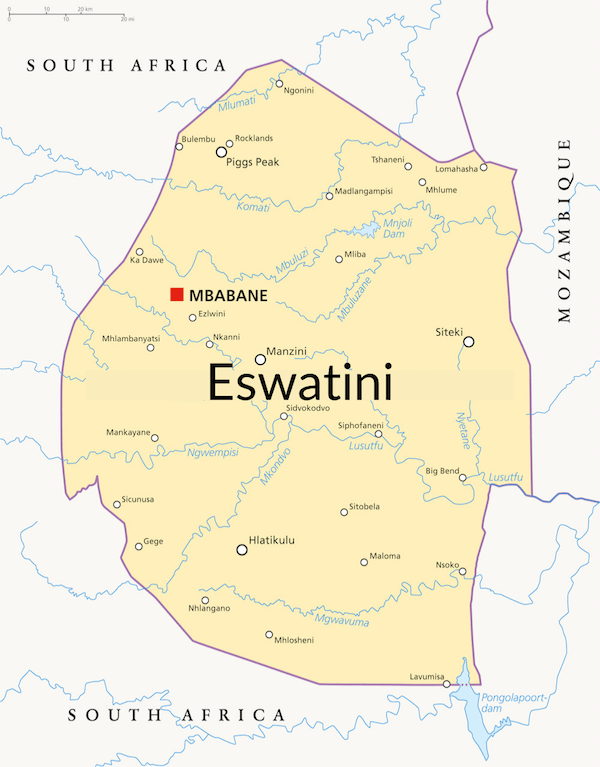
Mbabane East MP Welcome Dlamini told Parliament on Tuesday, November 10, 2026, that officials from the Ministry of Commerce, Industry and Trade had already begun enforcing the law by shutting down shops owned by Asians.

Dlamini warned there seemed to be no sustainable takeover plan for emaSwati to run the businesses. He suggested giving foreigners more time to train their successors.
“Why can’t we give the Asians or foreigners at least two or three years before ‘kicking them’ out so that emaSwati can learn to run the businesses?” he asked.
Hhohho Regional MP Tanele Magagula disagreed, urging the ministry to continue shutting down the shops. She said in one statement:
“Businesses owned by foreigners in the rural areas must be seized and closed immediately, why must we wait for three years while emaSwati suffer?”
Mafutseni MP Sabelo Mthethwa shared the same position, saying businesses owned by foreigners in the rural areas must be seized immediately.
Parliament subsequently resolved that foreigners must be given at least 12 months to leave with a condition that the law is formally amended to reflect that timeline, the ministry could continue enforcing it as written.
The closures follow inspections launched in August. Some businesses in Mbabane were found fully compliant, but inspectors also flagged concerns over days off, annual leave, and overtime. At least one case is still under investigation.
Eswatini, a small landlocked kingdom in Southern Africa, has about 70% of its population living below the poverty line.
The government says the law is meant to expand opportunities for citizens amid fears poverty and hunger could fuel political unrest.
This pressure mirrors the ongoing protests in neighboring countries like South Africa.
On July 30, 2026, the March and March movement gave undocumented immigrants a deadline to leave. Another protest followed on September 30. Two Ghanaian and two Nigerian nationals were reported killed amid the tensions.
Kenya has also stepped up enforcement against foreign traders.
-

 News23 hours ago
Diezani’s suit seeking to reclaim forfeited assets stalled
-
Politics11 hours ago
2027: SWAGA vows grassroots mobilisation of votes for Tinubu, Hamzat
-
Politics12 hours ago
‘You will suffer for four years’ — Ibiyeomie warns Nigerians taking money to vote
-
Politics12 hours ago
2027: Obi pledges security, jobs, food for Nigerians
-
Politics12 hours ago
VP Shettima vs Peter Obi: APC threatened, we’re here to win – NDC chieftain
-
Politics12 hours ago
Campaign: Stop Following Tinubu Around, Focus On Grassroots – Orji Kalu Tells APC Leaders
-
Opinion12 hours ago
Awujale succession: When money, ambition, blackmail threaten tradition
-
Business12 hours ago
Nvidia Board Reportedly Moves to Oust CEO Jensen Huang Amid Growing Leadership Crisis