
Business
Nigeria’s Ageing Apapa, Tin Can Ports Struggle as ₦1.3 Trillion Reconstruction Stalls

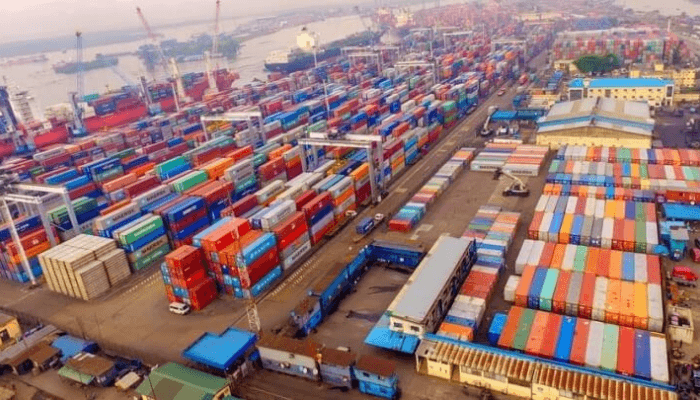
Nigeria’s two busiest seaports, Apapa and Tin Can Island ports in Lagos, are facing mounting operational difficulties as ageing infrastructure, declining cargo activity and prolonged delays in reconstruction threaten the country’s maritime competitiveness.
The situation has renewed concerns about Nigeria’s ability to maintain its position as a major trading hub in West Africa, particularly as neighbouring countries continue investing in modern port facilities.
The two ports are particularly important to Nigeria’s economy, collectively handling more than 85 per cent of the country’s container trade, according to figures cited by BusinessDay.
Apapa Port, commissioned in 1926, is almost 100 years old, while Tin Can Island Port commenced operations in 1977. Both facilities continue to handle significant volumes of Nigeria’s international trade despite years of infrastructure deterioration.

Port operations under pressure
Recent operational figures from the Nigerian Ports Authority (NPA) reveal growing challenges.
At Apapa, cargo throughput declined by five per cent to 535,000 tonnes in the first half of 2026. Vessel turnaround time increased from 5.9 days in the corresponding period of 2025 to 6.1 days.
Tin Can Island also recorded a deterioration in operational efficiency. Vessel calls declined by 3.4 per cent to 488, while turnaround time increased from 4.4 days to 5.1 days.
These delays have serious financial implications for importers, exporters, shipping companies and manufacturers.
Cargo dwell time in Nigerian ports has remained between 10 and 18 days in 2026, compared with approximately seven to 10 days at competing ports in Lomé, Togo, and Tema, Ghana.
The longer cargo remains in Nigerian ports, the more businesses spend on storage, demurrage and other logistics charges. Ultimately, these additional costs can be reflected in the prices consumers pay for imported goods.
The ₦1.3 trillion reconstruction project
The Federal Government had secured a £746 million financing agreement with the United Kingdom in March 2026 to rehabilitate Apapa and Tin Can Island ports.
The project, estimated at approximately ₦1.3 trillion, is expected to address decades of infrastructure deficiencies through the reconstruction of quay walls, berths, terminal pavements and other critical facilities.
It will also involve improvements to marine infrastructure and facilities required to accommodate modern ship-to-shore gantry cranes.
However, eight months after the financing agreement was signed, physical reconstruction had yet to commence, raising questions about the government’s implementation capacity.
The project had previously been expected to commence in the second quarter of 2026, before another anticipated mobilisation deadline in the third quarter was missed.
The Nigerian Ports Authority has indicated that counterpart funding commitments by the Federal Government remain part of the process required to move the project into its construction phase.
Nigeria losing business to neighbouring countries
Nigeria’s port infrastructure challenges are also affecting its ability to compete for maritime traffic in West Africa.
Ports in Lomé and Tema have invested in deeper channels, modern cargo-handling equipment and improved operational systems.
The Port of Tanger Med in Morocco handled approximately 11.1 million twenty-foot equivalent units (TEUs) in 2025, compared with total container throughput of approximately 2.1 million TEUs across all Nigerian seaports.
The Nigerian Ports Authority has previously estimated that the country loses more than ₦1 trillion annually because of inadequate port automation and outdated infrastructure.
Its management has also highlighted the loss of cargo to competing regional ports as a major concern.
Government announces new groundbreaking date
However, in a significant development on November 16, 2026, the Federal Government announced that the groundbreaking ceremony for the modernisation of Apapa and Tin Can Island ports would take place on November 25.
The announcement was made by the Ministry of Marine and Blue Economy, following renewed attention to the delays surrounding the project.
Minister Adegboyega Oyetola is expected to perform the groundbreaking ceremony.
The announcement provides a fresh timeline for the long-awaited reconstruction, although the actual commencement and completion of construction will determine when businesses begin to experience meaningful improvements.
What is at stake?
The modernisation of Nigeria’s major seaports goes beyond improving the appearance of maritime facilities.
Efficient ports are essential for reducing the cost of imports, supporting manufacturing, encouraging exports, attracting foreign investment and improving government revenue.
For an economy seeking to expand industrial production and strengthen its position in international trade, inefficient ports represent a significant economic disadvantage.
The challenge for the Federal Government is therefore to translate the £746 million financing agreement into actual construction, modern equipment and measurable improvements in cargo clearance and vessel turnaround.
Until that happens, Nigerian businesses will continue bearing the financial consequences of operating through infrastructure that was largely designed for an earlier era of global shipping. (BusinessDay)
-

 Business10 hours ago
FG settles ₦1.23trn electricity debt, says Power Minister
-
Politics11 hours ago
Imposing Tinubu in 2027 will trigger crisis — Ex-APC spokesman
-
News11 hours ago
More deaths, abductions in Zamfara, Sokoto
-
Business11 hours ago
How High Cost Of Feed Is Killing Poultries – Report
-
Politics11 hours ago
Thugs attack Kwankwaso’s convoy in Kano
-
Business11 hours ago
EXPLAINER: The Difference Between FG’s Newly Secured $500m And Fresh $500m Loan Request
-
News10 hours ago
Igbokoda Crash: NAF recovers black box, holds memorial November 26
-
Politics10 hours ago
I’m running to complete South’s remaining 4 years — Makinde