
Business
89% of Nigerians want renewable as grid confidence collapses

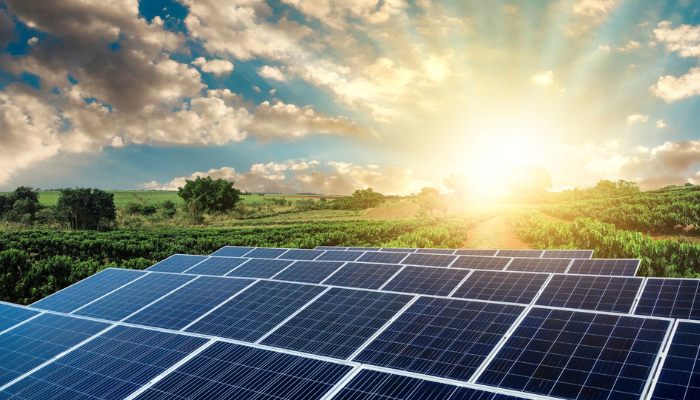
Nearly nine in ten Nigerians would consider switching to renewable energy within the next two years, a new survey found, as rising power costs and unreliable supply push households and small businesses to look beyond the national grid.
The poll, conducted by the Consumer Advocacy and Empowerment Foundation, found that 89 percent of respondents would consider adopting solar power, battery storage or mini-grids.
The result points to a large pool of potential customers in Africa’s most populous country. It also exposes the barriers between interest and action: high installation costs, scarce financing, limited consumer awareness and doubts about the companies selling the equipment.
CADEF presented the findings at a consumer-focused energy summit in Nigeria, where it also launched an upgraded version of its Renew Energy Naija website, built to help the public find information on clean energy options.

Chiso Ndukwe-Okafor, the foundation’s executive director, said Nigerian consumers face two problems at once. Many countries have energy poverty, she said, where power is available but too expensive. Nigeria has that, plus a shortage of electricity itself, whether from the grid or from alternative sources.
The survey data bear that out. About 45 percent of respondents rely on generators for backup power, even though most earn less than N100,000 a month.
Some 30 percent said they lack adequate access to energy. Another 21 percent sometimes cut back on electricity use, 18 percent always do, and 5perc said they can never afford the energy they need.
Those trade-offs, Ndukwe-Okafor said, are shaping household budgets and business operations alike.
Trust is a second weak point. Some 66 percent of respondents said they have little trust in government, and 57 percent have little confidence in electricity distribution companies. Regulators fared only slightly better, with 40 percent reporting low trust in them.
Awareness of who oversees the sector is thin. While 79 percent of respondents had heard of the Nigerian Electricity Regulatory Commission, they did not understand what it does, and 40 percent could not name the electricity regulator in their own state. Only 6 percent had noticed any improvement in grid supply in their communities.
Ndukwe-Okafor also questioned how the band system for allocating supply works in practice, noting that customers on the same feeder often do not receive the hours of power they were promised. Rebuilding confidence, she said, will require more transparency, accountability and engagement among providers, regulators and the public.
The survey did find openings for the renewable market. About 95 percent of respondents said they would shift when they use electricity to cut their bills, and 88 percent would accept a two-to-three-month approval process to sell surplus power from their own systems back to distribution companies.
At the same time, 19 percent said they distrust renewable energy vendors, which the foundation said underscores the need for stronger consumer protection and clearer service standards.
The upgraded Renew Energy Naija platform includes a solar calculator that lets users enter their appliances, with the number of units and wattage, to estimate power needs and see possible system sizes.
It also carries a directory of renewable energy providers, along with educational material, policy briefs, surveys, a glossary and industry insights. CADEF said the aim is to help consumers make better-informed decisions before they invest.
Olufunmi Adewale, delivering the keynote on behalf of Anita Nana Okuribido, founder and national president of the Women in Renewable Energy Association, said women-led businesses are often shut out by conventional lending rules on collateral, credit history and paperwork.
She called for pay-as-you-go models, equipment financing, working capital, loan guarantees and patient capital, and said women should be able to take part as consumers, entrepreneurs and investors rather than merely as beneficiaries of clean energy programmes.
On the regulatory side, Abdullahi Adamu, the NERC’s director of research and data analytics, said the commission issued Mini-Grid Regulations in April and Net Billing Regulations in June under the Electricity Act 2023.
Seventeen states have completed the process of setting up and taking over oversight of their electricity markets, he said, and Lagos created its own regulator in December 2024.
The mini-grid rules cover isolated systems of up to five megawatts per site and interconnected systems of up to 10 megawatts. Installations below 10 kilowatts need only register, while larger ones need permits, with applications due to be processed within 30 business days.
Adamu pointed to the Forum of Nigerian Electricity Regulators as a channel for coordinating federal and state oversight.
Summit participants said turning consumer interest into installations will take cheaper financing, firmer consumer protection, dependable vendors and better coordination among regulators.
They argued the transition should be built around affordability and access so that low-income households, women-led firms and small businesses are not left behind. (BusinessDay)
-

 Politics17 hours ago
NDC Campaign Accuses Tinubu Govt Of Covering Up ₦11.2trillion Pipeline Security Expenditure, Demands Forensic Audit
-
News18 hours ago
Fountain of Life board names interim leader, insists Jimmy Odukoya’s ouster
-
Politics17 hours ago
2027: There’re Concerns Over Direction Nigeria Is Heading – Jonathan
-
Business17 hours ago
NRS flags trillions in potential illicit financial flows
-
Politics16 hours ago
Gombe APC Chairman, Campaign DG Involved In Accident En Route To Rally
-
News17 hours ago
Reps move to review NYSC postings over rising kidnap threats
-
Business17 hours ago
Why goods remain expensive despite falling inflation — Oyedele
-
Business16 hours ago
Tinubu Unveils N100m Housing Loans, Repayment Spreads Over 20 Years