
African News
Nigeria-South Africa: A chastened Fani-Kayode meets the limits of loud diplomacy

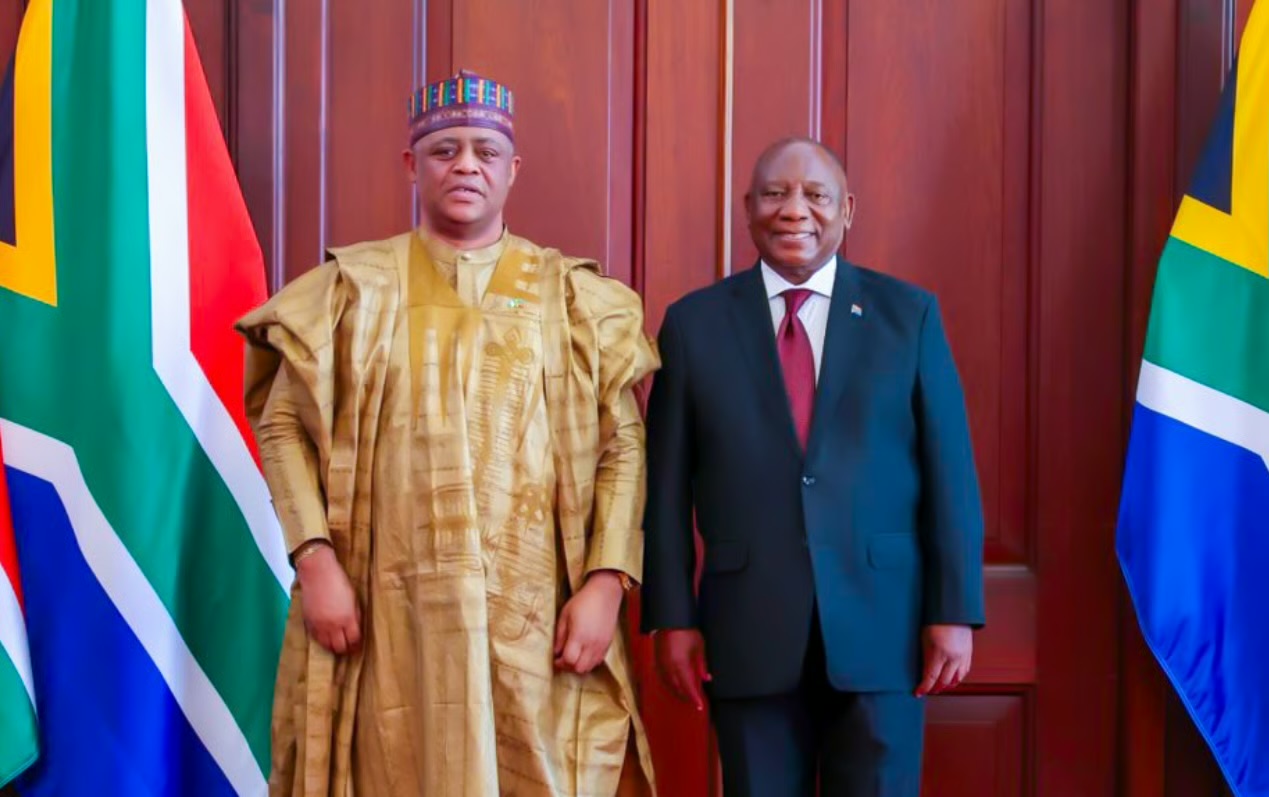
It took Femi Fani-Kayode just four days to go from presenting his credentials to being summoned. On 17 November, Zane Dangor, director-general of South Africa’s Department of International Relations and Cooperation (DIRCO), called in Nigeria’s new high commissioner to express Pretoria’s concern “regarding events that transpired” after the ceremony, “as well as subsequent remarks made on social media”.
Dangor also reminded him of Article 41 of the 1961 Vienna Convention on Diplomatic Relations, which requires envoys to conduct official business through the host country’s foreign ministry. That is diplomatic language for: do not buttonhole the president.
Swift as it was, Fani-Kayode’s démarche set no record. That belongs to Brent Bozell III, US President Donald Trump’s man in Pretoria. Bozell was démarched in March, soon after arriving and about three weeks before he had even presented his credentials, for saying he did not care what South Africa’s courts had ruled on the “Dubul’ Ibhunu” (Kill the Boer) chant.
Bozell, too, backtracked, insisting that Washington respected the judiciary. In September, he was démarched again, for attacking domestic policies he disliked. Pretoria, in other words, does not much mind whose envoy it scolds.

The Ramaphosa route above his pay grade
Fani-Kayode’s offence was a direct approach to the head of state. At the ceremony in Pretoria on 13 November, he was the last of 15 new envoys to present his letters to President Cyril Ramaphosa. Learning that his speech had not been carried on the presidency’s livestream, he approached Ramaphosa moments after the family photograph.
Ramaphosa steered him to Sophie Mokoena of the South African Broadcasting Corporation (SABC), who told The Africa Report she tried to explain that the broadcaster had to cut away to other feeds. The SABC later uploaded Fani-Kayode’s speech, but he refused its interview request in protest.
Then he took to X, claiming Ramaphosa had instructed officials to fix the problem at his request. “Sadly by then it was too late and Nigeria had been left out,” he wrote. “Clearly some elements in South Africa do not want to hear what we have to say or see our faces.” He would not, he added, “tolerate anyone that disrespects or treats our government or our people flippantly”. The post has since been deleted.
Vincent Magwenya, Ramaphosa’s spokesman, replied that the president “carries no legal or political mandate to interfere” with the SABC’s editorial decisions. The Nigerian High Commission hit back, calling Magwenya a liar and a disgrace. Days earlier, at a Nigerian fair in Johannesburg, Fani-Kayode had declared that “Nigeria remains the big brother of all African nations” – a line unlikely to have charmed his hosts.
From attack dog to diplomat
None of this will surprise anyone who has followed his career. A lawyer and two-time former minister, Fani-Kayode has built a political brand on sharp wit and colourful insult. Last year, he called Trump “a recalcitrant and unrepentant schoolyard and dockside bully” after Washington designated Nigeria a Country of Particular Concern. Before the 2023 election, he informed a British deputy high commissioner: “We are no longer your slaves.”
He was once among Nigerian President Bola Tinubu’s fiercest critics; he is now one of the president’s loudest defenders. “I was in People’s Pigs Party then, but saw the light and left the swine,” he explained.
His road to Pretoria was bumpy. First nominated to Germany, he was redeployed to South Africa – at his own request, he insists, though media reports suggested Berlin had declined him. He was among the last of Tinubu’s ambassadors to receive agrément.
Chastened, for now
After the DIRCO meeting, the tone changed. Fani-Kayode called it “cordial and constructive”, adding that “mutual concerns” had been discussed and pledged to build relations “founded on mutual respect, friendship and cooperation”. The phrasing closely echoed Pretoria’s own.
The stakes are bigger than one man’s pride. He is Nigeria’s first substantive high commissioner in South Africa for four years, arriving in a relationship long strained by xenophobic attacks on Nigerians, among other migrants, commercial friction and rivalry over who speaks for Africa. Both governments say they want a reset. Neither can afford an envoy who treats every slight as a casus belli.
Whether the contrition lasts is another matter. Bozell’s lasted six months. (The Africa Report)
-

 Politics23 hours ago
NDC Campaign Accuses Tinubu Govt Of Covering Up ₦11.2trillion Pipeline Security Expenditure, Demands Forensic Audit
-
Politics23 hours ago
2027: There’re Concerns Over Direction Nigeria Is Heading – Jonathan
-
Business23 hours ago
NRS flags trillions in potential illicit financial flows
-
Politics23 hours ago
Gombe APC Chairman, Campaign DG Involved In Accident En Route To Rally
-
News23 hours ago
Reps move to review NYSC postings over rising kidnap threats
-
Business23 hours ago
Why goods remain expensive despite falling inflation — Oyedele
-
Politics23 hours ago
Obasanjo Turned Against Tinubu After Failed Bid To Make Daughter Governor – Fayose
-
Business23 hours ago
Tinubu Unveils N100m Housing Loans, Repayment Spreads Over 20 Years