
African News
South Africans Demand Total Ban On Nigerians In Fresh Protest

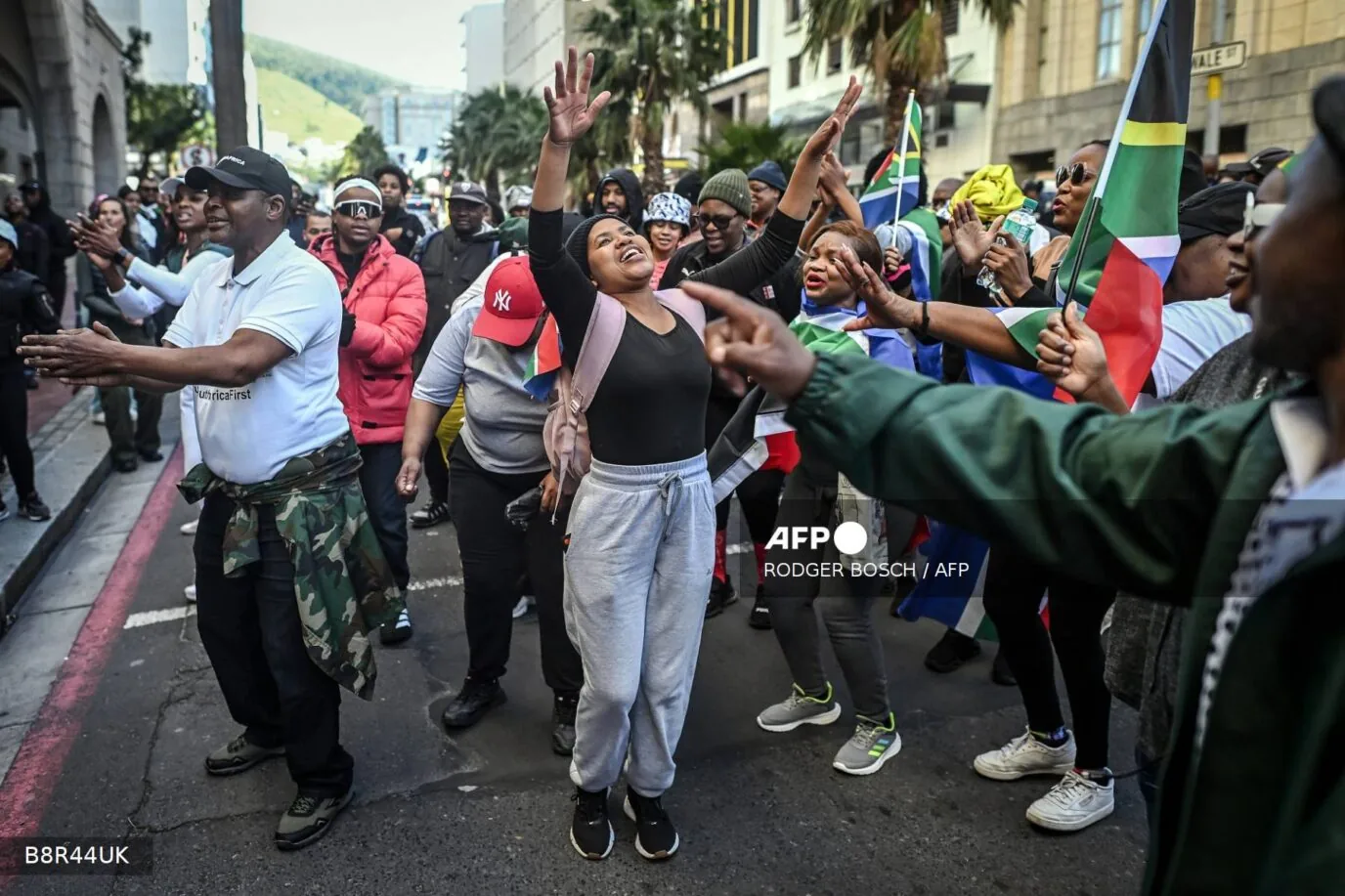
A fresh anti-Nigerian campaign erupted in South Africa on Wednesday as demonstrators marched through Pretoria, demanding that the government shut its borders against Nigerian nationals and stop their entry into the country.
The protesters, operating under the March and March movement, specifically accused Nigerians of engaging in drug trafficking and contributing to social problems in South African communities.
The demonstration, led by the group’s leader, Jacinta Ngobese-Zuma, took a particularly confrontational turn in Sunnyside, a Pretoria suburb popularly associated with a sizeable Nigerian community and sometimes described as ‘Little Lagos’.
Challenging Nigerian residents to explain their presence and influence in the neighbourhood, Ngobese-Zuma questioned how the area acquired the nickname.

“I am being told here that we’ve entered Sunnyside, the home of Nigerians. I am inviting Nigerians to come out, let’s talk to each other. We want to know who gave you this place and called it Nigeria. Who gave you permission to call this place Lagos or whatever you call it?” she asked.
She further questioned who had authorised Nigerians to identify parts of South African territory with their home country.
The remarks point to the increasingly hostile rhetoric directed at the immigrant community.
Ngobese-Zuma described the convention as “not sustainable and not feasible”.
She alleged that the presence of migrants was placing additional pressure on public resources and aggravating the frustrations of South African citizens.
The movement said it was taking its grievances to the Department of Home Affairs, where it intended to formally present its demands for tougher immigration controls, restrictions on refugee admissions and accelerated deportation of undocumented foreign nationals.
For his part, the group’s legal representative, Xolani Zuma, went further by demanding an outright prohibition on Nigerians entering South Africa.
“The state must ban Nigerians from South Africa. They must ban Nigerians until they stop selling drugs to our people. The rest of Africa, we are fine, but we do not want Nigerians in South Africa anymore. That is what we are saying,” he declared.
The demonstrators also called on the South African government to withdraw from the 1951 United Nations Convention Relating to the Status of Refugees.
They argued that the country’s obligations under the agreement were no longer sustainable.
The latest demonstration comes amid growing strain in relations between Nigeria and South Africa over recurring xenophobic hostility, the safety of Nigerian nationals and disagreements surrounding the diplomatic representation of both countries.
Only last week, Nigeria’s High Commissioner to South Africa, Femi Fani-Kayode, and the South African Presidency were involved in a diplomatic exchange following the exclusion of his prepared speech during the presentation of his credentials.
Fani-Kayode had described the omission as disrespectful to Nigeria.
Although he subsequently said the disagreement had been resolved following the intervention of South African President Cyril Ramaphosa and an invitation from the country’s Department of International Relations and Cooperation.
The envoy also disclosed that he had begun addressing concerns affecting Nigerians in South Africa since assuming office.
He described those behind xenophobic attacks as a tiny minority who should not be allowed to define the character of the country’s population.
He maintained that the majority of South Africans were decent and accommodating.
He expressed confidence that the two countries could overcome their differences without severing longstanding diplomatic relations.
However, Fani-Kayode had warned that patience was running thin within Nigeria’s corridors of power over repeated attacks on its citizens.
He insisted that the country would not abandon its nationals to xenophobic violence.(Daily trust)
-

 Politics13 hours ago
2027: INEC dispatches 186,277 BVAS to states
-
News13 hours ago
Senate sends State Police Bill to Tinubu for assent
-
Sports12 hours ago
FIFA Appoints Amokachi, Four Others To Manage Nigeria Football Federation
-
Politics13 hours ago
Tinubu Revises Campaign Schedule, Drops Bauchi, Adds More States
-
Metro13 hours ago
Eight-hour gridlock paralyses Lagos-Ibadan Expressway
-
Metro13 hours ago
Kano TikToker Jailed For ‘Insulting’ Hisbah DG
-
Business12 hours ago
Chairman’s firm buys 9.125% of Seplat senior notes
-
News12 hours ago
US hails Nigerian military over rescue of 125 kidnap victims