
Opinion
Who governs Nigeria, Tinubu or the World Bank?

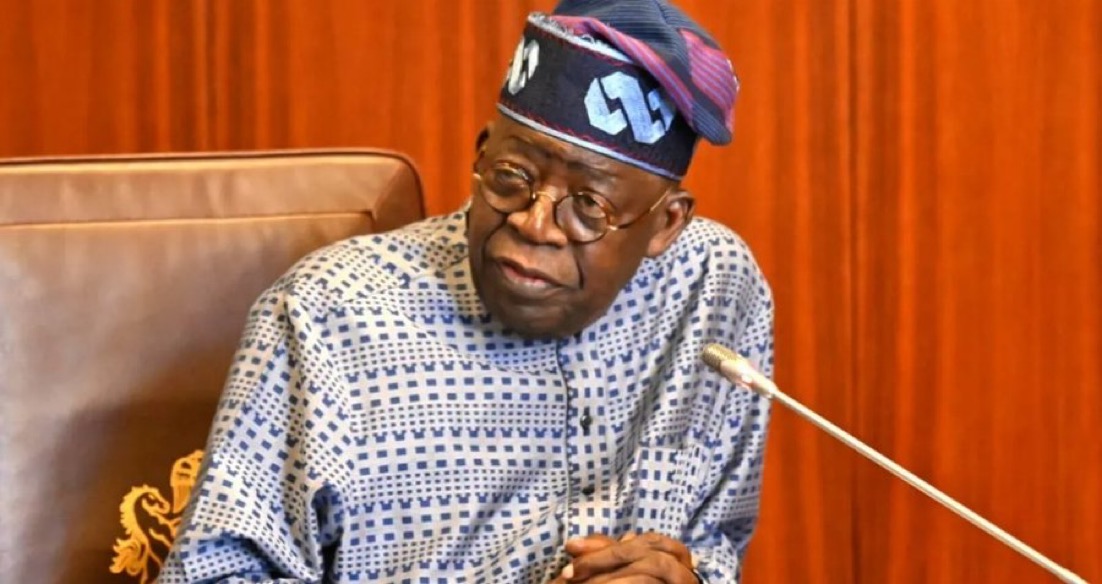
I have tremendous respect for H.E. Babatunde Fashola. But I must respectfully disagree with him in his defence of President Tinubu’s reckless and insensitive removal of fuel subsidy during his Channels TV interview on Tuesday, November 17.
As Governor Fashola would find, it is difficult to defend the Tinubu administration without feeling one’s credibility melting under the heat of the harsh reality that millions of Nigerians have struggled with every day for the last three years. It is like a piece of soap that diminishes itself each time it attempts to wash others clean.
Nevertheless, I would like to thank Governor Fashola for his remarkable candour. It is not every day that a man who sat in the Federal Executive Council for eight years comes forward to reveal, with such astonishing frankness, just how little of President Tinubu’s economic policy has been conceived and implemented in the interest of Nigeria and Nigerians.
In his eagerness to defend President Tinubu’s subsidy removal, H.E. Fashola may have revealed considerably more than he intended.

First, he told us that in removing fuel subsidy, President Tinubu was only acting on the directive of the World Bank! This has led millions of Nigerians to ask: Who is really running Nigeria? The President of Nigeria in Abuja or the World Bank in Washington, DC? Since when did the economic recommendations of an international financial institution become instructions that a sovereign government must obey, regardless of the suffering they could inflict on its citizens?
The World Bank has misled countries before, whether deliberately or inadvertently. Development literature is replete with such instances. Its recommendations are also ideological. This is why serious-minded countries listen to such institutions but ultimately do what they consider best for their countries and their people.
Secondly, he said President Tinubu was constrained by the Petroleum Industry Act (PIA), which prohibits government interference with the market prices of petroleum products. Pardon my biblical inference, but the natural question one must ask is this: Are laws made for Nigerians, or are Nigerians made for the laws?
As a legislative proposal, the PIA probably set a record as one of the longest-pending bills before its eventual passage into law in 2021. Perhaps it was because some of its provisions were thought to be injurious to the well-being of Nigerians that it was kept in abeyance for so long. Laws are made to promote the well-being of the people. Therefore, any law that detracts from this objective and, instead of improving their well-being, actually compounds their misery, must be considered repugnant to society and must be reviewed.
But I have read the PIA. And I think Fashola and others who have tried to defend the Tinubu government on the fuel subsidy removal are only using the law as a pretext for the reckless action or, as we now know, thanks to Fashola, their willingness to abdicate their patriotic duty in order to carry out the directives of their masters in Washington, whose agenda may actually be at variance with the overall national interest of Nigeria.
What they conveniently ignore is that the same PIA makes provision for the Domestic Crude Supply Obligation (DCSO), which provides a window for implementing the very idea of production subsidy that the ADC and our presidential candidate, Alhaji Atiku Abubakar, are proposing.
The question then is: Why has this administration failed to enforce that aspect of the law and use it as a lever to support local refineries so they can deliver cheaper fuel to Nigerians?
Governor Fashola also spoke about the economic crisis in which the Buhari administration had found itself, reminding us that the administration was spending nearly 90% of its revenue servicing debt. This, he said, made fuel subsidy removal inevitable if the economy was to survive. Fair enough. But the inescapable question is: What has changed in that regard since Tinubu removed the subsidy?
According to the Federal Government’s own budget implementation figures, Nigeria spent N4.63 trillion servicing debt in the first quarter of 2026, against revenue of N5.08 trillion. That is approximately 91% of government revenue. Meanwhile, our total public debt has risen from N87.38 trillion in June 2023 to N166.79 trillion in June 2026. Budget implementation remains chaotic, with capital releases hovering around 20% to 24%.
We must therefore ask: After more than three years of painful sacrifice, what exactly have Nigerians gained from this fuel subsidy removal?
I heard Governor Fashola mention prompt payment of salaries and NELFUND. So much for so little, I must say. How can we possibly justify the economic misery of 66% of the population (144 million people) with salary payments to just 1.5% of the entire population? Especially given that even the new minimum wage of N70,000 can no longer guarantee the minimum basic necessities of fuel, food and transportation, no thanks to Tinubu’s twin whammy of subsidy removal and currency devaluation. Granted, NELFUND has benefited some people, even though I still see it as more of a political gambit than a well-thought-out higher education policy. But does it justify this debilitating suffering that has made life a living hell for the majority of citizens?
And then there is Fashola’s big question: Where will the money come from? But this is the wrong question to ask in light of the mindless profligacy that we have seen advertised in the last three years.
The right question is: Why does this government always seem able to find money for its own comfort and luxuries, buying new yachts and jets for the presidential fleet, but cannot find the money to make life a little better for the people?
How does this government find money to expand the convoys of public officials, and for the First Lady and the First Son to throw money around and buy luxury vehicles for political supporters, but never enough to make life more affordable for ordinary Nigerians?
How come it is only when we talk about making life better for Nigerians that government officials ask where the money will come from? There is money for expensive official vehicles, presidential facilities and an ever-expanding cost of governance. But when Nigerians demand affordable petrol, transportation and food, suddenly, we are asked: Where will the money come from?
We reject the idea that economic management must always begin with taking more from those who have the least. As a party, the ADC and our presidential candidate believe that government must always begin by cutting waste, reducing its own excesses and putting the welfare of Nigerians first.
The difference is simple: This government is asking Nigerians to sacrifice for the comfort of government. The ADC believes that government should sacrifice for the comfort of Nigerians.
And to Fashola’s argument about the World Bank, let us say this: International institutions are entitled to offer recommendations. They are not elected to govern Nigeria. The President is.
President Tinubu was elected to serve Nigerians, not the World Bank. If his policies have failed Nigerians, he must answer for those failures. He cannot claim the authority to govern and then outsource responsibility for the consequences.
Mallam Bolaji Abdullahi is the national publicity secretary of the African Democratic Congress (ADC). He writes from Abuja.
-

 Politics16 hours ago
2027: INEC dispatches 186,277 BVAS to states
-
News16 hours ago
Senate sends State Police Bill to Tinubu for assent
-
Sports15 hours ago
FIFA Appoints Amokachi, Four Others To Manage Nigeria Football Federation
-
Metro16 hours ago
Eight-hour gridlock paralyses Lagos-Ibadan Expressway
-
Politics16 hours ago
Tinubu Revises Campaign Schedule, Drops Bauchi, Adds More States
-
Metro16 hours ago
Kano TikToker Jailed For ‘Insulting’ Hisbah DG
-
Business15 hours ago
Chairman’s firm buys 9.125% of Seplat senior notes
-
News15 hours ago
US hails Nigerian military over rescue of 125 kidnap victims