
News
Forgotten: Families agonise over pupils, worshippers still in captivity

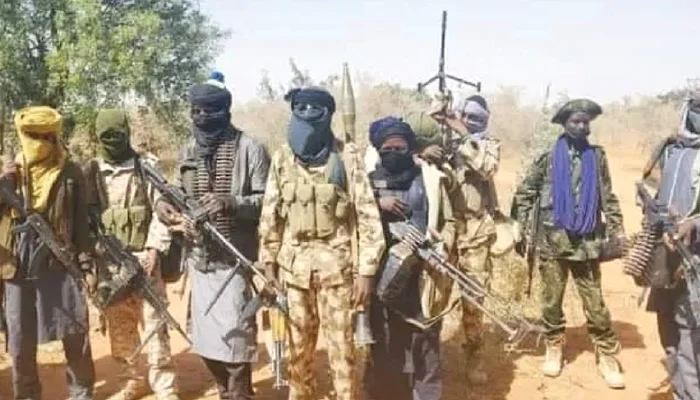
No fewer than 640 Nigerians, including schoolchildren and worshippers, have remained in captivity months after their abduction, Saturday PUNCH can report.
While the 78 schoolchildren abducted in Borno State have spent six months in their kidnappers’ den, 547 worshippers abducted in Niger State have remained in captivity for three months. Also, 15 schoolgirls abducted in the Rafi area of Niger State on October 31 have yet to regain their freedom.
The Borno schoolchildren were abducted in two separate attacks in Askira-Uba Local Government Area on May 15 and June 29, 2026.
On May 15, armed insurgents stormed Mussa Primary and Junior Secondary School, abducting 42 pupils, including reportedly two-year-old children.

Six weeks later, bandits attacked Government Day Secondary School, Lassa, while students were sitting the National Examinations Council examinations, abducting 36 students and killing two teachers.
On August 21, terrorists suspected to be members of the Lakurawa group attacked Kpenya Mosque during Friday Juma’at prayers after raiding surrounding communities, including Gidan-Zana, Sabon Gida and Masaka, in the Dekara district of Borgu Local Government Area.
Initially, the police and local officials put the number of abductees at between 60 and 80. However, community leaders later compiled and published a list of 547 abducted men, women and children, according to Al Jazeera.
The terrorists later released footage showing hundreds of captives seated in a forested area, prompting President Bola Tinubu to order the victims’ rescue.
Similarly, bandits abducted 15 Islamiyya school pupils in Tungan-Bako village, Pandogari District, Rafi Local Government Area of Niger State, on October 31, 2026.
All the victims have remained in captivity, leaving their families in prolonged anguish and uncertainty over their whereabouts and possible release.
No contact with our abducted children
Speaking with Saturday PUNCH, a parent of one of the 78 abducted Borno schoolchildren, Bura Emmanuel, said there had been no contact with either the abductors or the children.
He said neither the government nor the abductors had provided any information about the children’s whereabouts.
Bura added that the parents had continued to wait, hoping the government would rescue their children.
“As of today, we have not heard anything. Not even the government is giving us any information. We just keep our hopes hanging, believing that our children will be rescued someday by the government,” he said.
Meanwhile, the Principal of Government Day Secondary School, Lassa, John Medugu, told Saturday PUNCH that the incident had affected the concentration of other students in the classroom.
“There is still trauma. The level of concentration of our students is very low because of fear,” he said.
Medugu, however, said he was unaware whether the state government had established contact with the students’ abductors.
“For now, I’m not aware of any form of communication at all. We are praying that the government will act fast to help in rescuing the abducted students and teachers,” the principal said.
Why rescue is delayed
However, the Managing Director of Beacon Security and Intelligence Limited, Kabir Adamu, attributed the delay in rescuing the victims to difficult terrain and the porosity of the country’s borders.
He also cited political considerations, explaining that an operation could result in casualties among the victims, a risk the government might be unwilling to take, especially with elections approaching.
Speaking with Saturday PUNCH on Friday, Adamu said, “The first challenge is the environment; it is a difficult one, with difficult terrain. There are ungoverned spaces where these criminal elements occupy. When they abduct, they take their victims to these ungoverned spaces. An example is the Mandara Mountains, and then you also have the Sambisa Forest, but in this instance, I think we are dealing with the Mandara Mountains.
“The second challenge is the porosity of the border. Army Joint Task Force is divided into four sectors; Niger was manning sector four, but because of the breakdown of the relationship between Nigeria and Niger, that border zone is open. So, it allows for cross-border movement of these criminal elements in and out of Nigeria and from other countries into Nigeria.
“When you add this to the first factor, you will now see that it is very difficult and maybe impossible for Nigerian security forces to completely dominate that space and prevent the criminal activities that are ongoing in those spaces.”
Adamu said the security forces might lack the specialised equipment needed to carry out the operation with minimal collateral damage.
“The third factor is the deficit of the special equipment needed by the security forces to carry out these types of operations with very little collateral damage. There are huge psychological and emotional attachments associated with dealing with children and women, and when you are carrying out such an operation, especially with deficit of equipment, and then the likelihood of collateral damage is high.
“So, no political leader will want to approve such an operation, especially around the election period,” he added.
The security expert also blamed the lack of sustained media and public attention on the abductions for the delay.
“The failure of the media and the public to sustain a campaign that would keep the issue on the front burner of national and international discourse has reduced the political incentive for the government to prioritise operations to secure their release.
“That is not to say the government is not interested in the release of the children, but that desire to do it speedily is not there,” he said.
However, a retired Brigadier General, Bashir Adewinbi, said the delay in rescuing the victims might be politically motivated, accusing some people of seeking to embarrass the government.
He alleged that the kidnappings had been turned into a campaign instrument against President Bola Tinubu’s administration.
Adewinbi said, “The delay in rescuing the victims may not be unconnected with politics. Kidnapping and terrorism are politically motivated, just to discredit the government.
“The people behind these kidnappings want to use it as a campaign tool. We don’t love ourselves in this country. These people can go to any length, and they can play games with anything, including human lives to achieve their aims.
“The security agencies are up to the task. They are doing their best, but they are doing it against so many odds. When you want to rescue, you must plan the operation with the aim of minimising casualties. But the terrorists will devise means to make sure that the rescue will be so difficult without casualties. It requires intelligence gathering, planning, and, if possible, negotiations.”
Efforts to get an update on the rescue operation from the spokesman for the Niger State Police Command, Wasiu Abiodun, were unsuccessful, as calls to his phone did not go through.
He had also yet to respond to a message sent to him as of the time of filing this report.
Similarly, several calls to the state Commissioner of Information and Orientation, Obed Nuhu, were unanswered, while he had yet to reply to a message sent to him.
The Borno State Commissioner of Information and Internal Security, Usman Tar, also did not answer calls or respond to a message seeking an update on the government’s efforts to rescue the children on Friday.
The state Police Public Relations Officer, Nahum Daso, also did not answer calls or respond to messages sent to his phone.
Efforts to get a comment from the Director of Media Operations at the Defence Headquarters, Maj. Gen. Michael Onoja, were also unsuccessful, as he neither answered calls nor responded to a message sent to him. (Punch)
-

 Politics21 hours ago
Angry mob attacks Rarara, Tinubu’s praise singer, at National Mosque, Abuja
-
News21 hours ago
Armed Men Attack Football Legend, Segun Odegbami, Inside Abeokuta Residence
-
News19 hours ago
How to apply and qualify for FG’s fresh ₦100,000 family grant
-
African News19 hours ago
Nearly 600 women killed in South Africa within three months
-
News19 hours ago
Plan your movement: Lagos shuts major Ikeja roads for Capital City Race
-
News20 hours ago
Nigerian Judges Can’t Deliver Justice With Empty Pockets – Tinubu
-
News19 hours ago
Power generation drops to 900 megawatts
-
News1 hour ago
Lagos opens Ozumba Mbadiwe road after 33-day reconstruction