
Business
Diesel imports surge tenfold despite local refining

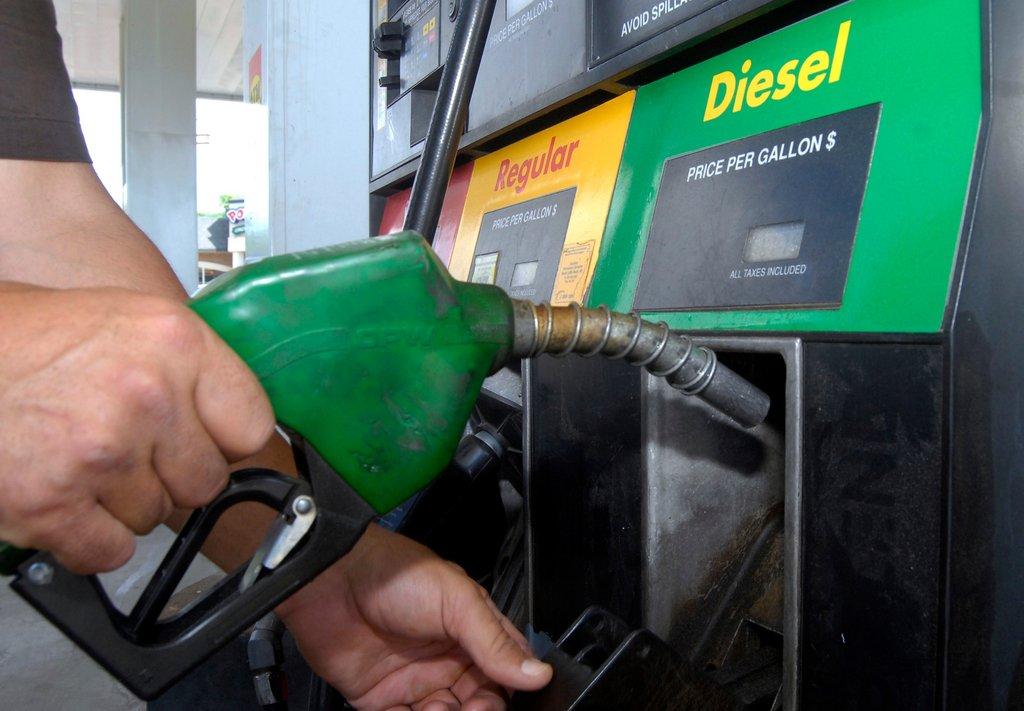
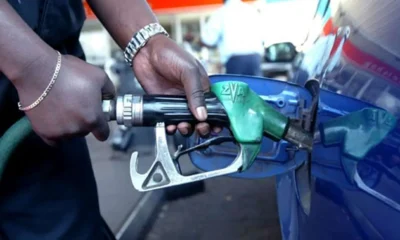
Nigeria’s diesel imports surged more than tenfold in October as the giant Dangote refinery sent over half its output abroad, forcing local fuel marketers to import foreign cargoes to meet rising domestic demand.
Data sourced from the Nigerian Midstream and Downstream Petroleum Regulatory Authority (NMDPRA) showed the country’s average daily diesel imports jumped to 6.1 million litres in October from just 600,000 litres in September, as the country relied more heavily on overseas supplies.
The increase pushed Nigeria’s average daily diesel receipts up 93 per cent to 16.8 million litres in October from 8.7 million litres the previous month, highlighting the growing importance of imports in meeting domestic demand.
Further findings showed that between October 2025 and October 2026, imported diesel accounted for an average 6.7 million litres per day, representing 39 percent of Nigeria’s total average daily diesel receipts of 17.1 million litres.

NMDPRA’s data showed imports contributed 7.7 million litres per day out of total diesel receipts of 18.9 million litres in January, representing about 41 percent of supply.
The dependence intensified in February, when imports surged to 15.9 million litres daily, accounting for nearly 64 percent of total receipts of 24.8 million litres. This was the highest monthly import contribution during the 13-month period.
Although reliance on foreign supplies eased between March and June as domestic refineries strengthened their contribution, the improvement proved temporary. Imports accounted for 7.9 million litres daily in July, representing roughly a third of total receipts of 23.6 million litres.
The pattern returned in October, when imports jumped to 6.1 million litres daily from just 600,000 litres in September, lifting their contribution to 36 percent of total receipts.
The development exposes a rising contradiction for a country that has spent years seeking to end its dependence on imported petroleum products through domestic refining led by the 700,000-barrel-per-day Dangote refinery, the continent’s largest, as its main source of fuel.
While the Dangote refinery is producing substantial volumes of diesel, its export commitments are leaving a significant share of output outside the domestic market.
The regulator said, “About half of AGO and most ATK output went to export.”
The NMDPRA’s October factsheet shows that diesel exports accounted for more than half of the refinery’s total production, compared with the 10 million litres supplied each day locally.
BusinessDay’s findings revealed Togo, Cameroon and Morocco took the largest share of refined products shipped out of Dangote Petroleum Refinery in July, as the Nigerian plant widened its footprint across West and Central Africa.
Efforts to get comments from Dangote proved abortive at the time of filling this report.
The refinery in July said it’s prioritising selling fuel abroad because it’s struggled to access foreign exchange from the central bank as well as oil from the state-owned Nigerian National Petroleum Company under a naira-for-crude arrangement.
“We are exporting as much as possible,” Devakumar V. G. Edwin, group vice president at Dangote Refinery, said in text message response to questions from Bloomberg. “We are not able to get enough dollars from the central bank, and it doesn’t make any sense to be selling the products in naira and not being able to buy dollars. We need the dollars to buy our feedstock.”
Modular refineries contribute less than 5% of daily demand
Experts said Nigeria’s dependence on imported diesel also reflects the limited contribution of smaller domestic refineries and the continued inactivity of its state-owned facilities.
The NMDPRA reported that Port Harcourt, Warri and Kaduna refineries were not producing in October, leaving the Dangote facility and modular operators to shoulder domestic refining activity.
Modular refineries supplied an average of 680,000 litres of diesel daily, up from 620,000 litres in September.
However, that volume represented only 4.9 percent of the regulator’s 14 million-litre daily diesel demand benchmark.
Performance across the modular refining segment remained uneven as WalterSmith operated at 58.10 percent capacity utilisation, while Edo Refinery exceeded its installed capacity with utilisation of 114.89 percent. Aradel operated at 30.93 percent, while OPAC recorded 24.86 percent. Duport Refinery remained shut down.
NMDPRA said that Aradel and OPAC remained “well below optimal capacity”, despite some improvements in their October performance.
“The limited contribution from these operators leaves the domestic market vulnerable whenever the country’s largest refinery directs a significant proportion of its output towards overseas customers,” a senior executive in the downstream sector told BusinessDay.
The Crude Oil Refineries Association of Nigeria said modular refineries have the capacity to supply over 10 per cent of the nation’s diesel needs but identified inadequate feedstock as a key constraint.
Eche Idoko, publicity secretary of CORAN, explained that modular refineries are hindered by insufficient crude supply.
“Any percentage at this moment is very, very important. When they said two per cent, I would contend with that figure. Our capacity is more than two per cent. We have the capacity to produce up to 10 per cent of our current diesel need, or 15 per cent, if we have enough crude supply. As I mentioned, refineries like OPAC are not even operating near their capacity yet. The reason the percentage is so low is the lack of crude feedstock,” he stated.
Diesel prices remain high
BusinessDay’s finding showed diesel prices remain elevated across major fuel depots, with Lagos prices ranging between N1,655 and N1,710 per litre, while Port Harcourt quotations climbed as high as N1,725.
In Lagos, several depots, including Ascon, Duport, Eterna, Gulf Treasure and Integrated, quoted diesel at N1,655 per litre, offering relatively cheaper supplies than Nipco at N1,680 and Rainoil at N1,670.
Prices were higher in Warri, where Edo Refinery quoted N1,705 and Nipco N1,710.
A report by the United Nations Conference on Trade and Development (UNCTAD) said Nigeria recorded the world’s highest diesel price increase, at 82.7 percent, between February and August 2026.
According to the UNCTAD report, diesel prices in Nigeria increased by 82.7 percent between February 23 and August 31, 2026, the largest increase among the countries and territories included in its comparison.
Lebanon recorded the second-highest diesel price increase at 73.6 percent, followed by Peru at 66.7 percent and Guatemala at 66.3 percent.
The report explains that although the shock to global energy markets affects countries worldwide, its effects vary depending on how higher international prices feed into domestic fuel and electricity costs.
“The shock is global, but the effects are uneven,” the report titled Trade and Development Report 2026: The Geoeconomics of Development said.
Diesel is a core input rather than a back-up for manufacturers as grid supply remains erratic, forcing many factories to run generators for the most part of the working day.
The Manufacturers Association of Nigeria (MAN) estimated that members spent N1.35 trillion on alternative energy in 2025, a 23 per cent jump from N1.1 trillion in 2024, as the rising cost of keeping factories running continues to erode resources.
Abiodun Ogunniyi, Head of Research at Iron Capital, explained that diesel and other energy costs affect virtually every stage of agricultural production, including operating farm machinery, processing produce and transporting food to urban markets.
According to Ogunniyi, higher fuel and diesel prices have increased the cost of moving agricultural produce from farms and rural markets to major consumption centres.
“Energy costs fit into everything. Tractors, farm machinery and other equipment used in agriculture run on diesel. When the prices of these energy sources increase, farmers incur higher production costs, which eventually feed into the prices of food,” he said (BusinessDay)
-

 Politics4 hours ago
Tinubu backed over 500,000 farmers with ₦450 billion in agricultural finance – Alake
-
Politics3 hours ago
Tinubu asks Masari to reconcile aggrieved APC members
-
Business17 hours ago
University dons reject fuel subsidy removal
-
Metro4 hours ago
Police must probe sexual predator Emir of Daura for molesting tourist – Amnesty
-
News3 hours ago
20 Officers Under Probe Over Escape Of Death Row Inmates In Kwara
-
News24 hours ago
Heavy Police Presence At Fountain Of Life Church Amid Leadership Crisis (Photos)
-
Politics3 hours ago
2027: Tinubu’s Northern Votes Will Shock Critics – Dalori
-
Metro4 hours ago
50 fake teachers arrested inside exam halls