
News
Tinubu misses budget deadline for third straight year

…leaves lawmakers with little time for scrutiny
President Bola Tinubu’s administration is heading into another financial year without meeting its budget preparation timetable, exposing a lack of compliance with fiscal procedures and the ability to end the practice of running overlapping budgets.
For the third consecutive year, the Federal Government has missed its September target for presenting the following year’s budget to the National Assembly, leaving lawmakers with limited time to scrutinise, debate and approve the proposed spending plan before implementation.

The delay also calls into question the administration’s commitment to restoring discipline to Nigeria’s budget process, which has been characterised by repeated extensions of previous appropriations and delays in capital budget implementation.
Section 81(1) of the 1999 Constitution, as amended, provides for the presentation of annual revenue and expenditure estimates to the National Assembly.
It states: “The President shall cause to be prepared and laid before each House of the National Assembly at any time in each financial year estimates of the revenues and expenditure of the Federation for the next following financial year.”
Although the Constitution does not prescribe a specific month or date for the presentation, it requires the President to submit the estimates within the financial year preceding the one for which the budget is being prepared.
The Fiscal Responsibility Act (FRA) 2007 also establishes a statutory timetable for preparing the Medium-Term Expenditure Framework (MTEF), which provides the foundation for the annual budget.
Section 11(1)(b) requires the Federal Government, after consultation with the states, to prepare an MTEF covering the next three financial years not later than four months before the commencement of the following financial year.
Section 18(1) further provides that the framework shall form the basis for preparing the revenue and expenditure estimates to be submitted to the National Assembly under Section 81(1) of the Constitution.
The September 2026 budget submission target was also expressly communicated by the Budget Office of the Federation in its September 4 budget call circular to Ministries, Departments and Agencies (MDAs).
The circular stated: “As you are aware, the 2027-2029 draft Medium-Term Expenditure Framework and Fiscal Strategy Paper was concluded by July 2026 in line with the Fiscal Responsibility Act 2007 to facilitate the submission of the 2027 Budget to the National Assembly by September 2026.”
The government subsequently directed MDAs to submit their 2027 personnel budget proposals by September 18, ahead of the planned presentation.
However, September passed without the proposed budget being laid before the National Assembly.
The delay comes amid persistent disruptions to Nigeria’s budget calendar, with the Tinubu administration struggling to restore a predictable January-to-December budget cycle.
It also compounds the challenges associated with implementing previous appropriations, as capital projects and allocations from one financial year continue to spill into subsequent years.
President’s promise to end overlapping budgets
The missed deadline also undermines Tinubu’s December 2025 pledge to end the practice of operating multiple budgets simultaneously and establish a single budget backed by a single revenue cycle.
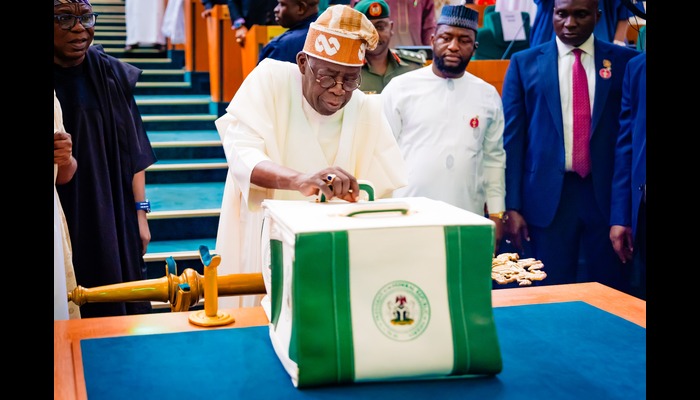
Presenting the N58.18 trillion 2026 budget to a joint session of the National Assembly on December 19, 2025, the President announced what he described as a reset of the country’s budget implementation system.
He pledged to end the practice of running multiple budgets and ensure that the government operates a single budget without overlapping appropriations.
“We are terminating the habit of running three budgets in one inflow. By March 31, 2026, all capital liabilities from previous years will be fully funded and closed.
“From April, Nigeria will operate on a single budget backed by a single revenue cycle — no overlaps, no excuses, no rollovers,” Tinubu declared.
However, subsequent developments have exposed the difficulty of delivering on that commitment.
In September 2026, the National Assembly approved a fourth extension of the capital component of the 2025 Appropriation Act, moving its implementation deadline from September 30 to December 31, 2026.
President Tinubu signed the amendment into law on September 30, allowing the 2025 capital budget to remain in operation throughout the 2026 financial year alongside the 2026 Appropriation Act.
Originally scheduled to expire on December 31, 2025, the 2025 capital budget had previously been extended to March 31, 2026, then June 30 and subsequently September 30 before the latest amendment.
Defending the extension, Senate Leader Opeyemi Bamidele said it would provide additional time to complete funded capital projects and critical national infrastructure already under construction.
The President also argued that the extension would allow MDAs to complete ongoing projects and ensure that appropriated funds were put to use.
However, the repeated extensions have sustained the very budget overlap Tinubu had promised to eliminate.
The situation complicates fiscal accountability, as government agencies must manage expenditure commitments from different budget years while preparing and implementing new spending plans.
It also makes it harder to assess budget performance, particularly where projects are repeatedly carried forward without clear evidence of completion or corresponding improvements in public infrastructure.
Nigeria’s budget implementation challenges have persisted for years, with capital projects frequently extending beyond their original fiscal periods.
The latest extension is particularly significant because it gives the capital component of an appropriation originally intended for one financial year an additional 12 months for implementation.
It also raises questions about the capacity of government agencies to execute approved capital projects within their stipulated timelines and whether budget releases are translating into completed infrastructure.
The World Bank has similarly highlighted the importance of improving budget credibility and execution to ensure that public expenditure delivers measurable economic and development outcomes.
Late budgets weaken legislative oversight
Vahyala Kwaga, Country Director of BudgIT, said the administration’s repeated failure to follow established fiscal procedures had become a defining feature of its approach to public financial management.
He said the delays reflected insufficient regard for established laws and procedures, with the government increasingly relying on reactive approaches to budget preparation and implementation.
“Lack of organisation has become a feature of this administration. It shows that the administration pays very little regard to established laws and procedures and is more comfortable with ad hoc, sort of reactive approaches to budgeting and public finance,” Kwaga said.
He described the delayed submission of the MTEF to the National Assembly as particularly troubling because it denied lawmakers the opportunity to understand the government’s fiscal direction before considering the annual budget.
According to him, the late submission of both the MTEF and annual budget places the legislature under pressure to scrutinise government spending proposals within a shortened period.
“So, in addition to late presentation of the budget, we have late presentation of the Medium-Term Expenditure Framework. And this particularly means that the Executive is responsible for the National Assembly’s inability to comprehensively assess the budget,” he said.
Kwaga said the delays effectively left lawmakers with little room to conduct a thorough review of the government’s spending proposals.
“This gives them very little time. The National Assembly is again being pushed into a corner by the Executive, basically railroaded into currently, in a rushed manner, reviewing the budget,” he said.
Beyond legislative oversight, he said the delays also restricted opportunities for citizens to participate meaningfully in the budget process.
The limited time available for lawmakers to consider spending proposals makes it difficult for citizens, civil society organisations and other stakeholders to examine government priorities and contribute to the process, he said.
Kwaga urged citizens to demand accountability from their elected representatives, particularly members of the Senate and House of Representatives, over the failure to maintain a predictable budget calendar.
Borrowing weakens impact of public spending
Akin Ogunsola, an economic analyst and Lead Consultant at Karma Professional Service, said repeated delays in budget presentation and implementation reflected a lack of fiscal discipline, with negative implications for economic growth and the delivery of public services.
He said the government’s continued reliance on borrowing to finance successive budgets, combined with delays in implementation, had weakened the impact of public expenditure on the economy.
Ogunsola noted that although some macroeconomic indicators might suggest improvements, many Nigerians were yet to experience the benefits in their daily lives.
“All the budgets that they have been pulling out have been deficits, trying to borrow, increasing the borrowing of the nation. So, the implication of all this on the economy, on the growth of the Nigerian economy, has been so negative,” he said.
He argued that delays in presenting annual budgets disrupted the entire implementation process, beginning with legislative consideration and approval.
“The government is not disciplined in terms of budgetary presentation and also implementation. Once there is a law that says that you should present a budget four months to the commencement of the year you want to budget for, I think government should be disciplined enough to obey that law,” he said.
Ogunsola said the consequences also extended to the government’s ability to account for public expenditure at the end of each financial year.
Lawmakers seek constitutional changes
Amid recurring delays in budget presentation, some lawmakers have proposed constitutional amendments to establish definite timelines for submitting annual estimates and strengthen legislative accountability.
In November 2024, Ikenga Ugochinyere, a member of the House of Representatives representing Ideato North/Ideato South Federal Constituency of Imo State, sponsored a private member’s bill seeking to amend Sections 67 and 81 of the 1999 Constitution.
The proposal sought to require the President to appear before each chamber of the National Assembly annually to present an account of his stewardship before submitting the following year’s budget estimates.
It also proposed that lawmakers dissatisfied with the President’s performance could pass a vote of no confidence and commence impeachment proceedings.
Although the proposal did not establish automatic impeachment as a consequence of missing a budget deadline, it sought to strengthen legislative accountability by linking the annual budget presentation to an assessment of the President’s stewardship.
The bill passed its first reading in November 2024.
Separately, in October 2025, the House of Representatives passed for second reading another constitutional amendment bill seeking to establish a definite timeline for presenting annual budgets.
Sponsored by Deputy Speaker Benjamin Kalu, the bill seeks to amend Sections 81 and 121 of the Constitution to require the President and state governors to present their annual budget estimates not later than the last working day of September each year.
Nkemkanma Kama, who led the debate on the bill on behalf of the Deputy Speaker, said the proposal was intended to address recurring delays in budget presentation and strengthen fiscal discipline.
The bill also proposes that audited financial statements for the preceding three years be submitted alongside annual budget estimates, enabling lawmakers to assess government expenditure and performance before approving new spending plans.
Both bills were subsequently referred to the House Committee on Constitutional Review for further legislative consideration. However, there has been no further update on their status. (BusinessDay)
-

 News21 hours ago
I embellished story of tapping NSA Ribadu’s phone to inflict pain on Tinubu govt – El-Rufai
-
Politics3 hours ago
2027: Bulletproof vehicles in demand amid campaign attacks
-
News3 hours ago
NDLEA busts N304bn meth Lab in Enugu, arrests five Mexicans
-
Business3 hours ago
Naira weakens to N1,455/$ as reserves shed $108m
-
Politics3 hours ago
2027: Give Me Imo, Kwara, I’ve Delivered Rivers, FCT – Wike Tells Tinubu
-
News3 hours ago
FG spends N4.17tn on capital projects, MDAs get zero funding
-
News21 hours ago
Katsina traditional rulers barred from hosting foreigners without govt clearance after Daura emir grabbed tourist’s breast
-
News3 hours ago
IGP reverses police decision to declare Obaigbena, Nestoil chair, Sahara Group ED, others wanted