
News
N78.8b cash transfer queries spark legal battle at ECOWAS Court

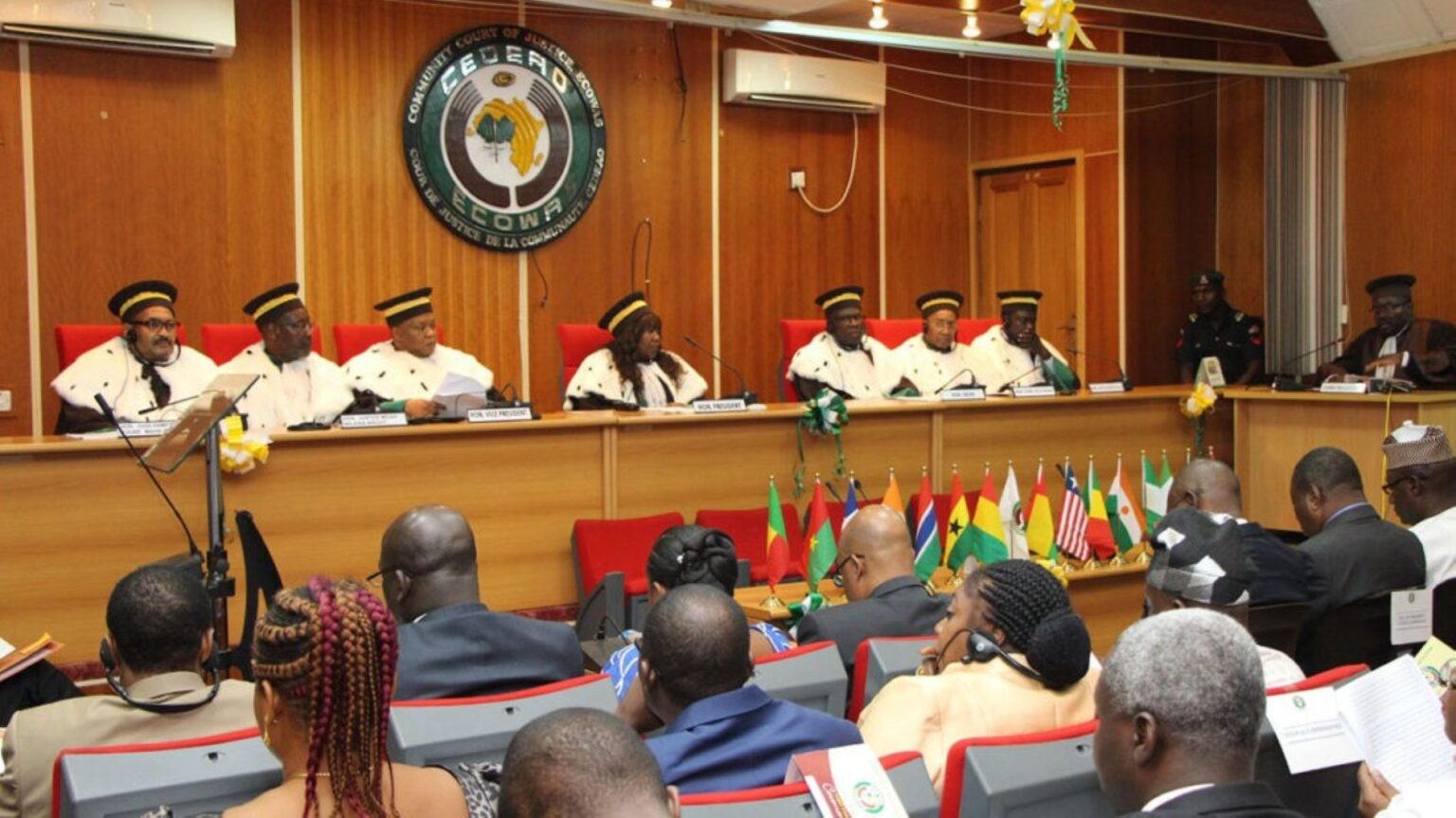
The Socio-Economic Rights and Accountability Project (SERAP) has taken the Federal Republic of Nigeria before the Community Court of Justice of the Economic Community of West African States (ECOWAS), challenging what it describes as the government’s failure to account for more than ₦78.8 billion connected with federal cash-transfer and social-protection programmes.
The suit, numbered ECW/CCJ/APP/42/26, is based principally on findings contained in the Auditor-General for the Federation’s 2024 Annual Report, published on August 7, 2026.
The report raised questions about financial-management practices and transactions involving federal institutions, including the National Cash Transfer Office (NCTO) and the National Social Safety Nets Coordinating Office (NASSCO), covering periods between January 2023 and December 2024.
SERAP argues that the issues extend beyond accounting procedures to the government’s responsibility to ensure that public resources earmarked for economically vulnerable people are properly managed and applied to their intended purposes.

More than 3.2 million households across 35 states were reportedly covered by the programmes.
The allegations, however, remain audit queries and claims of inadequate accountability. They do not, by themselves, establish that the entire amount was stolen, that all intended beneficiaries were denied assistance or that any particular person committed a crime.
SERAP says it is not asking the court to determine criminal guilt on the basis of an audit query. Rather, it wants the court to examine whether Nigeria has adequately safeguarded the funds, investigated the identified deficiencies and taken effective corrective measures.
One of the principal concerns relates to approximately N33.751 billion reportedly transferred in 2023 to 3,295,207 households across 35 states.
According to the audit findings cited by SERAP, adequate records were not produced to authenticate the payments and reconcile them with the relevant beneficiary records.
The concern is whether the authorities can provide a verifiable trail showing the amounts disbursed, the intended recipients, payment authorisations and evidence that the transactions were properly reconciled.
For a programme involving millions of households, such records are essential.
Without them, auditors and oversight authorities may be unable to establish conclusively whether the money reached eligible recipients, whether the correct amounts were paid or whether discrepancies occurred during implementation.
SERAP wants the government to produce the relevant beneficiary information, payment records, verification documents, authorisations and reconciliation records. It also seeks an explanation for the absence of relevant REMITA records identified in the audit findings.
Another major component is approximately N36.744 billion in payments reportedly made without prepayment audits.
Such audits are intended to establish whether proposed payments satisfy applicable requirements before funds are released. Their purpose is to identify irregularities early rather than leave the government to discover problems after disbursement.
The absence of the required checks does not automatically establish that every payment was improper.
It nevertheless raises questions about whether financial safeguards were observed and whether the transactions can be independently verified.
The Auditor-General also questioned N4.616 billion in expenditure for which supporting documents were reportedly not provided.
Other items identified in the application include approximately N350.182 million in enrolment payments, N89.511 million relating to store purchases and N17.422 million in diesel advances.
The application further identifies financial and control deficiencies relating to NASSCO, including questioned expenditure of approximately N2.553 billion.
Taken together, these figures form the basis of SERAP’s claim that more than N78.8 billion in expenditure associated with cash transfers and social protection requires adequate explanation and investigation.
The circumstances surrounding each transaction, explanations from the relevant institutions and the outcome of any subsequent investigation will be important in determining whether the issues involve documentation failures, breaches of financial procedures, actual losses or other irregularities.
An audit query is a demand for clarification and accountability, not a final judicial finding of wrongdoing. But the distinction does not diminish the need for answers, particularly when the funds are intended to protect households against poverty and economic hardship.
The case places vulnerable households at the centre of a debate that might otherwise remain confined to government accounts and administrative procedures.
Cash-transfer programmes are designed to provide financial assistance to eligible households, helping them meet immediate needs and cope with economic difficulties.
SERAP is bringing the case in the public interest rather than as a group of individually named beneficiary households. Its argument is that the government’s responsibility does not end with establishing a programme, allocating funds or announcing a beneficiary target; the state must also maintain systems for identifying eligible recipients, authorising payments, keeping accurate records, reconciling transactions, monitoring expenditure and investigating discrepancies.
Where those systems fail, the authorities must establish what happened and take appropriate corrective action.
If an eligible household is wrongly excluded, an intended payment does not arrive or public resources are lost before serving their intended purpose, the programme’s effectiveness may be compromised.
However, the audit findings cited in the suit do not establish that every household covered by the programme failed to receive assistance nor do they establish that all the questioned funds were diverted or lost.
The central issue is whether the government can produce reliable evidence showing how the money was administered and whether any identified deficiencies affected beneficiaries’ access to the assistance for which the funds were allocated.
SERAP is consequently seeking a comprehensive account of the expenditure and measures to ensure eligible households are not deprived of benefits because of financial mismanagement or inadequate controls. It also wants remedies for people whose rights are established to have been adversely affected.
SERAP’s principal legal argument is that public financial accountability can have direct implications for the enjoyment of human rights.
The application relies on Article 9 of the International Covenant on Economic, Social and Cultural Rights (ICESCR), which recognises the right to social security.
SERAP argues that the right encompasses more than the formal existence of a social-welfare programme. It also requires reasonable measures to protect resources allocated to the programme and ensure eligible beneficiaries can access the assistance provided for them.
The organisation also invokes Article 11 of the ICESCR, which recognises the right to an adequate standard of living, including adequate food, clothing and housing.
Its position is that cash transfers may form part of the government’s efforts to help economically vulnerable people secure basic necessities. If substantial resources intended for that purpose are not properly accounted for or delivered, and the government fails to take effective corrective action, the circumstances may engage the right to an adequate standard of living.
The application further relies on Article 22 of the African Charter on Human and Peoples’ Rights, which recognises the right of all peoples to economic, social and cultural development.
SERAP argues that the right to development cannot be separated from the administration of public resources allocated to welfare and social protection.
It also cites Article 1 of the African Charter, which requires states to recognise the rights protected by the Charter and adopt measures to give effect to them.
According to SERAP, reasonable administrative, financial and accountability mechanisms are among the measures required to protect resources allocated to the fulfilment of those rights.
The application does not contend that every accounting irregularity automatically amounts to a human-rights violation. Rather, SERAP wants the court to consider the audit findings alongside the government’s response, the population intended to benefit, the adequacy of investigations and corrective measures, and any established impairment of protected rights.
The court would therefore have to assess whether the alleged failures are sufficiently connected to the rights invoked to justify the declarations and orders sought.
SERAP’s case also draws on Article 9 of the United Nations Convention against Corruption (UNCAC), which addresses transparency and accountability in public financial management.
The provision concerns measures relating to public budgets, expenditure reporting, accounting and auditing systems, risk management and internal controls.
SERAP argues that these obligations are relevant to the audit findings on payments made without prepayment audits, expenditure unsupported by adequate documentation and transfers that could not be sufficiently authenticated or reconciled.
It maintains that where such deficiencies are identified, the government should establish what happened, determine whether public funds were lost or improperly spent, remedy any established loss and strengthen the systems that failed.
The organisation is not asking the ECOWAS Court to determine criminal liability under UNCAC. It relies on the convention as a framework for assessing whether Nigeria has taken appropriate measures to ensure accountability and sound management of public resources.
The application also cites Article 21 of the African Charter, which protects peoples’ rights over their wealth and natural resources and provides for lawful recovery in cases of spoliation.
The provision principally concerns wealth and natural resources; not every instance of public financial mismanagement constitutes spoliation. SERAP invokes it as a supporting argument where evidence establishes that public resources have been diverted or withheld from their intended public purposes.
The organisation further cites academic works by Kolawole Olaniyan, including Corruption and Human Rights Law in Africa, published in 2014, and Ownership of Proceeds of Corruption in International Law, published in 2023.
The works are relied upon as persuasive authority on the relationship between corruption, human rights, public resources, accountability and effective remedies.
The broader argument is that public financial management is not merely a technical concern for accountants and auditors. Where resources are allocated to programmes intended to advance protected rights, the mechanisms for safeguarding those resources may also engage the state’s human-rights obligations.
Before filing the suit, SERAP says it issued a public statement and wrote to President Bola Tinubu and relevant authorities on September 5, 2026, seeking action on the Auditor-General’s findings.
It requested an account of the questioned expenditure, publication of relevant audit trails, investigation of the transactions and recovery of any public funds established to have been improperly spent or diverted.
It also sought appropriate action, in accordance with due process, against persons whose responsibility could be demonstrated by admissible evidence.
The letter requested records relating to the reported N33.751 billion in transfers, including beneficiary information, payment and verification records, authorisations and reconciliation documents. SERAP also sought an explanation for the absence of relevant REMITA records identified in the audit findings.
According to the application, the period allowed for government action elapsed without sufficient measures being taken to address the concerns.
The available material does not establish the full nature of any government response or provide the outcome of a completed investigation into the transactions.
Several questions therefore remain: Have the relevant agencies reconciled the payments with verified beneficiary records? Can they account for expenditure for which supporting documents were not provided? Were the required prepayment audits conducted at any stage? Has any money been recovered, and has anyone been held responsible following due process?
The answers will matter to the litigation and public confidence in social-protection programmes.
SERAP is therefore seeking a declaration that failures to safeguard, verify and account for public funds allocated to cash transfers and social protection are incompatible with Nigeria’s international human-rights obligations where those failures impair, or risk impairing, access to intended benefits.
It wants the court to direct the Federal Government, through the relevant ministries, departments and agencies, including NCTO and NASSCO, to provide a comprehensive and verifiable account of the questioned funds.
The account would include payment records, beneficiary details, verification documents, authorisations, reconciliations and other relevant financial records.
The organisation is also seeking a prompt, thorough, independent and effective investigation into the irregularities identified by the Auditor-General.
Where evidence establishes that public funds were improperly spent, diverted, misapplied or lost, it wants the money recovered and remitted to the appropriate public treasury.
It is further seeking appropriate administrative, civil or criminal action, subject to due process, against any official, contractor, beneficiary, intermediary or other person whose responsibility for an established irregularity is demonstrated by admissible evidence.
Other proposed orders would require stronger safeguards for cash-transfer and social-protection programmes, including improved beneficiary identification and verification, payment authorisation, prepayment audits, financial record-keeping, reconciliation, monitoring, internal controls and independent oversight.
SERAP also wants measures to ensure eligible households do not lose access to assistance because of financial mismanagement or inadequate controls. It seeks the publication of sufficient information about investigations, accounting, recoveries and remedial measures, subject to legitimate privacy, security and other legal protections.
Finally, the organisation wants effective remedies for people whose rights are established to have been adversely affected and a perpetual injunction restraining disbursements without adequate safeguards. (Guardian)
-

 Politics4 hours ago
2027 alliance: Atiku or Obi?
-
Business4 hours ago
Dry Season: Farmers Face Rising Cost Of Cultivation, Insecurity
-
News4 hours ago
Schoolchildren battle killer heat
-
News4 hours ago
UK rejects 84% Nigerian student visa interviewees
-
Politics4 hours ago
Furore over ‘rig and die’ slogan
-
Politics4 hours ago
Election Riggers Should Not Be Killed – Fashola
-
Politics4 hours ago
You Can’t Win Sympathy Through Blackmail – Kano Govt Replies Kwankwaso
-
World News4 hours ago
English village votes to break away from UK