
Business
Dry Season: Farmers Face Rising Cost Of Cultivation, Insecurity

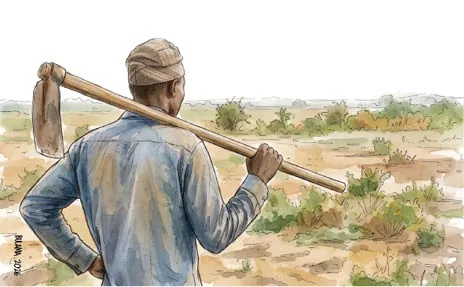
As wet season comes to an end, dry season farming activities have begun in most production areas across the North.
Across Taraba, Kano, Kaduna, Plateau, Katsina and other places, irrigation farmers are weighing rising cost against falling prices, insecurity against survival and many are deciding to farm less or not at all.
For millions of farmers in northern Nigeria, this is the moment that matters most. However, this year, farmers are facing soaring cost of production.
Irrigation farmers rely heavily on fuel to water their farms, but with petrol selling between N1400 and N1500 per litre and diesel selling above N1,900, along with the high cost of fertiliser, agrochemicals, farmers are facing tough choices.

Findings by Weekend Trust across Taraba, Kano and Katsina states found a farming communities caught between hope and exhaustion as the cost of everything has gone up: fuel, fertiliser, seeds, labour, pumps, solar panels, even the rent on farmland. But the price farmers get for what they produce has refused to keep pace. Many people harvested plenty last season, only to sell at a loss.
Some farmers told Weekend Trust that they had abandoned irrigation farming completely, while others cut their farm sizes or hired out portions of their land to those who can still afford to cultivate. However, few are still pushing ahead, driven not by profit but the simple need to put food on the table.
Our correspondent reports that since the end of the Muhammadu Buhari regime, the food production system has been strained.
Many stakeholders warned that if dry season farming failed, the consequences would not be felt only on the farm; whey would be felt in the market, especially in the prices of rice, onions, tomatoes and pepper, as well as the food security of millions of Nigerians.
Irrigation demands more cash
Dry season farming is different from wet season farming because the farmer has to provide the water, which is very essential for the survival and growth of his crops. This makes irrigation farming very costly.
However, farming in the dry season gives farmers more control over their crops. This can make farming more rewarding as crops grown in the dry season usually give better yield and sometimes have better markets.
But this year, the arithmetic is not working for many dry season farmers.
Irrigation farmers need a pump, which can run on fuel or solar power. They also need fuel, solar panels, pipes and people to work on the farm. This includes tasks like clearing land, leveling it, transplanting crops, weeds control and harvesting. The farmers also need fertilisers to help crops grow, as well as herbicides and pesticides to keep pests away.
When anyone of those costs spikes, the whole calculation collapses.
Farmers across three states told our correspondents the same story of spending more than they earned since 2024; hence many are scaling back on production.
Many of them told Weekend Trust that the losses they incurred last wet season were the final straw. They had borrowed, invested, laboured, harvested but watched prices fall at harvest time when everyone was selling. The money they had hoped to reinvest in dry season farming was gone.
In Taraba State, the mood among irrigation farmers is sombre. The state is blessed with vast and fertile irrigation fields, stretching hundreds of kilometres in Karim-Lamido, Lau and Gassol local government areas. Every year, those fields attract thousands of farmers from different parts of the country. This year, many of them have not come.
A survey by Weekend Trust found that high cost of production and poor price of paddy rice forced many farmers to opt out of irrigation farming this year. Others reduced the scope of their activities because of losses they encountered during wet season harvest.
Yahaya Mafindi, an engineer and large-scale farmer, as well as one of those who stopped farming said: “I stopped irrigation farming because there is no profit. In most instances, you will hardly realise the amount you invested when you harvest your rice.”
Mafindi explained that dry season rice farming was capital-intensive. According to him, to cultivate two hectares of rice, a farmer needs four solar water pumps, with three solar panels attached to each pump. In addition to that, he must pay for land preparation, fertiliser, chemicals and labour, as well as transportation to and from the farm. But when harvest comes, the reward is often disappointing, he added, saying that during the last harvest, a bag of paddy rice was sold between N24,000 and N28,000.
“By the time you sell your produce and calculate the amount you invested and the proceeds, you will discover that you did not recover the money you invested,” he said.
Mafindi’s experience is not unique. It is the story of many farmers who have discovered that producing more does not always mean earning more, especially when the market is flooded at harvest and middlemen dictate prices.
In Karim-Lamido, Alhaji Sale Binnare, another large-scale farmer, said two key factors forced many farmers to either abandon irrigation farming or reduce their activities: losses from the last harvest and insecurity.
According to him, farmers normally reinvest the proceeds of their wet season harvest into dry season farming, but because many suffered losses this year, they no longer have enough capital to start again.
The second factor, he said, was the recent killing at Binnari, which is located close to the irrigation fields. That incident has discouraged people, especially those who used to come from other states for irrigation farming.
“I decided to reduce the scope of my irrigation farming to avoid losing my capital,” Binnare explained.
He gave a breakdown of how cost of implements had risen. For example, a solar water pump with six solar panels, which sold at N450,000, is now N600,000. The smaller set with three solar panels, which sold at N350,000 last year, is now N430,000. A petrol-powered water pump that sold at N110,000 now costs N130,000, while a litre of petrol sells at N2,000 at irrigation fields.
“Despite the production cost, many people would have engaged in irrigation farming this year, but the number declined due to insecurity and cost of production.
“We have vast and fertile irrigation fields covering hundreds of kilometres in Karim-Lamido Local Government Area, which attract thousands of farmers from different parts of the country annually. But combined factors, including insecurity, cost of production, poor price of paddy rice and lack of incentive from government, have forced many farmers to abandon irrigation farming,” he said.
At Sheka irrigation fields in Gassol Local Government Area, Ibrahim Sheka said farmers from other states had started coming, but their number declined compared to previous years.
He said solar water pumps were the best option compared to petrol-powered pumps because they eliminate the daily cost of fuel. But the initial cost is a major barrier, especially for smallholder farmers.
He explained that farmers cultivating four to eight hectares needed over N2 million to purchase solar water pumps, with one set costing N800,000, with six solar panels.
“In the first year, a farmer hardly recovers his investment. In such situations, first-time farmers would abandon irrigation farming,” Sheka noted, adding that he also decided to reduce his farming activities because of his own experience.
He also said: “Last year, I produced over 500 bags of paddy rice. During harvest, a bag cost only N27,000. When I calculated the proceeds, I discovered that I did not make any profit.”
But not everyone in Taraba is giving up. Mallam Halilu Zip, also in Karim-Lamido, said he had started preparation for irrigation farming despite the losses of past years.
He said there was good indication that the price of paddy rice would be better this year.
“Currently, the price of a 100kg bag of paddy rice is N30,000, and there is good hope that it would be produced from irrigation farms and the price would rise. That is why I want to embark on irrigation farming this year,” he said.
Halilu acknowledged that the prices of farm inputs, including fertiliser, water pumps and petrol, as well as labour were high. He, however, believes the potential for a good price makes the risk worthwhile.
The chairman of the Rice Farmers Association in Taraba State and a large-scale farmer, Tanko Bobbo Andami, said irrigation farmers used petrol and diesel for their water pumps, and the prices of both are high.
According to him, most irrigation farms in the state are located in remote areas where there are no filling stations; hence farmers either travel long distances to buy petrol or rely on black marketers, who also increase prices, leading to additional cost.
“These and other factors discourage hundreds of people from engaging in irrigation farming this year in Taraba State,” Andami said.
Kano farmers adopt new strategy
Despite the challenges facing irrigation farming, including recording post-harvest losses during the last season, many farmers in Kano State have started cultivating this dry season. They are encouraged by an increase in the prices of maize, rice, beans and onions. For example, a 100kg bag of maize has risen to N50,000 from N25,000 last season, a situation that has given farmers the hope that this season may be different.
Abubakar Sani, a farmer in Bunkure town, who is confident of a bumper harvest said, “A farmer is a risk-taker. Post-harvest loss should not always discourage him from farming again. Farming activities are not necessarily for commercial or profit purposes but for sustaining livelihoods.”
On the rising cost of fuel and other inputs, Sani explained that water released from the Hadejia-Jamaare River Basin Authority reached his farm in Bunkure Local Government Area, for which he pays N30,000 for the whole dry season.
According to him, the water has saved him the cost of buying fuel to pump water to his farmlands, which stretch on over five hectares, and which he rents at N25,000 per hectare.
Sani also said he incurred losses during the last farming season after investing nearly N1 million in wheat and sweet potato. To avoid a repeat of that loss, he decided not to plant wheat this dry season.
“Because of the loss I recorded, this dry season I am only planting onions, tomato and sweet potato. We are confident that it will be a different experience this time. We cannot say that because we suffered last year we won’t farm this year. No. This year may turn out to be different, with farmers achieving success. And even if there is no profit, one will at least have some food to take home,” he said.
Sani’s decision to switch crops is strategic. Onions, tomato and sweet potato mature faster than wheat, have strong local demand and can be sold in stages rather than all at once at harvest. They are also less dependent on the cold harmattan weather that wheat needs to thrive.
Another farmer and the Kano State chairman of the National Tomato Growers, Processors and Marketers Association of Nigeria (NATPAN), Alhaji Sani Danladi Yadakwari, also said that anyone who failed to return to his farm this dry season was not a real farmer but a newcomer. He noted that he and many other farmers had already begun planting onions and tomatoes.
Yadakwari however admitted that most farmers would not plant wheat this season because of previous losses and the realisation that the cold weather conditions favourable to wheat are absent. Instead of planting wheat, he said most farmers would grow rice after harvesting onions and tomatoes.
He said: “As I speak, we have completed planting onions and tomatoes on my farm. Rice will be planted much later. Majority of our farmers will not grow wheat largely because it needs cold harmattan weather conditions to give you good yield, which we do not have at the moment. We also realise that it is better to plant rice after harvesting perishables like onions and tomatoes.”
The strategy allows farmers to earn quick income from perishables, then use the same land and residual moisture for rice, spreading risk across two harvests instead of betting everything on one crop.
However, Ibrahim Rufai, another farmer, said most farmers were discouraged from returning to their farmlands this dry season following losses recorded and the low price of farm produce in the market, with production cost likely to double on account of rising fuel cost, which is currently selling at nearly N1,400 per litre in Kano.
Rufai said some farmers like him were using solar-powered pumping machines because of the rising fuel cost, but many farmers are unaware of this development or cannot afford it.
He warned that if the prices of farming inputs like fertilisers and seeds continued to rise, many farmers would abandon the occupation to look for something else because they hardly recouped their investments and energy after harvest.
His warning is a reminder that resilience has limits. Farmers can absorb one bad season, perhaps two, but repeated losses without support will eventually push even the most committed out of farming, especially young farmers who have other options in towns and cities.
Speaking on the dilemma of farmers as the dry season farming season commences, the project coordinator of the Kano State Agro-Pastoral Development Project (KSADP), Alhaji Ibrahim Garba, said farmers in Kano had resilience to post-harvest shocks, expressing confidence that they will engage in dry season farming.
“I am pretty sure that farmers will crop their farms this dry season. Our farmers are consistent; they are resilient to all farming shocks,” Garba said.
That confidence is rooted in Kano’s long history as a centre of irrigated agriculture in northern Nigeria. From the Kano River Irrigation Project to the Hadejia-Jamaare Basin, the state has some of the most developed irrigation infrastructure in the country. But infrastructure alone is not enough if inputs are unaffordable and markets are unfavourable.
Smaller farms, bigger worries in Katsina
In Katsina State, dry season farming season has already commenced, but not without serious fear of the unknown due to several factors, ranging from high cost of labour, seeds, fuel and other agricultural inputs.
Hafizu Sani, a dry season farmer in Charanchi Local Government Area, said although the season offered farmers an opportunity to cultivate crops such as rice, wheat, vegetables, onions and tomatoes, the major concerns are whether farmers can overcome the economic and other challenges confronting the agricultural sector.
He explained that farm hiring, labour fees and petrol had gone up to a level that only a few farmers can afford to operate fully on their farms, a situation that has a multiplier effect on dry season production.
“A tin cup of onion seeds is now selling at N17,000 as against the initial price of N6,000 to N8,000. Labour has also increased by 100 per cent. To water an acre, one needs six to eight litres of fuel per day. You can imagine what it costs a farmer to produce on several hectares,” he said.
Another farmer, Yusuf Idris of Funtua Local Government Area, said many dry season farmers in the area resorted to reducing their farm sizes because their finances could not cover their initial production capacity. According to him, many have either hired out some portion of their farms or decided to leave them fallow this year, adding that the situation is frightening.
‘Why we should worry’
Speaking on the situation, an agricultural economist, Moses Ashanye Ombugus warned that supply would naturally fall when farmers cut production; and families that already spent a large share of their income on food are hit the hardest. And the poor, the urban dweller, students and civil servants all feel the effect, even if they never set foot on a farm.
Ombugus said the current situation also exposed three structural weaknesses in Nigeria’s agricultural system, including cost of energy. Whether it is petrol, diesel or solar, energy is the lifeblood of irrigation farming, he noted; hence irrigation becomes a luxury when fuel prices rise or solar panels become unaffordable. According to him, until energy becomes cheaper and more accessible, dry season farming will remain precarious.
He said solar pumps offered a way out as it eliminated daily fuel cost and freed farmers from black marketers. “But the upfront cost, which ranges from N430,000 to N800,000 for a set is beyond the reach of most smallholders without credit or subsidy.
“The irony is that the technology that could save farmers some money is too expensive for them,” he noted.
The agricultural economist listed the second problem as cost of inputs and the price of outputs. He said, “Farmers are squeezed from both ends. Inputs, seeds, fertiliser, chemicals, labour among others are rising fast, but the price of paddy rice, wheat, vegetables are either stagnant or falling at harvest when everyone sells at once.”
He also said the third problem is the absence of support and security, adding that farmers repeatedly mentioned insecurity and lack of government incentive as reasons for abandoning farming.
Ombugus said although none of these problems is new, they created a tipping point this dry season.
Many farmers told our correspondents across the states that what they are asking for are affordable inputs, access to credit, stable and fair prices, security in farming communities and support that extends to the dry season, not just the wet season.
The farmers said they wanted timely access to fertiliser and seeds at controlled prices. They are also seeking affordable fuel, guidance from extension workers on selecting crops, planting schedules, and efficient water management. They want a market structure to ensure profitability and construction of storage facilities to minimise post-harvest losses. The government, in turn, should avoid policies that undermine local farmers with cheap imports.
FG orders 3m bags of fertiliser
Last week, Vice President Kashim Shettima, during a meeting with agric stakeholders at the Presidential Villa, instructed government agencies and stakeholders in the fertiliser sector to expedite the production and distribution of more than three million bags to farmers in preparation for dry season farming.
This order came after President Bola Tinubu approved funding under the Renewed Hope Agricultural Stabilisation and Productivity Initiative aimed at making fertiliser more affordable, enhancing food production and revitalising the country’s blending industry.
During the meeting, the Fertiliser Producers and Suppliers Association of Nigeria (FEPSAN), said the current supply of raw materials could facilitate the manufacture of approximately three million bags of NPK fertiliser within a short timeframe.
Shettima further instructed the Office of the National Security Adviser (ONSA) to inspect and monitor fertiliser stocks reported by various parties to maintain transparency and responsibility. He emphasised the need for the office to ensure that farmers in regions experiencing security issues were not left out of the distribution process, especially those in sensitive and rural areas.(Daily trust)
-

 Politics4 hours ago
2027 alliance: Atiku or Obi?
-
News4 hours ago
N78.8b cash transfer queries spark legal battle at ECOWAS Court
-
Politics4 hours ago
You Can’t Win Sympathy Through Blackmail – Kano Govt Replies Kwankwaso
-
News4 hours ago
UK rejects 84% Nigerian student visa interviewees
-
News4 hours ago
Schoolchildren battle killer heat
-
Politics4 hours ago
Election Riggers Should Not Be Killed – Fashola
-
Politics4 hours ago
Furore over ‘rig and die’ slogan
-
World News4 hours ago
English village votes to break away from UK