Business
How CBN Cut 5,687 Bureau De Change Operators To 82

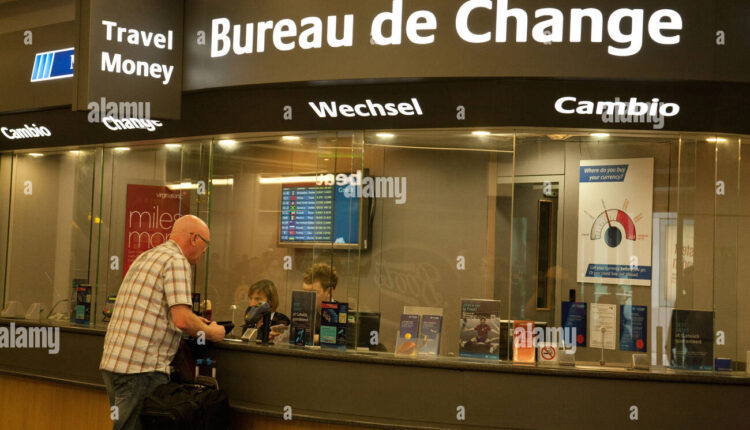
The Central Bank of Nigeria (CBN) has highlighted how the number of legacy Bureau De Change (BDCs) operators decreased from 5,687 to just 82 in its updated capital and compliance requirements, a major shake-up of the country’s foreign-exchange retail scene.
The regulatory reset marks one of the boldest clean-ups the subsector has seen in years, underscoring the central bank’s commitment to tighter governance and stronger market discipline.
In its online FAQs on the current reform of the Bureau De Change sub-sector, the CBN noted that 82 BDCs met the updated guidelines by November 30, 2025, while the other 5,602 failed to do so, resulting in their licenses becoming invalid.
The bank stated that the market had plenty of time to comply, with an initial six-month transition from June 3, 2024, to December 3, 2024, followed by another six-month extension that ended on June 3, 2025.

The regulator says the end of the extended window marks the close of a gradual compliance phase, and any legacy operators that didn’t meet the set benchmarks are now out of the formal market. An updated list of authorized BDCs is now available on its website to guide stakeholders.
The move is part of a wider reform plan. While the CBN listed 5,687 licensed BDCs in 2023, the number dropped sharply after the bank revoked 4,173 licenses on March 1, 2024, citing ongoing regulatory violations.
“As of November 27, 2025, just 82 operators had gained final approval under the tougher regulatory framework now defining the subsector”, the document noted.
The FAQ document tackled common questions from operators and the investing public, explaining that street currency traders are people carrying out unregistered cash deals in public spaces without approval. This contrasts with licensed BDCs, which operate fully within regulatory guidelines and are officially listed by the CBN.
Regarding ownership, the bank emphasized that BDC licenses aren’t tradable and operators can’t transfer ownership or control without prior approval from the CBN. Any merger, acquisition, capital restructuring, or operational handover must get formal consent. Families can pool resources to apply for a BDC, but they must strictly follow all outlined guidelines.
The CBN also stated that BDCs are not allowed to finance or get involved in unrelated businesses, no matter the size of their capital reserves.
It noted that while there’s no cap on the amount of foreign exchange an individual can sell to a licensed BDC, operators must strictly follow Anti-Money Laundering, Combating the Financing of Terrorism, and Counter-Proliferation Financing rules. For any transaction over $10,000, BDCs must collect all required documents showing the source of the funds.
The updated framework marks a clear regulatory change, aiming to make the FX retail sector more transparent, curb market abuse, and boost investor trust in Nigeria’s financial system.(Inside Business Online)
-

 Politics19 hours ago
Osun poll raises 2027 questions as APC reviews defeat, observers flag flaws
-
News19 hours ago
Insecurity: 31 states spend N252bn on security in six months
-
Business19 hours ago
Nigerian tycoon Wale Tinubu is drilling 62 wells to more than double Oando’s output
-
 Sports19 hours ago
Man United to battle Arsenal for Osimhen
-
News19 hours ago
Troops foil abduction attempt, rescue nine in Zamfara
-
Sports19 hours ago
NFF Sacks Madugu, Falcons Coaching Crew After World Cup Miss
-
Business19 hours ago
Concerns as cost-of-living pressure lingers despite easing inflation
-
Business11 hours ago
BREAKING: FCCPC says industry report suggests possible manipulation of cement prices