Business
Nigeria spends 105% of revenue on salaries, debt servicing

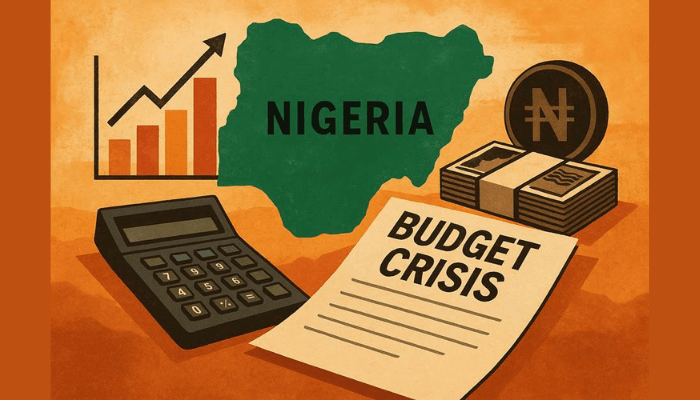
Debt servicing and personnel costs consumed more than the Federal Government’s entire revenue in the first seven months of 2025, as earnings fell sharply below target and capital spending suffered deep cuts, according to official budget documents.
An analysis of the 2026–2028 Medium-Term Expenditure Framework and Fiscal Strategy Paper (MTEF/FSP), published on Wednesday by the Budget Office of the Federation, shows that between January and July the Federal Government earned ₦13.67 trillion, far below the pro rata revenue target of ₦23.85 trillion.
The result was a ₦10.19 trillion shortfall, equivalent to about 42.7 per cent, underscoring continued pressure on public finances despite earlier assurances from President Bola Tinubu that Nigeria had met its revenue goals for the year.
Tinubu’s revenue claim not reflected in data
In September, Tinubu said Nigeria had already met its 2025 revenue target and would no longer depend on borrowing to finance the budget.

Addressing members of The Buhari Organisation at the Presidential Villa in Abuja, the president said non-oil revenue reforms had yielded sufficient inflows by August.
“Today, I can stand here before you to brag: Nigeria is not borrowing. We have met our revenue target for the year, and we met it in August,” Tinubu said.
However, figures in the MTEF/FSP do not support that claim. The document shows that the revenue gap was driven largely by a steep collapse in oil earnings.
Oil revenue slumps, taxes offer limited relief
Oil revenue for the January–July period stood at ₦4.64 trillion, compared with a pro rata target of ₦12.25 trillion, leaving a shortfall of ₦7.62 trillion, or 62.2 per cent.
Dividends from government-linked entities such as Nigeria Liquefied Natural Gas (NLNG) and development finance institutions also underperformed, generating ₦104.64 billion against an expected ₦428.71 billion.
Some non-oil revenues performed better. Company Income Tax (CIT) collections reached ₦2.54 trillion, slightly above the prorated estimate of ₦2.49 trillion, while the Federal Government’s share of Value Added Tax (VAT) rose to ₦630.10 billion, beating its target by about 11 per cent.
But those gains were outweighed by weaknesses elsewhere. Customs revenue fell to ₦988.29 billion, about 39.1 per cent below target, while Federation Account levies dropped by more than 70 per cent. The oil price royalty recorded no inflow during the period.
“The midyear outcome highlights Nigeria’s continued fiscal vulnerability to oil sector underperformance, even as non-oil revenue sources gradually increase their contribution,” the document said.
Debt service and wages outstrip income
Expenditure data show that debt obligations and salaries alone exceeded total revenue.
Between January and July, the Federal Government spent ₦9.81 trillion on domestic and external debt servicing. Personnel costs for ministries, departments, agencies and government-owned enterprises amounted to ₦4.51 trillion.
Combined, debt service and wages totalled ₦14.32 trillion, slightly more than the ₦13.67 trillion earned in the same period.
Debt servicing alone accounted for about 71.8 per cent of aggregate Federal Government revenue, highlighting the growing strain repayments are placing on the budget.
Capital projects bear the brunt
While recurrent spending largely stayed on track, capital expenditure suffered heavy cuts.
Total Federal Government spending, including project-tied loans and government-owned enterprises, reached ₦20.40 trillion, well below the pro rata target of ₦32.08 trillion.
Recurrent expenditure was close to plan, missing its target by just 3.7 per cent, but capital spending collapsed. Only ₦3.60 trillion was spent on capital projects, compared with a prorated allocation of ₦13.67 trillion, a shortfall of 73.7 per cent.
Spending by ministries and agencies was particularly weak, with just ₦834.80 billion released out of a planned ₦10.81 trillion.
Budget rollover deepens fiscal overlap
The Budget Office attributed the weak capital outturn partly to the extension of the 2024 budget, which was rolled over to December 2025 by the National Assembly.
As a result, about ₦2.23 trillion of 2024 capital spending is being financed in 2025, while releases under the 2025 capital budget have been tightly managed in line with revenue performance.
The Federal Government has also directed ministries and agencies to roll over 70 per cent of their 2025 capital budgets into 2026, effectively limiting new project approvals.
President Tinubu has asked lawmakers to pass a 2024 Appropriation Repeal and Re-enactment Bill, with proposed spending of ₦43.56 trillion, which he said would end the practice of running overlapping budgets.
(BusinessDay)
-

 News13 hours ago
Outrage in Sokoto as deadly bandit attacks spark protest, displace residents
-
News13 hours ago
Again, four killed, 10 injured in fresh Benue herdsmen attack
-
Politics13 hours ago
I never opposed Amaechi’s nomination – Kenneth Okonkwo
-
Politics13 hours ago
INEC extends voter registration by 2 weeks, unveils full self-service option
-
Metro13 hours ago
Three brothers charged with murder after beating mother’s boyfriend to death
-
News13 hours ago
200 US troops still in Nigeria for joint intelligence, training – DHQ
-
Business13 hours ago
Nigeria’s challenge is low revenue, not high debt – World Bank
-
Politics13 hours ago
IGP meets Adeleke over Osun pre-election violence, says suspects hiding in government house