Business
Fresh oil glut threatens Nigeria’s 2026 budget plans

…Brent hits five-year low
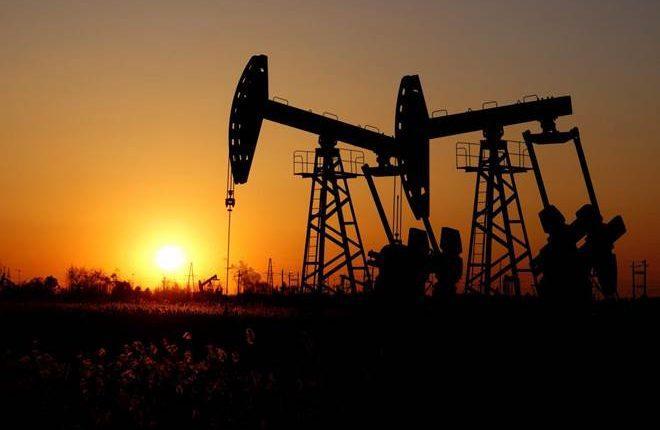
Nigeria’s ambitious spending plans for 2026 face mounting pressure as a looming global oil glut threatens to slash prices well below the government’s fiscal assumptions, risking a deeper budget crisis for Africa’s most populous nation.
Last Wednesday, Brent crude, the international benchmark, dropped 2.86 per cent to $58.83 a barrel by 4 pm WAT. US West Texas Intermediate (WTI) fell 2.88 per cent to $55.04 a barrel, pushing crude prices below the $60 mark for the first time since February 2021.

Investment banks and energy analysts now predict crude will average below $60 per barrel next year, casting doubt on Nigeria’s 2026 budget framework, which relies on an oil price benchmark of $64.85 per barrel.
With oil revenues accounting for the lion’s share of government foreign exchange earnings, the widening gap between fiscal projections and market reality could force Abuja to confront painful choices about spending cuts or increased borrowing.
The Nigerian cabinet on December 3 approved a medium-term fiscal plan projecting expenditure of N54.5 trillion ($37.71 billion) in 2026, with total federal revenue forecast at N34.33 trillion.
That leaves a deficit of N20.1 trillion, or 3.61 percent of GDP, according to Atiku Bagudu, minister of budget and planning. Debt service costs alone are estimated at N15.9 trillion, consuming nearly half of projected revenues.
The fiscal arithmetic looks increasingly precarious as the global oil market heads toward oversupply. The U.S. Energy Information Administration forecasts Brent crude will average just $55 per barrel in 2026, nearly $10 below Nigeria’s budget assumption.
Goldman Sachs projects an even steeper decline, with West Texas Intermediate crude expected to average $53 per barrel amid what it calls a large market surplus.
“All in all, we anticipate the supply glut, caused by weaker demand growth and increasing supply, to persist throughout 2026, with its impact steadily pushing crude prices lower,” said Moutaz Altaghlibi, senior energy economist at ABN AMRO Bank, which forecasts Brent averaging $55 per barrel for the year.
The convergence of bearish forecasts from major financial institutions signals trouble ahead for Nigeria, which has struggled for years to boost oil production to meet budget targets.
The 2026 framework assumes a daily output of 1.84 million barrels, well short of the 2.06 million barrel target and reflecting persistent challenges from theft, underinvestment, and ageing infrastructure in the Niger Delta.
A “super glut” scenario could materialise as new supply floods the market, warned Saad Rahim, chief economist at Trafigura, one of the world’s largest commodity traders.
Major drilling projects coming online in Brazil and Guyana, combined with President Donald Trump’s push to expand American production, threaten to overwhelm demand growth that’s already weakening.
China’s slowing appetite for crude presents another headwind. The world’s biggest oil importer is expected to increase purchases more slowly in 2026 as its massive electric vehicle fleet cuts into gasoline consumption. Chinese stockpiling has provided some support to prices this year, but analysts question whether Beijing can maintain that pace.
“China needs to keep buying at this rate, for that super glut to not show up even earlier,” Rahim said in remarks accompanying Trafigura’s annual results, which showed profits at a five-year low.
For Nigeria, the implications extend beyond immediate revenue shortfalls. The country’s debt burden has ballooned in recent years, and missing fiscal targets could complicate efforts to maintain investor confidence while managing inflation that has eroded living standards for millions of citizens.
Nonrecurrent debt expenditure is projected at N15.27 trillion, underscoring the fiscal strain on government finances.
Some analysts see potential relief from geopolitical risks that could tighten supply. Intensified sanctions on Russia’s oil sector and rising tensions between Washington and Venezuela might remove barrels from the market, providing upward pressure on prices. The EIA raised its 2026 Brent forecast by $3 per barrel from the previous month, citing these factors alongside Chinese stockpiling.
Yet even accounting for geopolitical premiums, the consensus points firmly downward. Ole Hvalbye, commodities analyst at SEB bank, said the path of least resistance remains skewed to the downside, with rising supply and deepening surpluses outweighing geopolitical concerns.
ABN AMRO’s detailed forecast sees Brent averaging $58 per barrel in the first quarter of 2026 before gradually declining to $52 as the glut worsens, ultimately reaching $50 by year-end. Ben Luckock, Trafigura’s head of oil trading, predicted in October that prices could dip into the $50s around the Christmas and New Year period.
The Reuters monthly poll of analysts and economists reinforces the bearish outlook, with Brent expected to average $62.23 per barrel in 2026, down from $63.15 forecast in October. Even that relatively optimistic projection would pressure Nigeria’s budget assumptions.
Macquarie Group analysts suggest OPEC+ may need to implement production cuts in the second half of 2026 to stabilise the market. Such moves could provide some price support, though past OPEC+ discipline has proven inconsistent, and the cartel faces internal pressures as members prioritise revenue over market share.
Goldman Sachs researchers believe 2026 will mark “the last big oil supply wave the market has to work through,” with rebalancing expected in 2027. That timeline offers little comfort to Nigerian policymakers grappling with immediate fiscal pressures.
The budget framework assumes an exchange rate of 1,512 naira per dollar and GDP growth of 4.68%. Both targets could prove optimistic if oil revenues disappoint, potentially triggering currency depreciation and slower economic expansion that further strains government finances.
Nigeria has long struggled with fiscal discipline, often failing to build reserves during periods of higher oil prices. The current challenge arrives as the country attempts reforms aimed at diversifying revenues beyond petroleum while managing the complex politics of subsidy removal and exchange rate liberalisation.
With global fundamentals pointing toward sustained pressure on crude prices, Nigeria’s ability to navigate 2026 without significant fiscal adjustments appears increasingly doubtful. The question facing policymakers is no longer whether revenues will fall short, but by how much, and what painful choices that shortfall will force.(BusinessDay)
-

 World News12 hours ago
Trump immigration crackdown: US arrests visa overstayers at airports
-
 News12 hours ago
Budget 2026: Govt agencies vote N400bn for mosques, palaces, halls
-
Politics12 hours ago
Adeleke kicks as police arrest SSG, five others
-
News12 hours ago
Beyond pipeline security: Battle over Tantita’s operations in N’Delta
-
News7 hours ago
‘We’ll marry beautiful ones, kill the rest’ — Terrorists threaten 176 woro captives
-
Metro12 hours ago
Father-in-law in police net over Lagos widow’s harassment
-
Sports5 hours ago
Chelsea sign France defender Lacroix from Crystal Palace
-
Politics7 hours ago
2027: Quit if you can’t campaign for us – APC tells Tinubu’s ‘technocrats’