News
Tax Laws Face Legitimacy Crisis

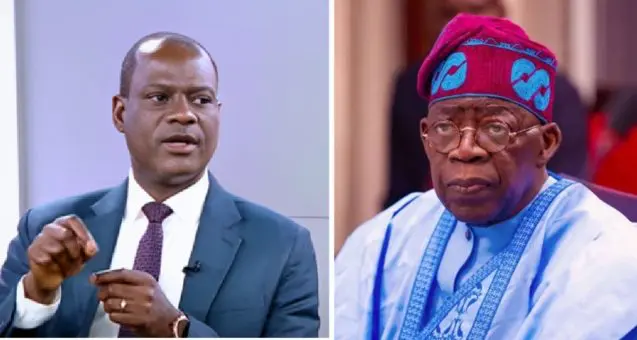
Amid the intensifying pushback from some lawmakers, political parties, civil society and regional groups as well as other critics, the tax laws are facing a legitimacy crisis.
The Nigerian Bar Association (NBA) yesterday demanded immediate suspension of the implementation of the tax laws pending a comprehensive investigation into alleged irregularities in the legislative process.
In a statement yesterday, NBA President Afam Osigwe (SAN) said the controversy surrounding the passage of the Tax Reform Acts raised serious concerns about the integrity, transparency and credibility of Nigeria’s lawmaking process.
Osigwe said allegations of discrepancies between the versions of the laws passed by the National Assembly and those later gazetted strike at the heart of constitutional governance.

“The Nigerian Bar Association considers it imperative that a comprehensive, open and transparent investigation be conducted to clarify the circumstances surrounding the enactment of the laws and to restore public confidence in the legislative process,” he said.
“Until these issues are fully examined and resolved, all plans for the implementation of the Tax Reform Acts should be immediately suspended.”
Osigwe warned that uncertainty surrounding laws of such economic significance could have far-reaching consequences.
“Legal and policy uncertainty of this magnitude unsettles the business environment, erodes investor confidence and creates unpredictability for individuals, businesses and institutions required to comply with the law,” he said.
He added that such uncertainty was inimical to economic stability and incompatible with the rule of law.
“Nigeria’s constitutional democracy demands that laws — especially those with profound economic and social implications — emerge from processes that are transparent, accountable and beyond reproach,” Osigwe said.
The NBA urged all relevant authorities to act swiftly in the interest of constitutional order, economic stability and the preservation of the rule of law.
N’Assembly adjourns amid tax laws’ dispute
Meanwhile, both chambers of the National Assembly yesterday adjourned plenary to January 27, 2026 for the Christmas and New Year’s recess without resolving the controversy surrounding the alleged alterations to the gazetted tax laws.
Following the allegations, the House of Representatives had, last week, constituted an ad hoc committee to investigate the matter and submit its report tomorrow.
The committee will not be able to meet submit its report as requested because the deadline falls on Christmas Day.
The federal government has maintained that implementation will proceed in January, 2026.
The Minister of Information and National Orientation, Mohammed Idris, had, on Monday, said the government followed due process, including consultations, legislative deliberations and presidential assent.
“The government has only one version of the new tax laws, duly processed by the National Assembly and signed by the President,” Idris said.
“Government is going ahead with commencement of implementation. Nothing has changed.”
A member of the House of Representatives, Abdussamad Dasuki (PDP, Sokoto), had, last week, raised a matter of privilege in the House of Representatives, alleging discrepancies between the versions of the tax bills passed by lawmakers and the copies subsequently gazetted.
The four laws forming the tax reform framework are the National Revenue Service (Establishment) Act, the Joint Revenue Board of Nigeria (Establishment) Act, the Nigeria Tax Administration Act and the Nigeria Tax Act.
They were passed in March, with Votes and Proceedings produced in May, signed into law by President Bola Ahmed Tinubu in June, and gazetted on June 26, according to copies sighted by Daily Trust.
Aside from Dasuki, Mansur Manu Soro (PDP, Bauchi) said his independent review of the Votes and Proceedings, the harmonised bills passed by the National Assembly and the gazetted versions confirmed what he described as “material discrepancies”.
“These discrepancies are neither minor nor inadvertent,” Soro said. “They represent deliberate alterations that removed critical oversight and reporting mechanisms expressly approved by the National Assembly.”
He alleged that the changes conferred new coercive and fiscal powers on the executive that were not approved by lawmakers.
Soro called for the immediate suspension of the laws’ implementation.
“In defence of the Constitution, which vests legislative authority in the National Assembly, the Tax Laws 2025 scheduled to take effect on January 1, 2026, should be suspended,” he said.
He noted that the House committee’s reporting deadline fell on a public holiday and said he was working with colleagues to raise the matter as one of urgent national importance before recess.
However, the motion was not presented. When contacted, Soro said he was unable to return to Abuja in time.
Efforts to get other members of the House of Representatives to speak on their take over the plan by the federal government to go ahead with implementation of the tax laws despite the pending investigation by the House, proved abortive as calls and messages sent to them were not responded to.
The lawmakers reached out to were the spokesperson of the, Akin Rotimi; Bamidele Salam, Afam Ogene, Cyril Hart Godwin, Oluwole Oke, Audu Gana, Alhassan Rurum, Fred Agbedi, Esosa Iyawe, Billy Famous Osawaru, Idem Unyime, Obinna Aguocha and Kwamoti Laori.

Ndume urges Tinubu to direct AGF to scrutinise laws
Senator Mohammed Ali Ndume told Daily Trust that he had engaged experts to compare the versions of the tax laws passed by the National Assembly with those signed and gazetted.
He urged President Tinubu to direct the Attorney-General of the Federation and Minister of Justice, Lateef Fagbemi, to scrutinise the documents.
“If there is any difference, then the version signed by the President becomes null and void. An altered law cannot be implemented,” Ndume said.
He said he would make his findings public if discrepancies were confirmed.
Ndume warned that failure to resolve the controversy before January 1 could generate further disputes.
ACF, Afenifere, Igbo elders demand tax laws’ suspension
Also, the Arewa Consultative Forum (ACF) has faulted the tax laws, describing them as invalid and unconstitutional.
ACF National Publicity Secretary, Prof. Tukur Muhammad Baba, said alleged alterations rendered the laws legally defective.
“You cannot build a law on something that is false. A forged document cannot be a law,” he said.
He urged the National Assembly to withdraw the laws and restate them exactly as passed.
Prof. Baba also criticised provisions granting extensive powers to the revenue service, saying they violated constitutional principles.
“You empower one agency to act as accuser, prosecutor, judge and juror. That is unconstitutional,” he said.
Also, Afenifere, the pan-Yoruba socio-political organisation aligned with the late Chief Ayo Adebanjo, has demanded the suspension of the tax laws as well as a halt to the presentation of the 2026 budget pending a full inquiry.
In a statement jointly signed by Afenifere Leader, HRH Oba Oladipo Olaitan, and its National Publicity Secretary, Prince Justice Faloye, the group condemned what it described as discrepancies between the tax reform laws passed by the National Assembly and the versions subsequently gazetted.
Afenifere said the controversy amounted to a grave constitutional breach and a show of contempt for the legislature, adding that in more advanced democracies, such actions could attract impeachment or criminal sanctions.
The group urged the National Assembly to assert its constitutional authority to protect the Nigerian people rather than defer to executive pressure.
In detailing its objections, Afenifere cited reports that the Federal Internal Revenue Service (FIRS) had entered into agreements with foreign entities to develop and manage Nigeria’s tax systems.
The group opposed what it described as the outsourcing of Nigeria’s tax sovereignty, warning that such arrangements could expose sensitive national and personal data and pose serious data protection and national security risks.
“Tax data are strategic national assets. Placing them in foreign hands gives external interests undue leverage over Nigeria’s economy,” the group said.
Afenifere warned that surrendering control of the tax system was tantamount to economic recolonisation, recalling Nigeria’s historical struggle for fiscal independence prior to independence in 1960.
It argued that Nigeria possessed sufficient local expertise in tax administration, law and information systems to manage its own tax infrastructure, stressing that taxation was “not rocket science but social science”.
The group also called for a comprehensive economic audit rather than the presentation of a new budget, citing claims by the Minister of Finance that Nigeria recorded a significant revenue shortfall in 2025.
Afenifere criticised rising public debt, saying deficit financing should improve citizens’ welfare rather than fund what it described as bloated governance costs and non-productive projects.
Similarly, the Secretary of the Igbo Elders Consultative Forum, Prof. Charles Nwekeaku, called on the Federal Government to delay implementation of the tax laws, citing the alleged discrepancies and the prevailing economic hardship.
“The President should take more time to examine the laws and ascertain which version is correct,” Nwekeaku said.
He noted that many Nigerians were yet to understand the new tax regime, warning that hurried implementation could worsen public hardship.
“If government goes ahead with implementation, it will reinforce the perception that it is becoming more extractive against the citizens. That is not an example of good governance,” he said.
PANDEF opposes suspension, backs implementation
In contrast, the Pan-Niger Delta Forum (PANDEF) has opposed calls for the suspension of the tax reform laws, arguing that implementation should continue despite allegations of alterations.
Speaking to Daily Trust, PANDEF National Publicity Secretary, Chief Obiuwevbi Ominimini, said while allegations deserved investigation, they should not stall implementation of laws already assented to by the President.
“Any allegation is subject to investigation, especially since it was raised on the floor of the National Assembly,” he said.
However, Ominimini noted that Nigeria operates a constitutional system with separation of powers, stressing that the laws had been duly passed and assented to.
“At this stage, the focus should be on what emerged from the harmonisation committee, not what was separately passed by either chamber,” he said.
He said the National Assembly’s decision to investigate the matter was appropriate, but maintained that implementation should proceed concurrently.
“Once a law is assented to by the President, it takes effect,” he said.
Ominimini acknowledged regional concerns over the tax laws but argued that broader structural inequities in Nigeria’s resource governance deserved greater attention.
He said while oil and gas resources benefit the entire country, solid minerals such as gold, lithium and tin remain largely controlled by private interests in other regions.
“What PANDEF wants is equity. Natural resources should benefit the entire federation,” he said, adding that Nigeria could significantly reduce borrowing if solid minerals were properly harnessed under national control.
It’s unwise to ignore alteration allegations — Yadudu
A professor of law, Auwalu Yadudu, who featured last night on Trust TV’s Daily Politics, said he would not want the implementation of the tax laws to start with litigation.
He said it would be most unwise to ignore the allegations of alterations in the tax laws.
“I would rather hope that the government will do the right thing, and that if it fails to do it, I think there are a whole range of available options available to the citizens, to people directly affected, and even to state organs. I wouldn’t want the implementation of the law to start with a legal challenge.
“And then, once you embark on a legal challenge on its validity, whatever delay you want to avoid now would be prolonged by needless litigation. I am not saying that even if you correct things, people will not have the option of challenging provisions in that. But I think, in light of what has been alleged, it would be most unwise to ignore such things.
“And then keep mute and hope that this thing will disappear. It won’t. Finally, the 1999 Constitution envisaged a situation whereby laws passed by the legislature are not the same as the ones assented to.”
Also speaking during the programme, a Senior Advocate of Nigeria, Sam Kargbo, said if the tax laws were altered as alleged, they cannot stand.
“So, if any of the more important headings or provisions as passed by both houses and assented to are omitted or altered at the point of printing, that is ultra vires. Therefore, it cannot stand. But, mind you, the original copy that is authenticated is there with the clerk of the House.
“That original version is the primary evidence. The gazette is a notice to the public that this is the law as passed. That is secondary evidence.
“So, if there is a discrepancy between that and the primary evidence, it shouldn’t take much of a hassle for you to have a look and compare the two…”
Atiku calls for suspension, investigation
Similarly, former Vice President Atiku Abubakar called for the immediate suspension and investigation of the tax laws.
In a statement he personally signed on Tuesday, Atiku described the alleged post-passage alterations as “illegal and unauthorised” and an assault on constitutional democracy.
“This overreach undermines legislative supremacy and reveals a government more interested in extraction than empowerment,” he said.
He called on the executive to suspend implementation, urged the National Assembly to rectify the alterations, and asked the judiciary to strike down unconstitutional provisions.
Atiku also called on anti-corruption agencies to investigate those responsible.
“What the National Assembly did not pass cannot become law. This principle must be defended, or we risk descending into arbitrary rule,” he said.
(Daily trust)
-

 News12 hours ago
How Tinubu’s Subsidy Removal Saved ₦53tn — Adedeji
-
News13 hours ago
PFIPC scandal: Adeyemi demands media, lawyers’ presence before Reps probe
-
Politics13 hours ago
Atiku accuses Obasanjo of 20-year campaign of lies, deceit
-
Metro13 hours ago
“Because of fear of Allah, I’ve never slept with any other woman since I got married” – Aregbesola
-
News13 hours ago
Alfred Kasunmu, former Lagos attorney-general, is dead
-
News12 hours ago
Sanwo-Olu straight-faced as Umahi asks Lagos to fund coastal highway drainages, service lanes
-
Business12 hours ago
CBN shelves N700bn T-bills auction amid liquidity squeeze
-
News12 hours ago
ALERT: NDLEA warns parents over illicit drugs hidden in cookies, gummies