Metro
Court rejects mosque’s plea to use loudspeaker, says no religion mandates prayers with voice amplifiers

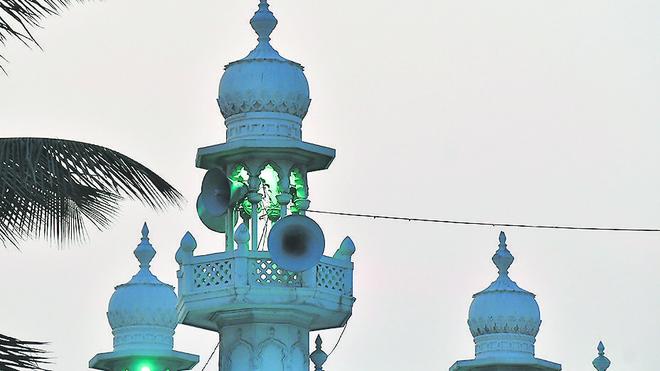
The Nagpur Bench of the Bombay High Court refused to grant relief to a mosque seeking permission to use loudspeakers, noting it was not entitled to use the device to practise religion as a matter of right.
The court, while relying on Supreme Court judgments, said that no religion mandates prayers to be offered through voice amplifiers or beating drums.
A Bench of Justices Anil Pansare and Raj Wakode said that the issue of noise pollution was recurring and took suo motu (on its own) cognisance of the same and asked the Maharashtra government to come up with an effective solution.
The court, in an order dated December 1, dismissed a petition filed by Masjid Gousiya in Gondia district seeking permission to use loudspeakers to offer prayers.

The Bench noted that the petitioner was unable to submit any material to show that the use of loudspeakers was mandatory/necessary to practice their religion.
“The petitioner, therefore, is not entitled to seek relief for the installation of a loudspeaker, as of right. The petition is accordingly dismissed,” the court said.
Relying on judgments passed by the apex court, the bench said no religion prescribes that prayers should be performed by disturbing the peace of others, nor does it preach that they should be through voice amplifiers or the beating of drums.
The Supreme Court also highlighted the importance of other citizens entitled to enjoy reasonable quietness, particularly those who are of tender age and those who are aged, sick, and people afflicted with psychic disturbances, it said.
The Bench, however, noted that the issue of noise pollution was recurring.
“Noise pollution is a serious threat to public health and welfare. It causes ‘fight or flight’ syndrome, releasing cortisol and other harmful chemicals into the bloodstream,” the court said.
Over time, these chemicals build up in the body, leading to a host of health problems, including cardiovascular disease, aggression, chronic fatigue, headaches, high blood pressure, mental illness and anxiety, it added.
The court said that noise pollution can cause hearing damage, and if it exceeds 120 decibels, it can cause eardrum rupture.
The Bench also highlighted functions and other festivities celebrated in the event halls at Civil Lines in Nagpur during which the noise pollution rules are violated. “In our view, while permitting various celebrations, these venues should take responsibility for ensuring adherence to the rules,” it said.
The court also pointed out several religious places where ‘bhajans’ are performed on loudspeakers in complete violation of the rules. “We hope the State government will be sensitive to the issue involved, which affects public health, and will come up with an effective solution,” it said. (The Hindu)
-

 Politics2 hours ago
Tinubu using foreign reserves to create misleading impression of economic growth – Makinde
-
Politics2 hours ago
ADC mocks APC over ‘rented crowds, empty seats’ at Kaduna rally
-
Politics2 hours ago
2027: It’s Our Turn To Repay Tinubu – Shettima Tells Northerners
-
Politics2 hours ago
2027: Forget About Social Media News, Nigerians Love Tinubu – Information Minister
-
Metro14 hours ago
UK police arrest 15-year-old boy for photoshopping local politician into rabbit
-
Politics14 hours ago
APC mobilisers caution party members against mentioning Tinubu’s name during campaigns in North
-
Metro2 hours ago
How AI-generated photo cost kidnap victim N4m ransom – Freed Benue graduate
-
Politics2 hours ago
Ebola: Parties reject campaign suspension