News
Reserved seats bill is a weak negotiation for women… I’m not a fan of it – Women Affairs Minister

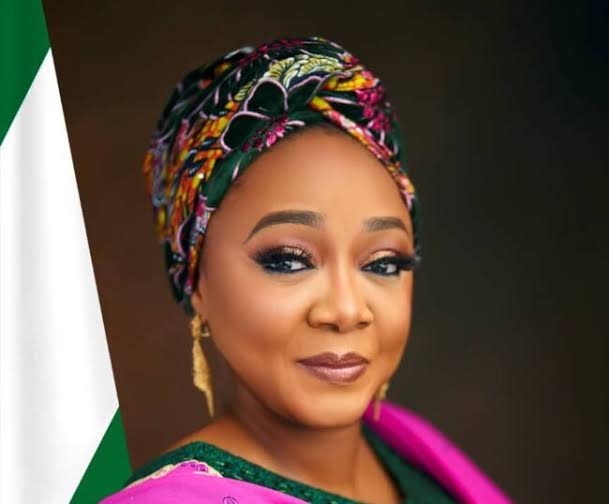
amaIn Sulaiman-Ibrahim, minister of women affairs, says the reserved seats for women bill is a weak negotiation for increased female political participation.
The reserved seats bill seeks to create special legislative seats for women in both the national and state assemblies.
The bill proposes creating 37 additional seats for women in the house of representatives (one seat per state and the FCT), 37 additional seats in the senate (one seat per state and the FCT), and three state houses of assembly seats per state (one seat for each state’s senatorial district).
The additional seats do not stop women from contesting for the existing constituencies.

Lawmakers introduced the bill following sustained public criticism of Nigeria’s poor global ranking on women’s political representation, despite women accounting for nearly half of the population.
The minister welcomed the effort on Tuesday at the Beijing+30 women’s summit but said it still felt like a shortchange for Nigerian women.
The summit was convened in Abuja, the nation’s capital, by the Amandla Institute for Policy and Leadership Advancement (AIPLA), in collaboration with the African Women Leaders Network (AWLN-Nigeria) and Womanifesto.
“I’m a great advocate for the special reserve seat bill, but I am not a fan of it, and I’m not afraid to say that, because I believe that the bill even puts us at a disadvantage as women,” she said.
“I believe that we can go for more and get more. So why are we negotiating for less, and why do we keep watering it down?”
“Some people say, ‘Let’s start from somewhere.’ No. The countries that have really gotten there didn’t start from somewhere; they went all out. What are we afraid of?
“We are the voters. According to a saying, ‘half of the world are women; the other half were given birth to by women.’ And we all know that without women there won’t be any election or election victory. We all know it. So why are we shortchanging ourselves?”
Pointing to factors that limit women’s political participation, the minister said men often benefit from political godfathers, work collaboratively, pool substantial financial resources, and plan their strategies well in advance.
“We’re negotiating for seats without a seat on the neck, so even the negotiations are faulty,” she said.
“I am praying for this reserved seat bill to scale through because every time I go for international meetings, I’m a subject of ridicule. They are like, ‘What’s happening in Nigeria?’ Because we are the lowest when it comes to elective offices.
“So, I’ll wait for that to change during my time so that at least I can have my shoulders high, but does it address our problems?”
Erelu Adeleye-Fayemi, AIPLA co-founder, said Nigeria’s constant low ranking on global indicators that measure gender equality remains a major barrier to women’s advancement.
The former Ekiti first lady said the institute would continue to galvanise the increased awareness of women’s rights and gender equality to fight for gender justice and support feminist leadership development.(The Cable)
-

 Politics18 hours ago
INEC puts voters revalidation plan on hold
-
Politics13 hours ago
Oyo 2027: Makinde moves to name successor
-
News23 hours ago
Suspected herders kill 17 in attack on Benue community
-
Politics13 hours ago
Obidients mobilise for #OccupyINEC protest
-
Politics13 hours ago
Talks intensify as Bauchi gov delays ADC defection
-
Business13 hours ago
Bakare announces full repayment of N4bn Wema Bank loan
-
News13 hours ago
FG hikes 2026 borrowing plan by N11tn
-
News5 hours ago
Fire Service CG’s Massive Convoy Sparks Reactions