News
Court awards $25,000 against Meta in Falana’s privacy suit

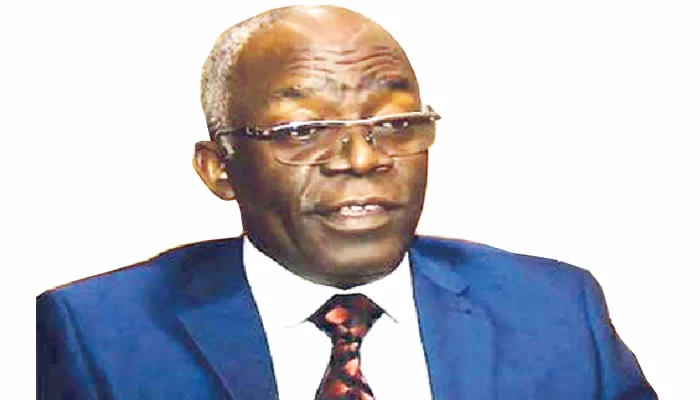
A Lagos State High Court sitting at Tafawa Balewa Square has awarded the sum of $25,000 in damages in favour of human rights lawyer, Mr Femi Falana (SAN), against Meta Platforms Inc. for publishing on Facebook a false video report that he was suffering from a terminal illness.
Early in 2025, a video was published on Facebook displaying that Falana was suffering from a terminal illness, which prompted the suit.
Delivering judgment on Tuesday, Justice Olalekan Oresanya held that Meta breached Section 24 of the Nigeria Data Protection Act by processing personal data that was “inaccurate, harmful, lacking lawful basis, and unfair” to the claimant.
The court ruled that the publication of false health information amounted to “unlawful processing of sensitive personal data.”

Falana had instituted the suit through his counsel, Mr Olumide Babalola, following the circulation of the offensive publication on Facebook.
In his judgment, Justice Oresanya made a number of significant pronouncements on the responsibility of digital platforms.
He held that, “A global technology company such as Meta, which hosts pages for commercial benefit, owes a duty of care to persons affected by content disseminated on its platform.”
The court rejected Meta’s contention that it was merely a hosting platform or intermediary, holding that “where a platform monetises content and the harm from misinformation is reasonably foreseeable, it cannot escape liability.”
The court noted that this position aligns with “emerging jurisprudence on platform accountability”.
Justice Oresanya further held that “the fact that the claimant is a public figure does not deprive him of his right to privacy.”
He ruled that “the publication of false medical information constitutes an intrusion into the claimant’s private life,” adding that “health data attracts heightened legal protection irrespective of public status.”
The court also found that Meta “determines the means and purposes of processing content on its platform, monetises pages, and controls content distribution through algorithms.”
On that basis, the court held that Meta “acts as a joint data controller with page owners and is vicariously liable for unlawful content disseminated on Facebook.”
The judge faulted Meta for “failing to deploy adequate safeguards to prevent or mitigate the harm caused.”
According to the court, “as a global technology company with vast technological and financial resources, Meta was expected to have effective content moderation systems, prompt takedown mechanisms, and safeguards proportionate to the risks posed by misinformation.”
The court held that its failure to do so amounted to “non-compliance with its obligations under the NDPA.”
Meta was represented by Mr Tayo Oyetibo (SAN).
-

 News24 hours ago
37 miners’ deaths: NSCDC parades suspended commandant, officers
-
Opinion24 hours ago
Now that the Mambilla mess is over
-
News24 hours ago
“We are ready to die here,” – Miners return to site
-
Politics24 hours ago
I can forgive, reconcile with Abba Yusuf.. I still like him – Kwankwaso
-
Entertainment24 hours ago
Yusuf, Bells, Chimsom Chuka evicted from BBNaija Season 11
-
News24 hours ago
NLC opposes planned concession of King’s College, other Unity Colleges
-
Politics24 hours ago
Presidential Poll: Makinde, APM drag Gov Otti to court over N200m campaign fee
-
Business24 hours ago
‘It’s based on free market conditions’– NMDPRA says it doesn’t fix fuel prices