News
Intersociety accuses New York Times of falsifying report, says Christian genocide data verified

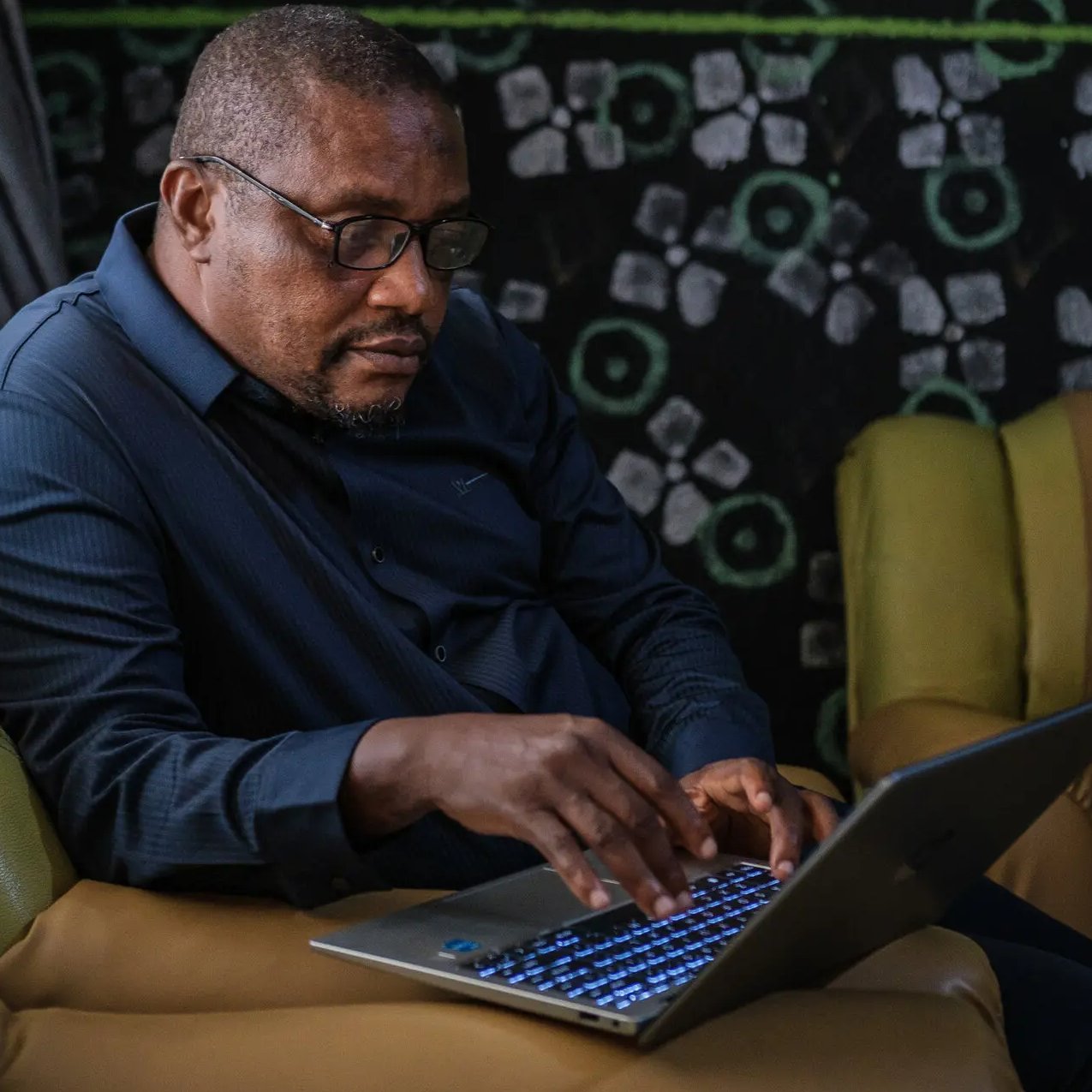
The International Society for Civil Liberties and Rule of Law (Intersociety) has accused the New York Times of falsifying parts of its report that told how the United States relied on its often “unverified” information to assert claims of a Christian genocide in Nigeria.
In the report published on Sunday, the New York Times said Emeka Umeagbalasi, Intersociety founder, admitted that he “often does not verify his data”.
“He acknowledged that his research was mainly based on ‘secondary sources’, including Christian interest groups, Nigerian news reports and Google searches,” the report said.
Umeagbalasi was quoted as saying he has documented 125,000 Christian deaths in Nigeria since 2009 and claimed 100,000 churches exist in Nigeria, and about 20,000 of them were destroyed in the past 16 years, based on his internet crawling.

According to the report, the screwdriver salesman is “an unlikely source of research that U.S. Republican lawmakers have used to promote the misleading idea that Christians are being singled out for slaughter” in Nigeria.
The report also alleged that Umeagbalasi claimed the 25 schoolgirls recently kidnapped in Kebbi were mostly Christian despite authorities saying they were all Muslim.
The New York Times added that the Intersociety leader called the Fulani “animals” and said all Fulanis should be confined to one Nigerian state, “a move that would be tantamount to ethnic cleansing”.
The report was filed from an interview with Umeagbalasi in his Onitsha home.
INTERSOCIETY KICKS
However, in a statement on Monday, Intersociety accused the American newspaper of spinning a “perfidy of lies” in its report.
The statement, co-signed by Umeagbalasi and other Intersociety officials, said it was “shocked and totally disappointed” at the “lies injuriously credited” to the organisation, saying they were never part of the interview that lasted for not less than three hours.
“New York Times lied when it falsely claimed that ‘our Board Chair admitted that he often does not verify his data’,” the statement reads.
The organisation listed its data collection processes, allegedly mentioned during the interview, to include “primary or directly generated and secondary or indirectly or third party generated”.
“Contrary to New York Times, we said 19,100 churches were attacked, including burned down or destroyed since 2009, and did not say ‘close to 20,000 churches’. We peripherally mentioned that 100,000 churches were likely to be in Nigeria as of 2021, out of which, estimated 19,100 had gone in the hands of Islamic Jihadists,” Intersociety said of its data on churches.
On gleaning data from secondary sources, Intersociety named a team of “expert-volunteers and field research assistants” who are also volunteers working to document cases of direct data collection across the country in line with international best practices.
The organisation said it explained how they established or identified religious identities of Christian victims such as knowing the Christian populated areas especially across the north, using credible media reports and relying on information from Christian communities and their leaders.
In its report, the New York Times said many of Boko Haram’s victims are Muslim.
“This is totally incorrect. Available statistics especially from 2009-2017, most victims of BH were found to be Christians including estimated 3000-4000 pastoral Igbo Christians living in the North and killed by Boko Haram,” Intersociety countered in its statement.
It also denied saying many of the 24 abducted Kebbi school girls were Christians, “but that we strongly suspected that some Christian girls were likely to be involved especially when the School is not an Islamic School, but a Government School and that the victim area: Danko/Wasagu Local Govt., is an indigenous Christian populated despite being an Emirate Council”.
In addition, Intersociety denied calling Fulanis animals.
“She (the reporter) had asked to clarify why we opposed ‘Nigerian Government Fulani Pastoralist Cattle Ranching Settlements across the country and we replied that ‘if the Nigerian Government is sincere that the policy does not have jihadist intent that it should designate Niger State, Nigeria’s largest landmass State which is also agriculturally fertile and turn it into one of the Africa’s largest modern cattle and milk producing areas’”.
Intersociety said Umeagbalasi is proudly a successful, lawful and legitimate screwdriver salesman.(The Cable)
-

 Sports19 hours ago
Salah To Leave Liverpool After Nine Years
-
Metro19 hours ago
ECWA Pastor Abducted In Jos
-
Politics19 hours ago
Ordeal: I Can’t Rule Out Political Undertone, Says Malami
-
Business19 hours ago
No more dollar payments as CBN directs IMTOs to open naira settlement accounts
-
Politics19 hours ago
Parties Move Against Electoral Act
-
News10 hours ago
Nigerian Population Commission Faces Scrutiny Over N129.5billion Funds Released For Census That Never Held
-
News11 hours ago
Court dismisses cyberbullying charge against Sowore, releases passport
-
Business14 hours ago
BREAKING: Court nullifies CBN’s sack of Union Bank’s board, restores core shareholders