Business
Nigeria’s rusty affair with Ajaokuta Steel leaves billions wasted

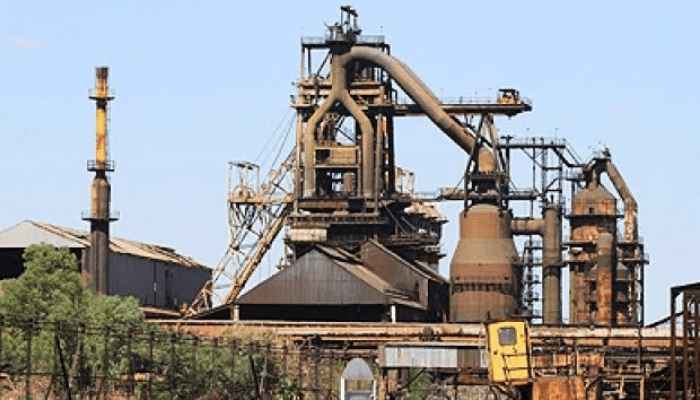
Nigeria has spent N46.62 billion on its flagship Ajaokuta Steel Company over the past decade, even as the facility has failed to produce a single tonne of steel commercially, according to budget data analysed by BusinessDay.
Conceived in the late 1970s as the flagship of an industrial revolution, the complex was meant to anchor shipbuilding, construction, transport, automotive, and manufacturing. Instead, it has become a cautionary tale of squandered billions, policy flip-flops, and rusting infrastructure.
The spending pattern, spanning 2017 through 2026, underscores Africa’s most populous nation’s struggle to translate industrial ambitions into operational reality. Despite repeated government pledges to revive the Soviet-era plant, annual allocations have primarily covered salaries, security and maintenance rather than capital improvements that might enable production.
Data sourced by BusinessDay from available budget documents showed annual allocations to the dormant complex have risen steadily, from N4.27 billion in 2017 to a projected N6.69 billion in 2026, the highest in the period reviewed. The 2025 budget set aside N6.81 billion for a plant that successive administrations have described as critical infrastructure but have proven unable to operationalise.

Aisha Mohammed, an energy analyst at the Lagos-based Centre for Development Studies, questioned the allocation strategy.
“Spending billions annually on maintenance without a clear path to production is fiscal irresponsibility,” Mohammed said. “Those resources could fund critical infrastructure that actually generates economic returns.”
Industry analyst Kayode Akintunde of Sofidam Capital noted the broader pattern of failed state enterprises.
“Ajaokuta is symptomatic of Nigeria’s challenge with public-sector industrial projects,” he said. “Without private-sector discipline and market incentives, these facilities become employment programs rather than productive assets.”
Ifeoma Nwosu, a legal analyst with experience in infrastructure contracts, believes that unresolved litigation remains a major red flag. “Before any serious investment can occur, Nigeria must clear the legal slate. Investors require clarity regarding liabilities, ownership structure, and dispute resolution mechanisms.”
On the technical front, Chinedu Agbo, a former consultant for Ajaokuta Steel Plant, stated that some plant parts are beyond repair.
“Most of the imported Soviet-era machines were never installed. Those that were have deteriorated dramatically. Ajaokuta’s revival requires more than just repairs. It necessitates re-engineering from the ground up using modern technology that meets today’s industry standards,” he stated.
The expenditures come as Nigeria grapples with a mounting debt burden and competing development priorities. The West African nation’s total public debt stood at over $100 billion as of mid-2024, while infrastructure gaps in power, transportation and healthcare remain acute.
Kalu Aja, an economist who has visited the site, said, “No Nigerian can visit Ajaokuta, see investments of more than $8bn rotting in the African sun, and not cry.”
“Ajaokuta Steel is gone, allow it to die,” he said on X, formerly known as Twitter. “Build new ones.”
While Nigeria struggles to develop its manufacturing sector, Egypt and South Africa have much higher steel production rates. Egypt produces approximately 10.6 million tonnes of steel per year, while South Africa produces 4.9 million tonnes, according to the World Steel Association.
In contrast, Nigeria produces only 2.2 million tonnes, relying on scraps and billets imported primarily from China.
Viability questions
Nigeria’s richest person, Aliko Dangote, whose industrial conglomerate includes cement and petrochemical operations, questioned the plant’s fundamental design.
“Ajaokuta will never work,” he said in an interview on September 15. “It was not built the way a steel plant should be built. Even if you complete it, you will still need billions of dollars to make it competitive.”
The billionaire’s assessment reflects broader private-sector scepticism about retrofitting decades-old Soviet technology to compete in modern steel markets dominated by efficient Chinese, Indian and Brazilian producers.
International Overtures
At the 2023 Russia-Africa Summit in St. Petersburg, Nigerian officials told international audiences the complex was “over 90 percent completed” and central to the nation’s industrial rebirth. Gabriel Aduda, then-permanent secretary in the Office of the Secretary to the Government of the Federation, highlighted discussions with Russia-based United Company Rusal (UC Rusal) about revitalisation.
“The moment we do that, then you can see profits for both of us,” Aduda said. “UC Rusal will make its money, and Nigeria, of course, will create jobs.”
Nearly three years later, no binding investment agreement has materialised. Government sources confirm Nigeria has since opened discussions with Chinese firms after Russian engagements stalled, though no timelines or financial commitments have been announced.
Some argue that privatisation offers the cleanest route out of the quagmire. Selling the complex transparently to a consortium with proven expertise and deep pockets could shift the risk away from taxpayers and inject efficiency. The federal government’s role would then focus on regulation, infrastructure, and incentives rather than daily operations.
Critics caution, however, that poorly structured sales, such as the ill-fated Indian concession, can backfire, leaving Nigeria to foot huge bills. Success hinges on openness, enforceable contracts, and an end to political interference. (BusinessDay)
-

 Business14 hours ago
Job losses loom as N3.9trn debt may cripple 22 firms
-
News14 hours ago
Delta dep director’s killing: Police arrest commissioner, 3 others
-
Business14 hours ago
GTCO Plc Releases 2026 Half Year Audited Results
-
 Business14 hours ago
Fuel import: Abuja court ruling opens fresh battle
-
Metro14 hours ago
Hospital seeks to stop inquest into Chimamanda son’s death
-
Metro14 hours ago
Why Nigerians should stop boiling eggs, rice together – Experts
-
News13 hours ago
FG plans to lift 5 million Nigerians out of poverty with skills acquisition
-
Politics14 hours ago
Obi makes U-turn, says he’ll restore petrol subsidy after curbing corruption