Business
Customers stranded as new airtime rule disrupts bank transfers

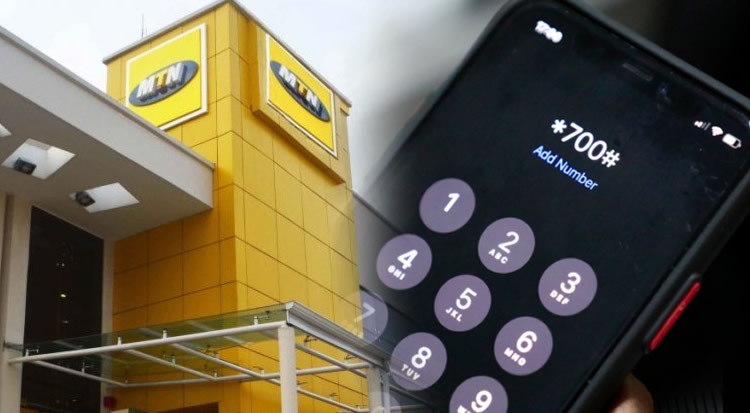
Millions of Nigerian bank customers are grappling with frustration and uncertainty following widespread disruptions to Unstructured Supplementary Service Data (USSD) banking transactions, with many unable to complete transfers despite having sufficient funds in their accounts.
Saturday PUNCH gathered that the disruptions, which have persisted in recent days across several commercial banks, have triggered complaints from retail banking customers, traders and Point of Sale operators who rely heavily on USSD platforms for daily financial transactions.
Findings by our correspondent revealed that the failures are linked to a major restructuring of the USSD payment ecosystem and the implementation of stricter anti-fraud measures by financial and telecommunications regulators.
The development has exposed a critical gap in public awareness, as many customers are unaware that successful USSD transactions now depend not only on the availability of funds in their bank accounts but also on the presence of airtime on their mobile lines.

Across Lagos, bank customers who visited branches of commercial banks expressed confusion over repeated transaction failures.
At branches of First Bank, First City Monument Bank, United Bank for Africa, Access Bank and Stanbic IBTC visited by our correspondent on Friday, customer service personnel spent considerable time responding to complaints from customers unable to transfer funds through USSD codes.
At FCMB’s branch opposite the Army Arena Shopping Complex in Oshodi, several customers sought clarification after unsuccessful transfer attempts.
A customer service official at the branch, who spoke on condition of anonymity because he was not authorised to comment on the matter publicly, explained that the challenge stemmed largely from changes in the industry-wide billing framework rather than isolated technical faults within individual banks.
“The reason some users are still experiencing difficulties is because of the migration to a completely different billing structure,” the official said.
According to industry insiders, the transition represents one of the most significant changes to the country’s digital banking architecture since the introduction of USSD services.
For years, banks deducted transaction charges directly from customers’ bank accounts and subsequently settled telecommunications companies through inter-corporate arrangements.
That model has now been replaced with what regulators describe as End-User Billing, under which customers pay USSD session charges directly through airtime deductions from their mobile phone lines.
Under the new framework, users are charged N6.98 for every 120-second USSD session, with the amount deducted directly from airtime rather than bank balances.
The implication is significant: customers with insufficient airtime cannot complete USSD transactions regardless of the amount of money available in their bank accounts.
At First Bank’s Bolade branch in Oshodi, a cashier explained the practical implications of the new arrangement.
“If a customer has zero airtime on the SIM card linked to the bank account, the USSD transaction will fail immediately, even if the person has millions of naira in the account,” the official said.
For years, users had become accustomed to USSD transactions requiring only a registered mobile number and sufficient account balance. The new arrangement effectively introduces airtime availability as a mandatory condition for accessing mobile banking services.
Several customers who spoke with Saturday PUNCH expressed frustration that they had not been adequately informed before the changes took effect.
Many argued that the sudden failures created unnecessary hardship, particularly for people in areas with limited internet access who depend on USSD services for routine banking transactions.
The disruption is also affecting thousands of small businesses and roadside POS operators who depend on instant transfers to serve customers.
At the UBA Charity branch along the Mile 2 Expressway, a customer identified simply as Alabi recounted his experience after multiple failed attempts to transfer money using USSD codes.
“I have been having issues using the bank USSD service for the past three days,” he said.
“We need urgent intervention from the authorities, including telecommunications operators and the Central Bank of Nigeria, before this situation causes serious damage to businesses.”
The effects are particularly visible within the country’s informal financial ecosystem, where many transactions are facilitated through mobile banking services rather than conventional banking channels.
A POS operator, Aderonke Adebayo, told Saturday PUNCH that customers now regularly complain about unsuccessful transfers.
“Three customers have already complained to me today that their USSD codes failed. I had to ask them to contact their banks because there was nothing I could do from my side,” she said.
According to operators, failed transactions often result in delayed payments, loss of business opportunities and increased tension between service providers and customers.
Some operators also worry that prolonged disruptions could undermine public confidence in digital payment channels that have become essential to economic activity across the country.
The migration to End-User Billing comes amid broader changes affecting digital financial services.
The Federal Government recently implemented a 7.5 per cent Value Added Tax on digital service charges, including USSD fees and certain electronic transfer charges.
Although regulators have clarified that the VAT applies only to service fees and not to the principal amount being transferred, some customers fear that the cumulative impact of multiple charges could increase the cost of banking transactions.
For instance, the tax applies to the N6.98 USSD session charge rather than the actual value of funds being transferred.
At the same time, the Central Bank of Nigeria has abolished several traditional banking charges, including some card maintenance fees and specific SMS alert deductions.
Industry analysts believe regulators intend for banks to compensate through greater efficiency in digital service delivery rather than through conventional account-related charges.
However, consumers argue that persistent disruptions risk undermining the benefits expected from the reforms.
Beyond billing reforms, industry sources say some service interruptions may also be linked to tighter security protocols introduced to combat rising incidents of electronic fraud and identity theft.
The Central Bank of Nigeria and the Nigerian Communications Commission recently signed a Memorandum of Understanding aimed at strengthening collaboration between the banking and telecommunications sectors.
The agreement focuses on tackling SIM-related fraud, protecting consumers and improving the integrity of digital payment systems.
As part of the initiative, regulators have introduced the Telecom Identity Risk Management Portal, a system designed to enable banks verify the status of customers’ SIM cards before approving transactions.
The platform allows financial institutions to determine whether a mobile line has recently been swapped, recycled or flagged for suspicious activity.
Financial institutions can then use the information to assess transaction risks and prevent fraudulent access to customer accounts.
Industry experts say the measures have become necessary as fraudsters increasingly exploit SIM swap schemes and identity theft techniques to gain access to bank accounts.
Complementing the reforms, the Nigeria Inter-Bank Settlement System recently introduced tighter restrictions on changes to phone numbers linked to Bank Verification Numbers.
The policy limits such modifications to a single update in a lifetime, a measure intended to reduce opportunities for identity manipulation and account compromise.
The latest changes also come against the backdrop of a long-running dispute between banks and telecommunications operators over unpaid USSD service charges.
Earlier this year, the Chairman of the Association of Licensed Telecommunications Operators of Nigeria, Gbenga Adebayo, announced that both sectors had resolved a debt crisis estimated at nearly N300bn.
According to him, the debt accumulated over approximately four years and had become a major threat to the sustainability of both the telecommunications industry and the digital financial ecosystem.
“One of the most difficult issues was the USSD debt crisis, a debt burden that grew over four years to nearly N300bn,” Adebayo had said.
“It had become a systemic risk to our sector and the digital financial ecosystem.” (Punch)
-

 Politics14 hours ago
2027: ADC campaign accuses Kwankwaso of working for Tinubu
-
News14 hours ago
DSS arrests fleeing Maina’s son in Abuja
-
Politics14 hours ago
2027: Tinubu afraid to face Nigerians – ADC
-
Politics14 hours ago
Buhari considered it distasteful for Osinbajo to contest against Tinubu – Babachir Lawal
-
Politics10 hours ago
‘Tinubu Must Go’ Vs ‘Tinubu Must Stay’: Forces Behind Campaigns
-
Metro14 hours ago
Two Nigerians nabbed with cocaine in Thailand
-
 News14 hours ago
Tinubu approves lifetime pay for ex-immigration chiefs
-
News14 hours ago
Obi of Onitsha urges end to hunger, insecurity