Politics
Real-time election results transmission not feasible in poorly connected rural areas – PAACA

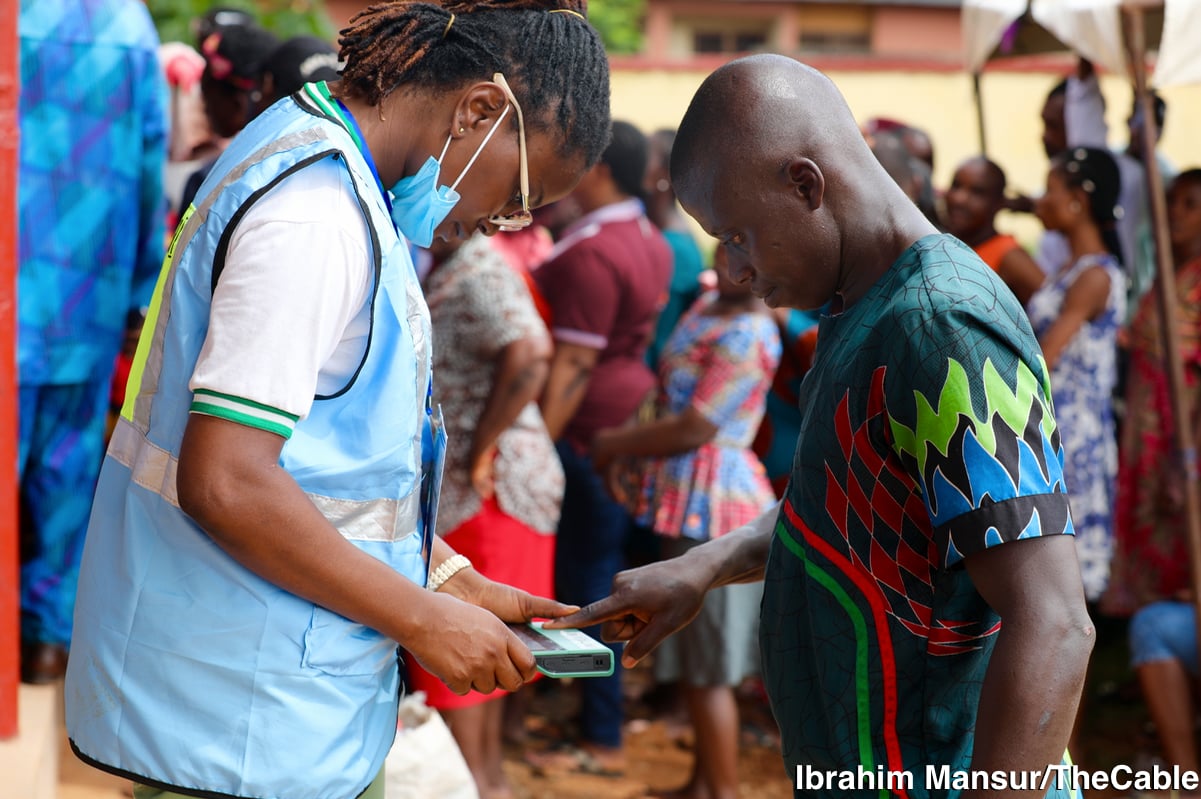
The Peering Advocacy and Advancement Centre in Africa (PAACA) has urged lawmakers to adopt a cautious, inclusive and evidence-based approach as debates intensify over proposed amendments to Nigeria’s Electoral Act.
In a statement issued on Tuesday in Abuja, Ezenwa Nwagwu, executive director of PAACA, spoke specifically on technology-driven reforms such as the electronic transmission of election results.
Nwagwu said while electronic transmission of results is desirable and necessary to improve transparency and credibility, it must be grounded in Nigeria’s existing communication infrastructure to avoid creating new electoral challenges or excluding voters in poorly connected areas.
He warned against reforms driven by assumptions that overlook Nigeria’s uneven internet penetration and digital infrastructure, stressing that clarity is needed on where real-time electronic transmission is feasible and where it is not.

“Our elections cannot be better than the infrastructure they rely on,” the statement reads.
“It is important to properly nuance the conversation around internet penetration. We cannot discountenance that discussion.
“It has to be clear where electronic transmission can happen in real time and where it cannot, so we do not solve one problem and create a bigger one.”
According to him, although millions of Nigerians are registered on 4G networks, connectivity remains largely urban-centred, raising concerns about the feasibility of real-time transmission in many rural and hard-to-reach communities.
“If you have about 94 million people on 4G, the critical question is: where are they located? Are they in Kaura Namoda? Are they in Okitipupa? The reality is that many of these subscribers are urban-based,” he said.
“We still have several backwater communities across the country where internet penetration is either very poor or completely non-existent.”
Nwagwu cautioned against designing electoral reforms from an urban elite perspective, noting that Nigeria’s vast geography and infrastructural gaps must guide policy decisions.
“Nigeria is not just Abuja, Port Harcourt, Victoria Island or Ikoyi. In a state like Taraba alone, from Jalingo, there are communities where you spend five hours on the road to reach,” he said.
The PAACA executive director said discussions on electronic transmission should involve holistic engagement with key stakeholders, particularly agencies responsible for communications and digital governance.
Nwagwu called for a coordinated assessment involving the Independent National Electoral Commission (INEC), the Nigerian Communications Commission (NCC) and the ministry of communications and digital economy to map areas with 2G, 3G, 4G or no network coverage.
“These institutions can come out clearly and say: in these places we have 2G, in others we have limited coverage, and in some areas we have nothing at all. That clarity is important so that we do not pretend challenges do not exist,” he said.
While reiterating support for electronic transmission and collation of results, Nwagwu argued that the current system does not adequately address the problem of collation, which he described as a core weakness in Nigeria’s electoral process.
He said uploading results from polling units to a viewing portal without real-time computation and collation does little to improve electoral integrity.
“If you continue to take compromised results from polling units and upload them into a portal that does not collate and compute results in real time, then we have not made much change,” he said.
He also expressed concern over the frequent amendment of the Electoral Act ahead of the general election, warning that constant changes without deep reflection could undermine electoral stability.
Nwagwu said reforms should be guided by a clear understanding of the problems they are meant to solve, rather than being reactive or politically motivated.
“Most times, we push reforms that end up creating more challenges than they solve. There has to be wider thinking, deeper understanding and harmonisation so that the changes being proposed today do not create future crises,” he said.
He, however, welcomed the growing public interest in electoral reforms and legislative processes, describing it as a positive sign for democratic governance and citizen oversight.(The Cable)
-

 Metro18 hours ago
EFCC moves to seize 57 Malami-linked properties
-
Politics18 hours ago
You Have Over 30 Governors In APC, What Are You Afraid Of? – David Mark To Tinubu
-
News18 hours ago
Makinde insists on Alli’s crowning despite Ibadan Obas’ boycott
-
News18 hours ago
Plateau Killings: Tinubu Meets Victims’ Families At Airport
-
Politics18 hours ago
2027 battle: INEC under fire as ADC crisis worsens
-
News18 hours ago
Gunmen Abduct 9 In Sokoto Community
-
African News18 hours ago
Burkina junta chief says country must ‘forget’ democracy
-
Politics18 hours ago
We helped make Abiodun Ogun gov – Daniel