News
Lawmakers May Shift 2027 Presidential Poll To February 13

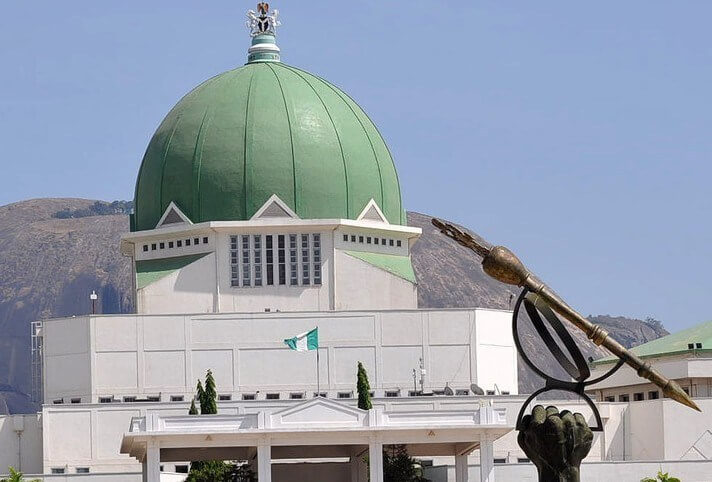
The National Assembly of Nigeria has announced that it will reconvene plenary on Tuesday, February 17, 2026, cutting short its ongoing recess amid indications that lawmakers may review the date set for the 2027 presidential election.
In a notice signed by the Clerk to the National Assembly, Kamoru Ogunlana, senators and members of the House of Representatives were directed to resume sitting at 11:00 a.m. and adjust their schedules accordingly, as “very crucial decisions” are expected to be taken during the session.
“I am directed to inform all Distinguished Senators and Honourable Members of the National Assembly that the Senate and House of Representatives shall reconvene plenary session at 11:00 am on Tuesday, 17th February 2026, respectively,” the notice read.
Members were urged to reschedule their engagements to enable full participation in the session.
However, sources within the legislature revealed that the public notice masks a more pressing agenda—an extraordinary plenary session to review the 2027 presidential election date as stipulated in the Electoral Act amendment.
According to insiders, lawmakers may shift the presidential poll to February 13, 2027, from the earlier date of February 20 announced by the (INEC).
The move is said to be aimed at giving legislative backing to INEC’s request to address concerns over the 2027 elections coinciding with the Ramadan fasting period.
“This session is crucial. It is about more than dates—it is about ensuring that every Nigerian, regardless of faith, has a fair opportunity to participate in the electoral process. The decisions taken here could define the credibility of the 2027 elections,” a Senate source disclosed.
The development comes shortly after the Senate approved the electronic transmission of election results to INEC’s Result Viewing Portal (IReV), while retaining manual collation as a backup in areas where technology may fail.
The reconsideration followed widespread public criticism over a disputed clause in the Electoral Act (Repeal and Re-enactment) Amendment Bill, 2026. Although the Senate approved electronic transmission, it stopped short of making it compulsory and rejected calls for real-time uploads of results.
Under the revised provision, presiding officers at polling units are required to electronically transmit results to the IReV portal after voting concludes and documentation is completed. Where electronic transmission is not possible due to network challenges, the manual result sheet, Form EC8A, will serve as the primary basis for collation and declaration.
Senate President, , while putting the motion to a voice vote, urged senators opposed to the amendment to formally challenge it on the floor.
Meanwhile, the Joint National Assembly Conference Committee constituted to reconcile differences in the Electoral Amendment Bill passed separately by both chambers is expected to meet to harmonise contentious provisions. The harmonised bill will subsequently be transmitted to President for assent.
The committee has reportedly been given a one-week window to conclude its work.
INEC had earlier acknowledged public concerns over the timing of the 2027 general elections, which coincide with Ramadan, a holy month of fasting and spiritual reflection for Muslims.
The National Commissioner and Chairman of the Information and Voter Education Committee, Mohammed Haruna, clarified that the timetable for the 2027 elections was developed in strict compliance with the Constitution, the Electoral Act 2022, and INEC’s Guidelines and Regulations for the Conduct of Elections.
According to INEC’s schedule, the presidential and National Assembly elections were slated for Saturday, February 20, 2027, while governorship and state Houses of Assembly elections were fixed for Saturday, March 6, 2027.
However, Islamic stakeholders, including the Muslim Rights Concern, objected to the proposed dates, arguing that they fall within the Ramadan period, projected for February 7 to March 8, 2027.
Former presidential candidate of the Peoples Democratic Party, , also called for a reconsideration of the dates, noting that February 20 falls squarely within the fasting period.
In response, INEC assured Nigerians that it remains sensitive to legitimate concerns that may affect participation and the overall conduct of elections, adding that it is undertaking consultations and may seek legislative intervention where necessary.
The latest move builds on earlier proposals by lawmakers to adjust the timing of the 2027 elections. In October, the National Assembly suggested holding the polls in November 2026—about six months ahead of schedule—to ensure that all election petitions are concluded before the May 29, 2027, handover date.
Lawmakers also proposed constitutional amendments to shorten timelines for election petitions, reducing tribunal judgments from 180 to 90 days and appellate court decisions from 90 to 60 days, while ensuring that the entire judicial process does not exceed 185 days.
Other proposals under consideration include early voting for security personnel, INEC staff, accredited journalists, and observers at least 14 days before election day.
With plenary set to resume, lawmakers are expected to deliberate on the Electoral Act amendment and other pending legislative matters as preparations intensify for the 2027 general elections.
-

 Metro17 hours ago
EFCC moves to seize 57 Malami-linked properties
-
Politics17 hours ago
You Have Over 30 Governors In APC, What Are You Afraid Of? – David Mark To Tinubu
-
News16 hours ago
Plateau Killings: Tinubu Meets Victims’ Families At Airport
-
News17 hours ago
Makinde insists on Alli’s crowning despite Ibadan Obas’ boycott
-
Politics17 hours ago
2027 battle: INEC under fire as ADC crisis worsens
-
African News17 hours ago
Burkina junta chief says country must ‘forget’ democracy
-
News17 hours ago
Gunmen Abduct 9 In Sokoto Community
-
Politics17 hours ago
We helped make Abiodun Ogun gov – Daniel