Business
MATTERS ARISING: Does Atiku truly have an interest in OPL 245?

The federal government’s recent declaration that the long-running dispute over OPL 245 has been resolved was intended to close a contentious chapter in Nigeria’s oil sector.
The presidency had announced the conclusion of a settlement agreement between the federal government and Eni/Nigerian Agip Exploration Limited (NAEL).
President Bola Tinubu signed the agreement at an event attended by top officials of the oil companies in Abuja.
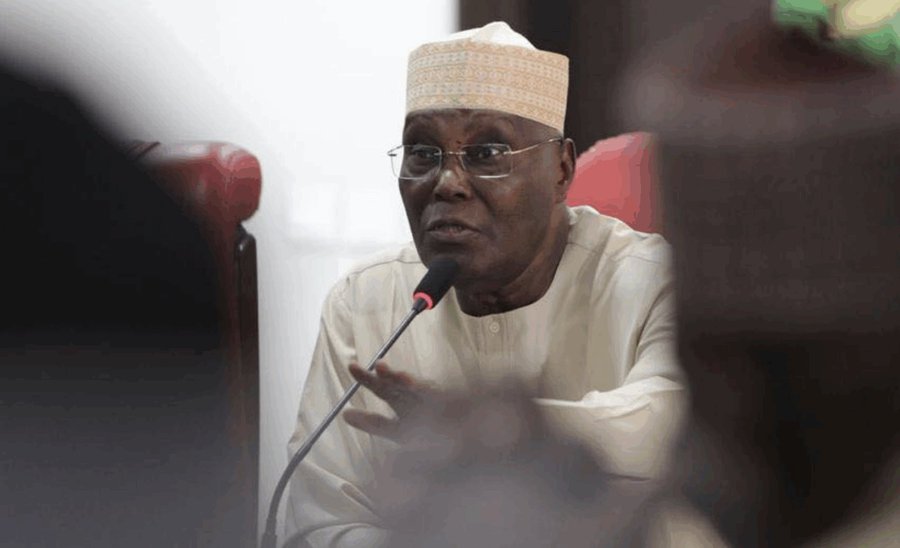
But this has quickly been challenged, with former Vice-President Atiku Abubakar condemning the resolution “without the involvement of the critical stakeholders” — whom he did not name.

WHO ARE THE KNOWN STAKEHOLDERS?
Mohammed Abacha maintains that he is the majority owner of Malabu Oil and Gas Limited, the company awarded OPL 245 in 1998 when his father, Sani Abacha, was the military head of state.
Another critical stakeholder is Pecos Energy, promoted by Otunba Oyewole Fasawe, who was a known associate of former President Olusegun Obasanjo.
Dan Etete, who was minister of petroleum resources under Abacha, had been recognised by the federal government as far back as 2001 as the beneficial owner of Malabu.
Mohammed Abacha contested the recognition in 2010, alleging that his name was illegally removed from the company register as a director in 1998.
He, however, told an FCT high court that he did not pay for the shares — an admission that could have undermined the legality of his claim to ownership. He also admitted to using a pseudonym to register the company.
Indeed, Malabu was originally registered with pseudonyms.
In the original incorporation documents, the shareholders were listed as Mohammed Sani (50 percent), Kweku Amafagha (30 percent), and Wabi Hassan (20 percent).
“Mohammed Sani” was, in fact, Mohammed Abacha, while “Kweku Amafagha” was Etete.
“Wabi Hassan” was the stand-in name for Adamu Hassan, who was then Nigeria’s ambassador to the United States.
Following the Tinubu administration’s declaration that the OPL 245 dispute had been resolved and production could commence, Abacha’s lawyers have issued a pre-action notice rejecting the latest settlement and warning regulators against implementing any agreement reached without the involvement of Malabu’s owners.
Abacha insists his legal interests in the oil block remain valid and subject to pending cases before Nigerian courts, while also demanding N1 trillion in damages.
His initial opposition to the 2011 sale of OPL 245 by the Etete-led Malabu to Eni and Shell, without his involvement, had sparked a series of controversies that eventually escalated into a global scandal.
Mohammed Bello Adoke, the attorney-general of the federation when Malabu sold its interest to Eni and Shell for $1.1 billion in 2011, alleged in his book, ‘OPL 245: The Inside Story of the $1.3bn Nigerian Oil Block’, that Abacha had enlisted him to get Etete to give him a share of the proceeds. He said he refused to intervene because it was a shareholders’ dispute that should be settled by anti-graft agencies or in a court of law, not by the AGF.
Adoke alleged that he was persecuted and put on trial by the Muhammadu Buhari administration because the late president believed he was unfair to the Abacha family in the $1.1 billion resolution agreement.
However, courts in the UK and Italy, as well as regulatory authorities in the US and the Netherlands, have examined the transaction and concluded that there was no evidence of wrongdoing.
Adoke was also discharged and acquitted by Nigerian courts.
AND ATIKU ENTERS THE FRAY…
Abubakar, who was vice-president when Obasanjo removed the OPL from Malabu in 2001, has criticised the Tinubu administration over the resolution.
In a statement issued on Sunday, Atiku accused the federal government of misleading Nigerians by declaring the dispute “resolved”.
“A government that sidelines critical stakeholders, disregards pending judicial processes, and proceeds to celebrate a disputed agreement demonstrates not strength, but recklessness,” Atiku said in the statement issued by his media office.
But beyond the immediate claims lies a deeper, more complex question — one that has trailed the OPL 245 saga for decades: what really is Atiku’s interest in Malabu and OPL 245?
Atiku’s statement positions him as a critic of the government’s handling of the matter, especially as he complained about the opacity in the oil and gas sector.
On its face, his sentiments align with opposition politics, which typically challenge official narratives and raise accountability concerns.
But the history of OPL 245 complicates any attempt to see the issue purely through the lens of opposition politics.
From its earliest days, the struggle over OPL 245 has drawn in powerful political and commercial interests.
In his book, Adoke offers some insight into the extent of elite involvement.
Adoke writes that Gabriel Volpi, whom he described as an associate of Atiku, was among those who negotiated to acquire a majority stake in Malabu in the early 2000s, which would have given him major control.
“Gabriel Volpi, an associate of Vice-President Atiku, and Otunba Oyewole Fasawe, Obasanjo’s pal, had offered to acquire a majority stake of 60% in Malabu and had negotiated with Chief Dan Etete, who acted as consultant to Malabu,” Adoke said.
A 60 percent stake would have amounted to effective control of Malabu and, by extension, significant influence over OPL 245.
Adoke adds that the negotiations ultimately collapsed after Etete declined to cede majority ownership.
“I was told the negotiations broke down sometime in the first half of 2001, because Etete, who for all intents and purposes was the beneficial owner of Malabu despite calling himself a ‘consultant’, refused to cede majority shareholding to them,” he said.
“Shortly after, OPL 245 was unceremoniously revoked.”
Adoke further recounts that, at a later stage in 2010, an individual named Lawal Abba surfaced, claiming to represent the interests of Atiku and the Abacha family in relation to Malabu — asserting that they held stakes in the company.
“…I never knew the Abacha family was involved in OPL 245 until one Lawal Abba surfaced from nowhere in 2010 and claimed to be representing the interests of former Vice-President, Alhaji Atiku Abubakar, and the Abacha family,” Adoke recounted.
“He said they had stakes in Malabu. He demanded that we should ensure that his clients were paid from the sale proceeds of the oil block. He was clearly aware of the ongoing negotiations between Malabu and multinational oil companies.”
Atiku never denied these widely publicised allegations of his interest in the block.
It was reported at some point that Atiku, as vice-president, acquired Adamu Hassan’s 20 percent stake in Malabu, but this was neither publicly denied nor confirmed.
What is certain is that the Etete-led Malabu benefitted wholly from the sale of OPL 245 to Shell and Eni — and the Abacha-led Malabu has protested that it was short-changed.
AN OIL BLOCK SHAPED BY DISPUTE
The oil block has a convoluted history.
On April 9, 1998, the federal military government awarded it to Malabu Oil and Gas Ltd.
On July 2, 2001, Obasanjo revoked Malabu’s licence and assigned the oil block to Shell — without a public bid.
The Etete-led Malabu went to court, and ownership was reverted to it in 2006 by Obasanjo after it reached an out-of-court settlement with the federal government.
Shell fought back and initiated arbitration against Nigeria, but when ex-President Goodluck Jonathan came to power in 2010, the controversy appeared to have been resolved when Shell and Eni agreed to buy the oil block from Malabu for $1.1 billion.
The oil companies also paid $210 million in signature bonus to the Nigerian federal government.
The ensuing controversy has become a soap opera with unending seasons as well as twists and turns.
(The Cable)
-

 News8 hours ago
UK Port Deal: Nigeria Taking Loans To Fund British Economy, Says ADC
-
News8 hours ago
Tinubu’s Ally To Handle N1.4trn Lagos Ports Project
-
News8 hours ago
IG Directs Police to Get to Root of GBV in Delta Community
-
Business8 hours ago
Fresh fuel import licences trigger Dangote export threat
-
Politics8 hours ago
APC to Retain Zoning Formula, National Executive, Say Progressive Governors
-
Business7 hours ago
Nigerians’ Woes Deepen As Petrol Hits N1,400/L
-
Business8 hours ago
MTN Explains Record N1trn Investment, Persistent No Coverage Zones
-
Politics8 hours ago
Any PDP Member With Wike is an Enemy of Democracy – Makinde