Business
US-Iran conflict raises food prices amid deepening poverty

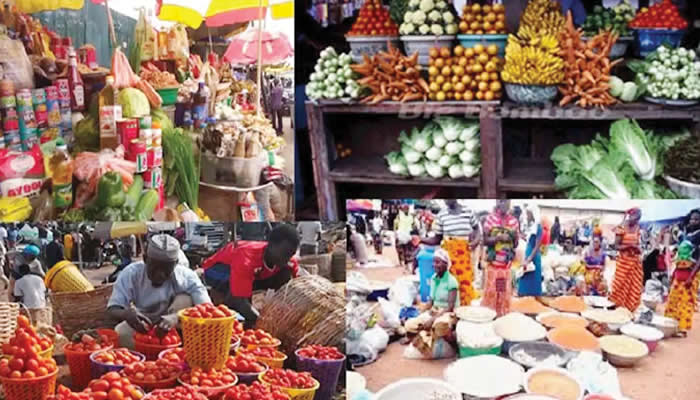
Soaring fuel prices linked to the US-Iran conflict have pushed up food prices across Nigeria, worsening hardship for households already struggling with poverty and rising food insecurity. JANET OGUNDEPO reports
As the US-Iran conflict enters its 29th day, Nigerians are grappling with a sharp rise in food prices driven by soaring fuel costs, with residents in several states reporting significant increases in the prices of staple foods.
Findings by PUNCH Healthwise show that the recent hike in petrol pump prices has triggered higher transportation costs, which traders and farmers say are directly pushing up the prices of staple foods in markets.
In Ogun State, a grains vendor identified simply as Olisa said the prices of staple foods began rising about three weeks ago following the increase in fuel prices.

He stated, “A paint (4kg) of small grain rice, which sold for N5,000 in February, is now N5,500, while long grain rice,n which was N6,000, is now N6,500. Honey beans, which sold for N5,000, are now N6,000. White garri is now N1,500 from N1,200.”
Olisa stated that the increased prices have made customers complain, but there is nothing they can do, adding, “They complain when they hear the new prices, but they have no choice.”
In Niger State, a housewife, Hauwa Ahmed (not real name), stated that there has been a recent increase in food prices due to the rise in fuel and transportation prices.
She stated, “A mudu (1.5kg) of beans I bought last month (February) was N800, now it’s fluctuating between N1,300 and N1,500. Rice was N1,100 before, now it’s N1,500. The prices of fuel rose from N900 to N1,300 overnight. I was so shocked the following day when I got to the filling station, and I saw the price of fuel was now N1,300 per litre.”
Also, a Bauchi State resident, Mukhtar Ahmad, stated that while food prices fluctuate weekly and are often unpredictable in his area, the increase in transportation costs and fuel pump prices triggered a rise in the cost of commodities.
In Abuja, findings from foodstuff traders show that the prices of staple foods have increased.
One of the traders, Mrs Hamisu, said, “A mudu of beans, which costs N700 now, costs N1,500. A basket of tomatoes rose from N13,000 to N25,000. We are still watching the market prices because from next week, prices of staple food will increase, as we are still selling reservoir goods. When the new products come in, it might be more expensive.”
Hunger, inflation, and rising food prices
The situation has already led some residents to ration their food and adjust their feeding pattern.
A Gombe resident, Patience Ahmadu, explained that the situation has forced her to adjust her feeding pattern.
“It has affected me because I now buy in smaller quantities and choose cheaper food items. The amount we eat has reduced because of limited income,” she noted.
She added, “Government needs to reduce transportation costs, improve security and support farmers so that food can be more available and affordable.”
A father of three, Mohammed Idris, stated that the situation has affected his household.
“I now focus on what I can afford. Sometimes I switch to cheaper food, and the quantity we eat has reduced. The government should address insecurity affecting farmers, reduce the cost of transportation and ensure a stable supply so that prices can come down further,” he said.
Already, about 27.2 million Nigerians across the country are currently facing hunger, a figure which could rise to 34.7 million between June and August 2026 if timely interventions are not implemented to address the rising food security challenges.
The Food and Agriculture Organisation had stated that the worsening hunger and food insecurity situation in the country was driven by persistent conflicts and violence in some of the states known for food production, economic shocks, armed violence, organised crimes, particularly in the North-West and North-East, and climate-related shocks like prolonged dry spells and floods in some communities.
It further noted declining purchasing power, high food inflation and seasonal food stock depletion as factors contributing to the situation.
A recent report showed that about three out of five Nigerians earned below N100,000 monthly or have no income at all in 2025.
Despite the rise in the prices of commodities, the nation’s minimum wage is still pegged at N70,000 per month.
Although prices of food and the food inflation rate dropped in December 2025 and into January 2026, recent data from the National Bureau of Statistics showed that food inflation rose to 12.12 per cent in February, reversing the single-digit level recorded in January.
The data also showed rising prices of several staple foods across the country.
However, the US-Iran conflict is further contributing to the rise in food prices across the country.
The conflict began on February 28, 2026, following broken negotiations, with attacks targeting Iranian military infrastructure and resulting in the blockade of the Strait of Hormuz, a choke point for 20 per cent of global oil, further threatening severe economic instability, driving crude prices up sharply by 18 per cent and disrupting global supply chains.
PUNCH Healthwise earlier reported that the escalating Iran-United States conflict will directly worsen Nigeria’s health funding gaps, putting critical programmes like HIV, tuberculosis, malaria, immunisation, and maternal health at greater risk due to potential support cuts.
The report showed that as the prolonged conflict consumes substantial resources, external funding to low- and middle-income countries, including Nigeria, will suffer, indicating that this growing economic burden will exacerbate reductions in global health funding.
The experts in the report noted that with the closure of the Middle East due to the conflict, importation of drugs from China and India will become difficult, driving up costs while funding shrinks.
The report further revealed that the prolonged tensions between the United States and Iran could trigger drug shortages and push up the cost of medicines and consumables across the country.
An agricultural economist who spoke with PUNCH Healthwise has warned that the prolonged conflict could trigger a nationwide increase in food costs, as fertiliser prices are also expected to rise.
The rising prices of food, they noted, could also lead to an increase in Nigeria’s already worsening severe malnutrition cases.
Farmers bear costs
While residents in some areas are already feeling the impact of rising food prices, the situation remains relatively unchanged in others.
Findings in Lagos show that prices seem to be unaffected, as a paint (4kg) of rice sells between N6,000 and N6,500 while a derica sells between N1,000 and N1,100.
A poultry farmer, Tobi Atanda, stated that he currently bears the brunt of the increased fuel prices but is unsure of what would happen should the conflict continue and prices go up again.
He stated, “The only thing that has affected much is just logistics. Although there is a slight increase in the prices of feed, the main area we are affected is in logistics, when we go to the farm and have to deliver eggs to customers.”
How food inflation began
A Professor of Agricultural Economics at Ebonyi State University, Abakaliki, Jonathan Alimba, explained that while the current crisis has worsened food inflation, the problem did not start with the US-Iran conflict.
He noted that Nigeria’s food price challenges began with the removal of fuel subsidy, which significantly increased transportation costs.
The agribusiness and farm management expert noted that the main underlying cause of reduced food availability to citizens is insecurity, especially in the northern region that produces much of the food, particularly grains.
He stated, “Almost all the states in the northern region are in a silent war. The middle belt, which used to produce a lot of grain, has been in a terrible security situation. So, many farms were not cultivated, and even now, the ones that are cultivated cannot do proper harvesting. That is the underlying thing that is facing us. We are talking about the US-Iran war. We are in a silent war in Nigeria because Nigeria is now the flashpoint of the whole world in terms of insecurity.”
The professor stated that the US-Iran war is only worsening the situation Nigeria is facing, adding that the country should not have any business with that.
He noted that the increase in food prices as a result of this situation is only affecting about 65 per cent of the citizens who are very poor, adding that civil servants who used to be middle class have now gone into the class of poverty.
Alimba stated, “Nigeria is actually facing a war situation marked by scarcity of food and other essential commodities. Remember that if this is not controlled, children in some parts of Nigeria, or even the whole of Nigeria, may face a war situation given by disease conditions such as kwashiorkor. Many children in villages are now facing this war situation. Kwashiorkor, which is a nutrient deficiency disease.”
He warned that parents who are civil servants with constant salaries who tried to feed their families marginally may not be able to do so again if this situation continues.
The economist stated that people will start engaging in several crimes to raise money to at least feed their families, noting that the crime rate is already growing, and many people who do not even want to join the criminal population are joining because they want to feed their families.
He stated, “If the conflict does not end soon, there will be a further increase in food prices. There will be a further increase. It’s just increasing every day. So as the war continues, food prices will continue to increase given higher transportation costs affecting food supply.”
Alimba called on Nigeria, being an oil-producing state, to design a way of reducing fuel prices to facilitate commodity transportation within the country.
He stated, “We can’t be producing oil and then anything that moves based on oil prices in the worlddd, even in the Arab world, will start affecting us. It’s not supposed to. Other African countries that are producing oil are not complaining. It’s only in this country that we are experiencing this type of thing.”
The professor urged the government to subsidise prices now that the country is facing the challenge, adding that the additional increase that has entered fuel prices should be removed by the government to retain at least the level of subsidy removal before.
He stated, “From this N1,400, N1,500 we are buying a litre of fuel, reduce it to what it used to be, N850, for now. And that will affect transportation costs. Transportation costs will raise the prices of everything.”
Alimba called on Nigerian politicians in government to think and develop local intervention strategies, noting that senators should find a way of intervening to touch the lives of the poorest of the poor within the areas they represent.
He urged politicians to reduce self-aggrandisement, become selfless, and intervene in the lives of the poorest of the poor.
The economist urged people to look inwards and develop coping strategies as is done in war situations, noting that this is a war situation Nigeria is facing.
Demand for oil higher than supply
A Professor of Agricultural Economics at Usmanu Danfodiyo University, Sokoto, Ahmed Ala, stated that in economics, there is demand and supply, and once one outweighs the other, there is no economic equilibrium in the economy.
The professor noted that the supply of oil is drastically reduced, adding that it has a direct effect on all the prices of other thing because transportation costs have to go up.
He stated, “Today, when you take, for example, fuel that we buy at the cost of N800, N900, it’s about N1,300. The diesel that was bought maybe N1,100, it’s about N1,800. And all this surely has an effect on our prices for all other commodities.”
Ala disclosed that 20 per cent of fertiliser used for agricultural production comes from the Gulf region, adding that all this will surely have a negative effect on food prices, on transportation, and on all other items because oil is directly linked to all this.
He stated, “Prices will begin to go up. And fertiliser, like I said, because we are also having a serious shortage of one of the elements used in making fertiliser coming from that region. So surely we begin to see a rise in prices, because the demand for all these different elements is going up while the supply is going down.”
The economist stated that he hopes the war will come to an end so that things will stabilise and the common man will begin to enjoy some of the benefits from oil.
Ala stated that as long as demand is not met by supply, there is going to be a continuous disequilibrium, and once supply continues to go down, factories, industries, and agricultural production will go down.
He stated, “Once they go down, it means all the items that are produced, the price will have to go up, because you have to incur extra costs before you produce some items, and once you incur extra costs in the production of any item or items, surely you have to transfer that to the consumer to pay, because as a producer, you are producing to make profit.”
Ala warned that in the long run, if the war continues, employment levels will have to go down because some factories will either close down or have to reduce the level of production.
He stated, “Once they reduce the level of production, it means that they have to lay off their staff. So it’s a very serious problem, and as I said, we just pray that we get an end to it, so that our global economy and our different national economies will begin to pick up.”
On what the government can do, Ala stated that the government can provide subsidies in the meantime, but subsidies are normally not efficient in any economy because there are people who are going to hijack them.
He stated, “We don’t want to go back to the issue of subsidies. The government can decide to say that, okay, since we are lucky, oil is being bought at $105, the government can decide to say, okay, we’ll sell at $80, and then you also reduce your price by that percentage. But then, we are still importing fuel. If we were getting all our requirements and producing all our requirements in terms of fuel, diesel, kerosene, then it is easier for the government to do that.”
Ala noted that if the government decides to provide support in terms of financial support, it will not get to the right people, adding that in Nigeria, it has to go through some bureaucratic bottlenecks. (Punch)
-

 Politics24 hours ago
New Twists In Race For Lagos Government House
-
 Politics3 hours ago
Kwankwasiyya Directs Members To Join ADC, Says Kwankwaso Will Leave NNPP On Monday
-
Business2 hours ago
Foreign inflows into banks jump 93% amid recapitalisation
-
Opinion3 hours ago
The Electoral Act and certificate forgery
-
News3 hours ago
How Gunmen Invaded Ondo Hospital, Abducted All Staff On Duty
-
Politics2 hours ago
Atiku, Kwankwaso Meet As 2027 Realignment Talks Continue
-
News3 hours ago
Despite Housing Deficit, Unoccupied Gov’t Houses Flood Bauchi
-
Business3 hours ago
Band A Customers Pay More For Darkness