Business
Debt, gas challenges spur urgency for N501bn power bond

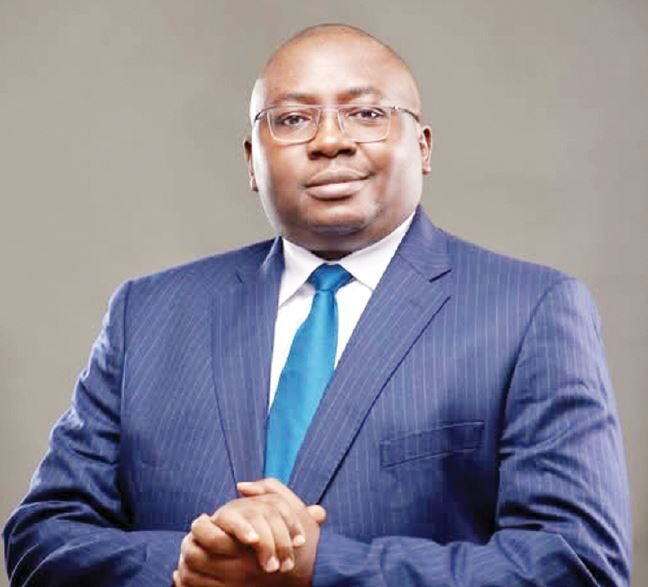
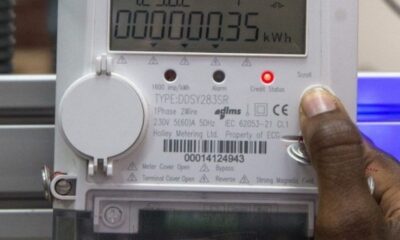
Nigeria’s troubled electricity sector may be on the cusp of a financial reset following the issuance of a N501.02bn bond designed to ease crippling debts owed to power generation companies. While the intervention promises immediate liquidity and a potential boost in electricity output, stakeholders say its long-term success will depend on deeper structural reforms, including cost-reflective tariffs and disciplined subsidy funding, writes DAMILOLA AINA
For years, Nigeria’s power generation companies have operated under severe financial strain, weighed down by mounting unpaid invoices, erratic gas supply and declining investor confidence. Now, an N501.02bn bond issued by the Federal Government through Nigerian Bulk Electricity Trading Plc is being touted as a much-needed lifeline, one that could stabilise operations and potentially improve electricity generation across the country.
The bond, a Series 1 issuance, is the first tranche under the Federal Government’s N1.23tn initial approval, itself part of a broader N4tn Presidential Power Sector Debt Reduction Programme. The initiative is designed to address the deep-rooted liquidity crisis in the Nigerian Electricity Supply Industry and restore financial balance to a sector long plagued by structural inefficiencies.
For an industry carrying over N6tn in outstanding obligations as of December 2025, the move signals what policymakers describe as a decisive attempt to halt years of financial deterioration.

Structured through NBET Finance Company Plc, a special purpose vehicle, the bond carries a full Federal Government guarantee. It is split into two seven-year tranches, N300bn and N201.02bn, both priced at 17.50 per cent and aimed at injecting immediate liquidity into the generation segment.
Beyond its size, the issuance represents a shift in strategy, with the government opting for a capital market solution rather than relying solely on budgetary interventions or monetary expansion.
The roots of the current crisis date back to the 2013 privatisation of the power sector, when expectations of efficiency and investment quickly ran into structural realities.
At the heart of the problem is a persistent mismatch between revenue and operational costs. Electricity tariffs have largely remained below cost-reflective levels, while government subsidies intended to bridge the gap have often existed more on paper than in actual cash disbursements.
The result has been a chronic shortfall in payments to GenCos.
Between May and October 2025 alone, 25 generation companies issued invoices totalling N1.531tn but received just N547.37bn, about 35.7 per cent of what was due. The balance, nearly N1tn, remains tied to subsidy obligations yet to be fully funded.
Over time, these shortfalls have accumulated into a debt burden exceeding N6tn, leaving GenCos struggling to service loans, maintain infrastructure and invest in expansion.
The effects have cascaded across the value chain, particularly affecting gas suppliers, whose reduced or halted supply has further constrained electricity generation.
The Minister of Power, Adebayo Adelabu, said at a recent press briefing that the bond issuance was part of steps taken to stabilise the electricity market.
He explained that President Bola Tinubu approved a N4tn bond to settle verified debts owed to power generation companies and gas suppliers.
According to him, the first tranche of N590bn was issued in January 2026, and it was oversubscribed.
He added that the government is also developing a targeted subsidy to support vulnerable households.
Adelabu said the goal is to move the sector towards full commercialisation and long-term sustainability.
He noted that these measures are expected to improve cash flow, boost investor confidence, and attract more private investment into the power sector.
Adelabu said, “To stabilise the market, Mr President also approved a N4tn bond to clear verified GenCo and gas supply debts. The first tranche of the bond to the tune of N501bn was issued closed in January 2026, and it was oversubscribed. Alongside this, a targeted subsidy framework is being developed to protect vulnerable households and ensure a sustainable path toward full commercialisation and a viable industry. These measures are central to restoring liquidity, enhancing bankability, and crowding in private investment across the value chain.”
For many thermal power plants, the most immediate benefit of the bond will be the ability to settle outstanding payments to gas suppliers.
Operators say years of unpaid debts have forced key suppliers to scale back deliveries, leaving plants unable to operate at full capacity despite having the technical capability to do so.
A senior official at one of the plants explained that improved liquidity could quickly reverse the situation.
“Gas companies have stopped supplying us, but once payments are made from the bond proceeds, supply should resume. When gas comes back, generation will improve almost immediately,” the official said.
This dynamic underscores a central paradox in Nigeria’s power sector: installed generation capacity often exceeds what is actually produced, largely due to fuel constraints rather than infrastructure limitations.
Beyond fuel supply, the injection of funds is expected to address another critical challenge: maintenance.
Liquidity constraints have strained relationships between GenCos and original equipment manufacturers, many of whom now demand upfront payment before carrying out essential maintenance work.
This has contributed to reduced plant availability, estimated at about 30 per cent across the industry.
With improved cash flow, operators say they can resume regular maintenance cycles, increasing plant efficiency and responsiveness to grid demand.
“When you call the OEMs now, they insist on upfront payment because of past experiences. But with this funding, confidence will return. Maintenance will improve, and plant availability will increase,” the official added.
Such improvements could translate into fewer outages and a more stable electricity supply, particularly during periods of high demand.
Furthermore, the bond also represents a systematic approach to clearing long-standing arrears.
Under the programme, verified debts for electricity supplied between February 2015 and March 2025 are being settled through negotiated agreements. So far, 14 GenCos have signed full and final settlement deals valued at about N827bn.
Proceeds from the Series 1 issuance will cover roughly half of these obligations, marking the first phase of a broader repayment plan.
Officials describe the initiative as a “reset” of the electricity market, one aimed at restoring trust among stakeholders and re-establishing financial discipline.
To date, five GenCos representing 14 power plants, including First Independent Power Limited, Geregu Power Plc, Ibom Power Company Limited, Mabon Limited and the Niger Delta Power Holding Company Limited, have executed settlement agreements with NBET.
The Minister of Finance and Coordinating Minister of the Economy, Mr Wale Edun, represented by the Director-General of the Debt Management Office, Ms Patience Oniha, said resolving legacy debts is critical to unlocking growth in the sector.
NBET maintains that the bond is not a bailout but a structured capital market intervention to resolve legacy obligations and restore liquidity.
The Acting Managing Director of NBET, Mr Johnson Akinnawo, noted that the issuance is a major milestone, adding that it is expected to boost liquidity, enhance operational stability, and encourage fresh investment.
Although the amount is yet to be disbursed following recent comments by the generating companies, stakeholders, including the Managing Director and Chief Executive Officer of the Niger Delta Power Holding Company Ltd, Jennifer Adighije, remain optimistic about its impact on the power sector.
Adighije said the Federal Government’s recently approved Power Sector Refinancing Plan has improved liquidity to unlock fresh investments in critical electricity infrastructure and accelerate the completion of ongoing power projects across the country.
“And so we also want to thank Mr President for his support for graciously approving the Power Sector Refinancing Plan, because with improved liquidity, we can also make future investments into ongoing projects, and we will ensure that the vision of Mr President, which is to achieve electricity access to all Nigerians, will be achieved,” Adighije said during an inspection tour of the 570 Megawatts Alaoji Combined Cycle Power Plant by members of the House of Representatives Committee on Power.
For investors, the structure of the bond is as significant as its size.
With a sovereign guarantee, eligibility for pension fund investment and recognition by the Central Bank of Nigeria for liquidity purposes, the instrument aligns with global best practices for infrastructure financing.
This could help attract fresh capital into the sector, particularly as outstanding receivables are cleared and financial risks reduced.
However, they also caution that debt resolution alone will not address the sector’s underlying challenges.
Key reforms, such as enforcing remittance discipline, strengthening transmission infrastructure and ensuring that subsidies are fully funded, remain critical to preventing a recurrence of the crisis.
For ordinary Nigerians, the impact of the bond may not be immediate.
Electricity supply is influenced by multiple factors across the value chain, including transmission capacity and distribution efficiency. As such, improvements in generation must be matched by upgrades elsewhere to translate into better service delivery.
In the longer term, however, a more financially stable sector could lead to fewer disruptions, improved plant performance and increased investment in new capacity.
The N501.02bn bond has been widely welcomed as a bold and necessary intervention in a sector on the brink of deeper crisis.
Yet, it also raises a fundamental question: will it deliver a lasting turnaround or merely provide temporary relief?
On one hand, the programme signals strong political will, coordinated stakeholder engagement and renewed investor interest.
On the other, the core issue of revenue inadequacy remains unresolved. Without cost-reflective tariffs or fully funded subsidies, the risk of accumulating new debts persists.
Even so, industry observers agree that inaction was not an option. Left unaddressed, the sector’s financial challenges could have further eroded generation capacity, worsened grid instability and deepened Nigeria’s power supply deficit.
While not a cure-all, the bond represents a critical step towards restoring liquidity, rebuilding confidence and setting the stage for broader reforms in Nigeria’s electricity market.
Adelabu concluded, “Today, we have achieved a reduction in subsidy requirements from the Federal Government. The transmission capacity has also increased or improved considerably because of a number of transmission projects that are ongoing. We met a capacity of 5,000 megawatt wheeling capacity.
“We have an energy transition plan that’s targeting carbon neutrality by the year 2060, and we believe we are on our way to achieving this. This is Nigeria’s power sector, and we will do everything possible to ensure that we give Nigerians a 24-7 electricity supply over time.
“We believe the bond will encourage the power generation companies as well as gas supply companies. There were also tariff reforms that improved sector revenue.
“We believe that 24-7 electricity supply is possible in Nigeria. It is only a matter of time. We see it as a journey rather than a destination.” (Punch)
-

 News4 hours ago
Though Challenging, Tinubu’s Reforms Laying Foundation For Progress – Northern Govs
-
Politics4 hours ago
This Is Your Final Year In Office – ADC Tells Tinubu
-
News4 hours ago
AEDC Increased Tariff Without Consulting Us – Abuja Residents
-
News4 hours ago
Tinubu Donates Salaries To Wounded Soldiers, Families Of Fallen Heroes
-
Metro4 hours ago
Suspected Kidnappers Of Police Applicant Arrested In Plateau
-
 Sports4 hours ago
CAF Moves To Restore Confidence With Reforms In Statutes, Officiating
-
Politics4 hours ago
PDP convention: Wike bloc installs new NWC in Abuja
-
News4 hours ago
El-Rufai’s Mother To Be Laid To Rest In Abuja