Business
How Iran is making a mint from Donald Trump’s war

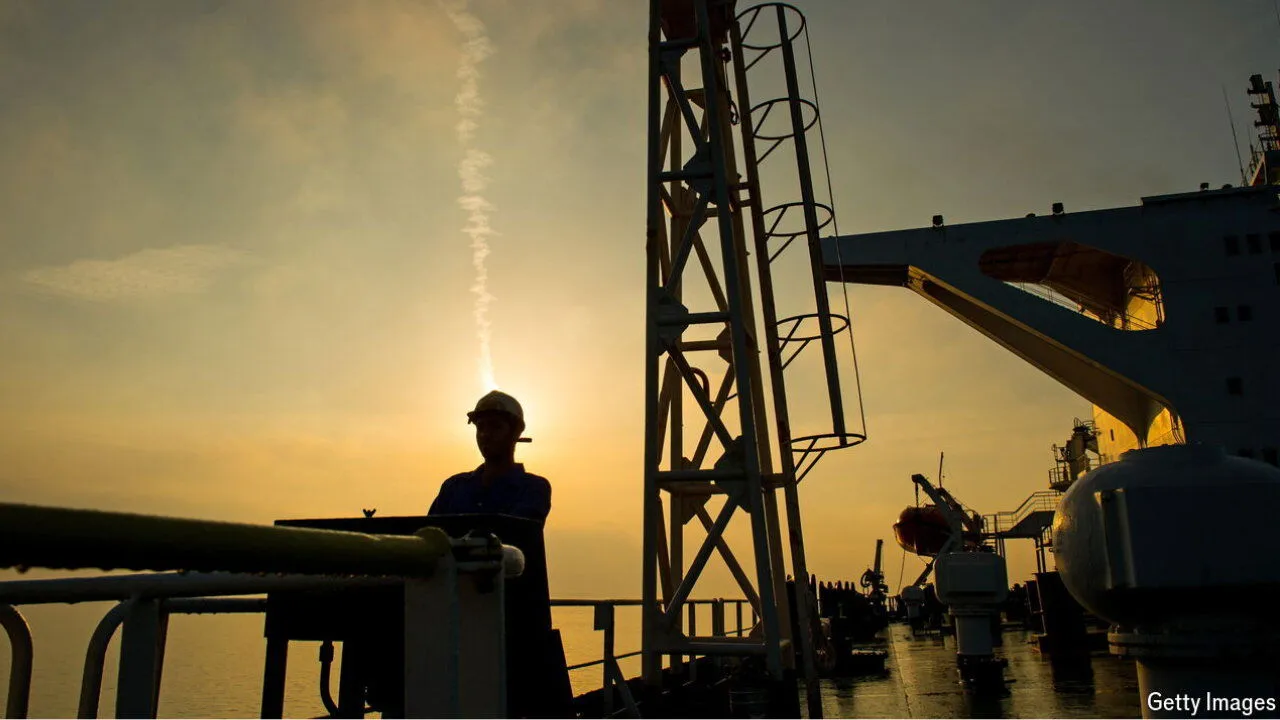
For half a century the Middle East’s petro-monarchies have cast themselves as reliable suppliers of low-cost petroleum. The third Gulf war, now in its fifth week, has shattered that image. With the Strait of Hormuz largely closed, 15% of the world’s oil cannot reach its customers. All Gulf states have slashed output and seen export proceeds plunge.
All bar one. As its tankers keep plying the strait (see chart 1), Iran is now earning nearly twice as much from oil sales each day as it did before American and Israeli bombs started falling on February 28th. It may be pummelled on the battlefield, but the regime is winning the energy war.
Working out how many barrels the world’s greatest sanctions-dodger exports is hard. Its tankers are more furtive than ever, commercial providers of satellite imagery have paused their updates for the region and electronic scrambling has thrown a fog across the Gulf. But a source with knowledge of Iran’s oil accounting, who spoke to The Economist on condition of anonymity, confirms the country is currently exporting 2.4m-2.8m barrels of oil and petroleum products per day (b/d), including 1.5m-1.8m b/d of crude. That is the same, if not more, than it did on average last year. It also sells at much higher prices.

Moreover, Iran’s oil machine has adapted in ways that make it more resilient to strikes and sanctions. Most of the proceeds are now going to the Islamic Revolutionary Guard Corps (irgc), the regime’s elite fighting force. And China is playing an active role in allowing the money to flow. Iran’s war chest is buried deep in Asia, safe from Israeli ordnance.

Iran’s oil business rests on three pillars: salesmen, shipping and shadow banks. Start with the sales force. As in most petrostates, Iranian oil exports are nominally handled by a government-owned producer, the National Iranian Oil Company (nioc). The practice is different. In a country short of hard currency, oil offers a form of liquidity. Factions of the government, from the foreign ministry to the police, are handed barrels they can sell. Some religious foundations have allocations, too.
All these institutions are controlled by 20 or so oligarchs who use their own networks to convert the oil into cash, according to several Iranian sources. Some prominent figures, such as Ali Shamkhani, who once ran Iran’s Supreme National Security Council, are now dead. Others survive. Shamkhani’s son, Hossein, runs a trading and shipping empire. The clique surrounding Mojtaba Khamenei—son and successor to the late supreme leader, killed on the first day of the war—is also involved in the oil business. Some traders are related to Gholam-Hossein Mohseni-Ejei, a top Islamic jurist.
Many of these individuals have links with the irgc. Emma Li of Vortexa, a ship-tracker, reckons that the force, which runs its own oilfields, is behind most of the recent growth in petroleum exports. The son and son-in-law of Mohsen Rezaee, a former irgc commander-in-chief who became the younger Mr Khamenei’s military adviser in March, are said to move a lot of barrels. The irgc’s international arm, the Quds Force, controls 25% of Iran’s crude output. This decentralised structure is hard to dismantle from the air.
During the war the irgc has also tightened its grip on shipping—the second pillar of Iran’s oil business. The force controls Hormuz and controls transport and communications across much of the Gulf. Nominally private companies owned by the irgc or affiliated with Khatam al-Anbiya, another branch of the armed forces, co-ordinate most freight logistics with nioc. They include Sahand (an industrial firm), Sahara Thunder (a trading business), Pasargad (a financial group), Admiral (Mr Shamkhani’s shipping firm) and Persian Gulf Petrochemical Company, which runs oil-processing plants. All are under American sanctions for acting as front companies.

Iran’s logisticians work hard to keep tankers out of harm’s way—the cargo can be worth $150m-200m, five to ten times the value of the clunkers carrying it. On Kharg Island, from which 90% of Iran’s crude usually departs, vessels at the outermost “T-jetty” (see map, bottom) now operate with emergency escape procedures. In case of attack, ships can cut mooring lines and sail without tug assistance. The Azarpad jetty, which handles the largest tankers, has reduced usage from its two berths, for safety reasons. Shuttle tankers continue to run between Kharg, nearby islands and storage vessels.
America has bombed military installations on Kharg and threatened to seize the island. But the irgc appears to be preparing for such a scenario. The smaller Jask, Lavan and Sirri terminals are operational and amassing record stocks (see map, top). Pushed to the max, they and others might handle 25% of what Kharg currently exports, reckons Richard Nephew, a former American envoy to Iran.
All details of the ships, including cargo, crew names and destinations, are communicated to the irgc via intermediaries upon departure. Once vetted by the force’s naval command, says a source, a passcode is issued. As ships approach the strait, they are asked to provide the code by radio; if approved, a small irgc boat escorts them through. They will often cross not down the middle, as they used to, but via a narrow corridor hugging Iran’s coast, where the force can conduct more verifications. Some tankers are asked to pay a toll of several million dollars, according to Lloyd’s List, a shipping journal. Their transponders are briefly turned on to avoid collisions—before going off again as tankers enter the Indian Ocean.
Despite America’s decision last week to waive sanctions on the sale of the near-record 150m Iranian barrels already at sea, Iranian tankers continue to use every trick available—stealing other ships’ credentials, forging documents, spoofing their locations—to conceal their cargo’s provenance. “They think the waiver is a trap,” says a source familiar with Iran’s shipping business. Most transfer their load on the high seas off Malaysia or Singapore to legitimate-looking vessels for the final leg.

That end of the journey is almost always China, which absorbs over 90% of Iran’s oil. The buyers are 100-odd small “teapot” refineries in Shandong, in the country’s north. On paper, these are independent of China’s state-owned giants, which fear exposure to American sanctions. The reality is murkier. Some teapots count Chinese oil majors as customers. Shandong Shouguang Luqing Petrochemical, a teapot that has bought at least $500m of Iranian crude over the years, owns stakes in three joint ventures with state-owned enterprises.
Before the war the teapots could extract discounts against Brent of $18-24 per barrel for Iranian Light, the country’s flagship grade. Now that other Gulf supplies have dried up, that discount has shrunk to $7-12 a barrel. Factor in the typical freight cost from Malaysia, and Iranian Light delivered to China is now dearer than Brent (see chart 2). Brent itself has surged, buoying the futures price of an Iranian barrel for delivery in a few months’ time to $104, three-quarters above its pre-war level.
This, combined with a government cap on petrol prices that prevents the refiners from passing all the costs on to motorists, is crushing the teapots’ margins. Even the permitted prices have tamped down Chinese demand for refined products (see chart 3). But some state-owned refiners are considering buying Iranian oil under the American waiver, says a source. The nioc rents large storage facilities in mainland China on which these companies could draw. This would formalise China’s involvement in Iran’s oil trade.

Similar formalisation will probably not extend to Chinese presence in the third pillar of Iran’s smuggling complex—payments. Buyers of Iranian oil, Chinese or otherwise, settle by paying into disposable “trust” accounts opened for that purpose, most often at small Chinese banks on the mainland or in Hong Kong. Those accounts are registered in the name of shell companies set up, often for a fee, by Chinese individuals. The oil proceeds are then funnelled from these, through myriad other trust accounts to wherever Iran wants them.
Some of the money stays in China, to pay for goods Iran wants to import. The rest is dispatched around the world. The Economistobtained the names of two Chinese companies used to transfer Iranian oil money in recent months. Together with Kharon, a research firm, we determined that these companies have conducted transactions with plastics-makers in India, Kazakhstan and Turkey.
This shadow payment system is run by dedicated departments inside Iranian firms controlled by Iran’s defence ministry or the irgc, which operate like informal banks. The density of their networks of accounts—numbering in the thousands—allows them to weather shocks created by the war. In recent weeks the United Arab Emirates, once a haven for Iranian money, has shared extensive intelligence on Iranian-linked banks and companies with America. That has prompted Iran to abandon those channels and reshuffle funds elsewhere.
Transactions are now routed through two or three extra layers of shell companies and handled with “extreme caution”, says a source with knowledge of the networks. A group of Iran-linked accounts that person monitors, which held a combined $6bn-7bn before the war, has seen withdrawals as trustees have sought to shelter the cash elsewhere. There is no shortage of havens: bank accounts in East Asia, Britain, Germany, Georgia, Italy and Romania continue to be used, the source says.
The extreme redundancy introduces such complexity that the money is getting harder to trace even for Iran’s central bank—and easier for the country’s oil barons to skim. But it keeps the oil machine going. Short of all-out strikes on Iran’s energy infrastructure—to which Iran would respond by bombing that of other Gulf states—it will not be throttled. (The Economist)
-

 News4 hours ago
Though Challenging, Tinubu’s Reforms Laying Foundation For Progress – Northern Govs
-
News4 hours ago
Tinubu Donates Salaries To Wounded Soldiers, Families Of Fallen Heroes
-
Politics4 hours ago
This Is Your Final Year In Office – ADC Tells Tinubu
-
Metro4 hours ago
Suspected Kidnappers Of Police Applicant Arrested In Plateau
-
News4 hours ago
AEDC Increased Tariff Without Consulting Us – Abuja Residents
-
 Sports4 hours ago
CAF Moves To Restore Confidence With Reforms In Statutes, Officiating
-
Politics3 hours ago
PDP convention: Wike bloc installs new NWC in Abuja
-
Business3 hours ago
Debt, gas challenges spur urgency for N501bn power bond