Metro
Heat Wave Forces Kano Residents To Sleep Outdoors

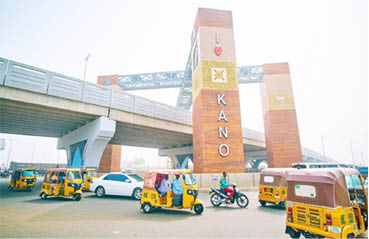
Many residents of Kano are sweltering under extreme heat as the temperature climbs above 40°C during the day. The heat wave has left residents gasping for relief in recent days, with the city’s erratic power supply compounding the situation.
Residents say they are compelled to devise measures to cope with the harsh weather condition amid high risks of measles and meningitis outbreaks as well as respiratory infections.
Across the metropolis, stories abound of sleepless nights, disrupted businesses, and health concerns over extreme heat and unreliable power.
For Aisha Musa, a mother of seven, the heat wave has turned bedtime into a nightly ordeal.

She said, “We spread mats outside because the rooms are like ovens. Without electricity, even rechargeable fans go off quickly. The children cry, but what can I do? Sometimes mosquitoes bite us outside, but inside is even worse. We just pray for rain.”
Aisha’s experience is not an isolated case. Mubarak Abubakar, a father, also said even though he has a solar-powered fan, it blows hot due to the heat wave. He said he and his family have since resolved to sleep outdoors as a mitigation strategy.
“It is only my wife who still insists on sleeping indoors, so she sleeps with the fan alone, while he sleeps with all their five children outdoors,” he added.
In Sabon Gari market, one of the biggest commercial hubs in the bustling city, Malam Ibrahim, a tailor, lamented that the heat in his small shop has become unbearable.
“When there is no light, the machines stop. Customers complain, but I can’t sew without power. The heat inside is too much. Sometimes I close early, even though I need money,” he stated.
For artisans like Ibrahim, the heat wave is not just a health issue but an economic one, cutting into daily earnings and productivity.
For Abubakar Sule, a tricycle rider, the heat has affected both his health and his income.
“There are fewer passengers in the afternoon. People avoid going out unless it is necessary. I also get tired quickly, and sometimes I stop work early. The sun is too much,” he said.
Sule added that he hardly goes out under the scorching sun due to low passenger turnout and waits until late evening to hit the road.
For Aliyu Garba, a civil servant living in Hotoro, the heat wave has triggered health concerns.
“My blood pressure rises these days. Doctors warn that I should avoid stress, but how? No fan, no AC and the air outside is dusty. Even breathing feels heavy. I worry for the elderly and children. This is not normal, it is dangerous,” he explained.
Doctors recommend coping tips
Dr. Aminu Mato Jitandutse of the Community Medicine Department at Aminu Kano Teaching Hospital (AKTH) described the situation as a serious public health concern.
He explained that heat waves affect everyone regardless of social or economic background, noting that dehydration, heat exhaustion and heat stroke are among the most immediate risks. He warned that in severe cases, heat stroke could be fatal.
Beyond these direct effects, Dr. Jitandutse said hot conditions also encourage the spread of infectious diseases.
He pointed out that outbreaks of meningitis and measles are more common during periods of extreme heat, alongside other respiratory infections.
According to him, children and the elderly are particularly vulnerable due to weaker immunity, while adults who spend long hours working outdoors are at risk of exhaustion and dehydration.
The doctor advised residents to take practical steps to protect themselves, including wearing light‑coloured clothing to reduce heat absorption, staying hydrated by drinking water regularly, and seeking shade when exposed to the sun.
He also advised frequent bathing, ensuring proper ventilation in homes and avoiding overcrowded spaces as part of the important measures to take to stay safe.
“Thirst is already a signal that your body is dehydrated. People should not wait until they are thirsty before drinking water. They should take water as much as possible to replace what is lost through sweating and breathing,” he cautioned.
Dr. Jitandutse stressed that awareness and community action are vital to reducing the health impact of the heat wave.
He urged residents to adapt their daily routines and living conditions to mitigate the risks, warning that failure to do so could have serious consequences for public health in Kano.
Brisk business for traders
Meanwhile, some traders, such as cold drink sellers, are making brisk business due to the increasing demand for their products.
Aminu Kabiru, who hawks cold drinks at the ever-busy Zoo Road in Kano, said he makes more than three times daily the sales he used to record a few weeks back.
“People are really suffering under the scorching sun; that is why whosoever wants to buy drinks usually asks for the cold ones,” he explained.
He, however, lamented that the epileptic power supply has led to an increase in the prices of drinks from wholesalers who run on generators to chill the drinks.
As the heat wave bites and electricity supply falters, traders dealing in solar-powered fans and rechargeable appliances have become lifelines for many households.
In markets across Kano, residents troop to stalls in search of alternatives to ease their nights.
Ibrahim Adamu, a dealer at Sabon Gari market, said the demand has surged in recent weeks, with solar‑powered fans topping the list of items families now rely on to survive at night.
“Many people now come to buy solar-powered fans to be able to reduce the heat, especially at night. Our sales since this heat wave started have increased. Fan is like a necessity now,” he added.
It is not our fault – KEDCO
The Kano Electricity Distribution Company (KEDCO) has insisted that the poor power supply crippling the city is beyond its control.
Sani Bala Sani, Head of Corporate Communications at KEDCO, told Daily Trust that the company is only able to distribute what it receives from the national grid, which has been hit by gas supply problems.
“It is just a generation problem happening across the country. Our generation stations are not operating at full capacity because of gas shortages. We need about 350 megawatts to supply all our customers sufficiently, but currently we get only around 200,” he explained.
He stressed that KEDCO is not deliberately denying households electricity, but is forced to ration the limited supply.
“We are trying as much as possible to make sure everyone gets the little we can distribute, but it is not adequate. That is why we prioritise industries and social services like hospitals so they don’t go without supply,” he said.
According to him, the company is exploring embedded power projects and mini‑grids in Kano, Katsina and Jigawa to reduce dependence on the national grid.
Sani noted that while the situation had improved slightly compared to the previous month, significant relief would only come when generation companies resolve the gas supply challenges.(daily trust)
-

 Metro17 hours ago
Man threatens to release Kano governor’s nude videos, photographs
-
Sports17 hours ago
Harry Kane crowned 2026 Ballon d’Or winner
-
World News17 hours ago
Trump hits back at Obama over Saddam ‘Cheesecake Factory’ jab
-
News17 hours ago
OPHK troops destroy ISWAP enclaves in Lake Chad, kill 16 terrorists
-
Business17 hours ago
Microsoft offers voluntary exit packages to 60,000 staff
-
Politics16 hours ago
‘He was trained in sanitation’ — Shettima says Atiku can’t govern modern economy
-
Politics16 hours ago
2027 Elections: 103m voters, 35m votes and the 68% who may decide the Presidency
-
Politics16 hours ago
FACT CHECK: How Tinubu’s Image On Bread Was Edited To Depict Obi