News
Bread that stays fresh-looking for weeks may pose health risks – Experts

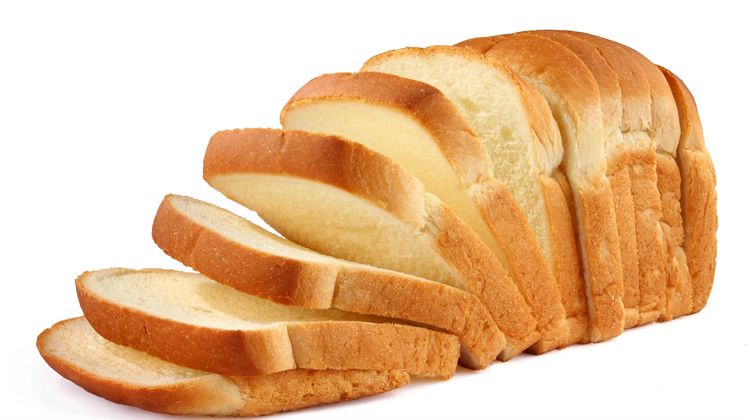
Bread that appears fresh after several days or weeks of storage may still pose health risks despite showing no visible signs of spoilage, senior food safety and nutrition experts have warned.
They explained that while some bread may not easily show physical changes like mould growth, it is not entirely resistant to microbial and biochemical processes.
The experts, who spoke exclusively with PUNCH Healthwise, said consuming such bread could predispose individuals to food poisoning, toxins, gastrointestinal infections, and chronic conditions when consumed frequently.
The warning comes amid debates on social media over the shelf life of some bread, which Nigerians on X claimed remained fresh after days, with some lasting weeks.

A vendor sparked debate online after sharing that a bread she had in stock remained fresh for over two months.
“This bread has lasted two months and still looks fresh,” she said in a video post.
Other Nigerians also shared their experiences, with many urging the National Agency for Food and Drug Administration and Control and other food safety authorities to investigate and protect consumers.
Commenting on the issue, a Professor of Food Science and Technology at Bells University of Technology, Ota, Ogun State, Olugbenga Ogunmoyela, said the absence of visible mould does not mean bread is safe.
“Harmful bacteria such as Bacillus cereus, Staphylococcus aureus, and certain Enterobacteriaceae can multiply in bread without producing any visible change in colour, texture, or smell.
“This phenomenon is sometimes called ‘invisible spoilage’ and is particularly dangerous because consumers are given a false sense of safety,” he said.
According to him, consuming such bread may lead to foodborne illness caused by organisms such as Bacillus species, which can survive baking as spores.
He noted that symptoms may include nausea, vomiting, diarrhoea, and abdominal cramps.
“Another risk is exposure to toxins. Some microorganisms produce heat-stable toxins that remain even if the bread is reheated or toasted. These toxins can cause a rapid onset of food poisoning.
“There are also chronic health concerns, as low-level, repeated ingestion of such contaminated food may contribute to long-term gastrointestinal or systemic health issues,” the don warns.
Ogunmoyela, who is also the President and Chief Executive Officer of the Consumer Advocacy for Food Safety and Nutrition Initiative, added that continuous consumption of potassium bromate also poses health risks.
“In addition, the risk can come from continuous consumption of potassium bromate, which has long been banned in bread-making because of its cancer-causing potential. Unfortunately, many bakeries still use bromate as an oxidising agent to achieve high loaf volume, even though they know it has been banned,” he said.
On his part, a Professor of Food Science and Technology, Olusola Oyewole, said that although bread is relatively low in moisture compared to many perishable foods, it can still change during storage.
“Bread is a relatively low-moisture food compared to many perishable items; however, it is not entirely resistant to microbial and biochemical changes during storage,” he said.
Oyewole, a former Vice-Chancellor of the Federal University of Agriculture, Abeokuta, explained that one common change in stored bread is staling, which affects texture but does not necessarily make it unsafe.
“Over time, bread undergoes staling, a physicochemical process primarily driven by starch retrogradation. While staling affects texture and palatability, making bread firmer and less fresh, it is not in itself a safety concern,” he said.
He, however, stressed that the main concern lies in microbial contamination, which may not always be visible.
“From a safety standpoint, the key issue is the potential for microbial contamination. Even when mould is not visible, certain microorganisms, such as bacteria or fungal spores, may still be present at levels not detectable by the naked eye,” he said.
Oyewole added that these microorganisms can multiply under favourable conditions and pose health risks.
“Under favourable conditions such as ambient temperature, humidity, and handling practices, these microorganisms can proliferate or produce metabolites that may pose health risks,” the don said.
He noted that preservatives used in commercial bread can extend shelf life but do not eliminate risk.
“It is also important to note that preservatives, such as calcium propionate, commonly used in commercial bread, can inhibit mould growth, thereby extending shelf life. However, these do not completely eliminate the risk of microbial activity over extended storage periods,” he said.
Oyewole advised consumers to follow proper storage practices and adhere to recommended consumption timelines.
“In general, for safety and quality, bread stored at room temperature is best consumed within two to three days,” he said.
The don added that refrigeration and freezing affect bread differently.
“Refrigeration may slow mould growth but can accelerate staling. Freezing is the most effective method for extending shelf life without compromising safety,” he said.
The expert, however, urged caution when consuming stored bread.
“While bread that appears unchanged after several days may still be safe under proper storage conditions, the absence of visible spoilage does not categorically guarantee microbiological safety. A cautious approach, guided by proper storage practices and reasonable consumption timelines, is advisable,” he said.
Also speaking, a Chief Dietitian/Nutritionist, Olufunmilola Ogunmiluyi, said bread can look fine after a few days but still pose health risks.
“Even when you don’t see mould, microorganisms like bacteria or fungi may already be growing inside the bread. Some moulds start internally before becoming visible on the surface. Consuming such bread can expose one to harmful microbes,” she said.
The nutritionist listed visible mould, such as green, black, white, or even pink fuzzy spots on the crust or inside the loaf, as warning signs.
“If you see mould on one part, the whole loaf is contaminated. Don’t just cut it off; throw it away,” she advised.
Ogunmiluyi added that freshly baked bread without preservatives is best eaten the same day or the next, while commercial bread should be consumed within two to four days.
“Bread’s nutritional value does change over time, but not all nutrients decline at the same rate. The biggest changes are in quality, texture, and some sensitive vitamins, rather than a dramatic loss of calories or major nutrients,” she said.(Punch)
-

 Politics24 hours ago
Presidency denies withholding ₦250bn NLNG dividends from states
-
News24 hours ago
FG disagrees with World Bank over H1 124% debt servicing/revenue ratio
-
Politics23 hours ago
2027: APC unveils online portal for support groups
-
News23 hours ago
5 Security Operatives Killed As B/Haram Attacks Adamawa Communities
-
Metro24 hours ago
Kidnapped Catholic Priest, three others rescued in Benue
-
Politics23 hours ago
Buhari Saw Tinubu As ‘Bad News’, Resisted His Presidency – Baba-Ahmed
-
News23 hours ago
Nnamdi Kanu’s Family Accuses UK Of Failing To Protect Its Citizen, Demands Action To Secure His Freedom
-
News23 hours ago
How Scavengers Stole N3bn Power Line Cables – Zulum