Business
Dangote unveils ambitious plan for 20,000MW power project

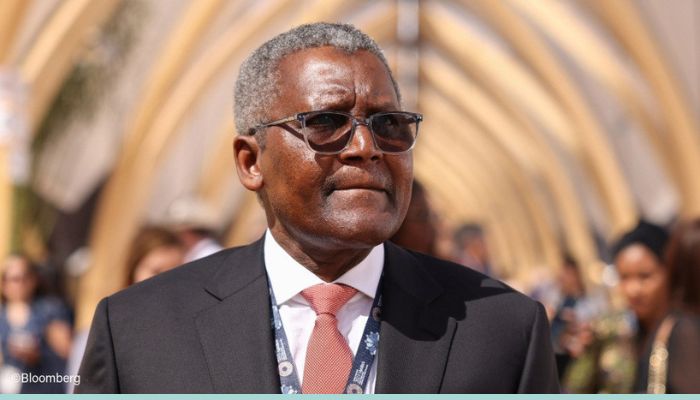
Aliko Dangote, the billionaire behind Africa’s largest industrial conglomerate, has set his sights on Nigeria’s epileptic power sector with a plan to generate 20,000 megawatts of electricity. The ambitious plan comes as the continent’s most populous nation continues to buckle under a chronic energy deficit that has seen government targets missed and industrial growth stifled.
The announcement, made during a conversation with International Finance Corporation Managing Director Makhtar Diop, marks a significant escalation in Dangote’s industrial footprint beyond oil refining, cement, and fertiliser.
“We are now going into power… 20,000 megawatts,” he said, adding that Africa’s most pressing needs remain energy, fertilisers, and industrial inputs.
Having recently commissioned a 650,000-barrel-per-day refinery and established a dominant position in the fertiliser market, the billionaire suggests his group now possesses the liquidity and asset base to tackle the power sector. He noted that his operations are becoming asset-light and generating the kind of robust cash flow required to fund such a capital-intensive expansion.

Dangote’s entry into the sector follows a string of failed promises from the Nigerian government. Adebayo Adelabu, ex-Power Minister, has repeatedly missed deadlines to stabilise the grid at even 6,000 megawatts, a fraction of what Dangote is now proposing. Since taking office in August 2023, Adelabu has watched three separate deadlines pass while actual supply often languishes near 3,331 megawatts. This output is barely enough to sustain a single major city, leaving a nation of 200 million people largely dependent on expensive diesel generators.
The economic toll of this energy poverty is staggering. World Bank data suggests that erratic power costs the Nigerian economy roughly $29 billion annually, representing about 10 percent of its gross domestic product. While the government briefly touched a record 6,003 megawatts in March 2025, the achievement was fleeting. Supply quickly regressed due to a combination of infrastructure vandalism and a dysfunctional gas supply chain.
Despite Dangote’s track record of delivering mega-projects, his 20,000-megawatt vision faces a gauntlet of systemic hurdles. The most immediate obstacle is Nigeria’s fragile transmission network, which currently lacks the capacity to sustain 8,000 megawatts without risking a total grid collapse. If Dangote builds the plants, the state-controlled middleman of transmission may remain a bottleneck that prevents power from reaching factories and homes.
Financial viability remains another significant headwind. Nigeria’s power sector is locked in a liquidity trap where distribution companies struggle to collect revenue, leading to massive debts owed to gas suppliers and generation firms. At least 70 percent of the country’s current thermal plants are starved of gas because of unpaid invoices. Dangote may need to leverage his own gas assets and LNG capabilities to bypass this supply chain volatility, yet he will still have to contend with a regulatory environment that has historically struggled to maintain cost-reflective tariffs.
The billionaire’s strategy appears rooted in vertical integration. By expanding into potash and phosphate mining in Congo and Brazil, and building a deep-sea port, Dangote is positioning his empire to be its own largest customer.
“The needs of Africa are petroleum products and fertilisers,” Dangote said. “Today, in about two and a half years, we will be the largest fertiliser company in the world. We are putting up 12 million tons of urea. We are opening up mines of potash and phosphate in Congo and Brazil. We are building the biggest deep-sea port with an 18-meter draft. We are doing LNG.”
However, the scale of a 20,000-megawatt project would require a total overhaul of Nigeria’s energy policy and a level of private-sector coordination that has eluded the country since the 2013 privatisation of the sector. For now, the market remains skeptical of any timeline that does not account for the structural rot of the national grid.(BusinessDay)
-

 News15 hours ago
Outcry as fake products flood markets
-
Celebrity Gist15 hours ago
Okoye really sweet, Cardi B says after third sighting
-
News16 hours ago
N33.75bn Cash Transfer Mystery: FG Failed to Prove Millions of Vulnerable Nigerians Received Funds — Auditor-General
-
Business15 hours ago
Airport policies didn’t drive Uber out of Nigeria, says FAAN
-
Metro15 hours ago
Trafficker lures, sells 15 Nasarawa children