News
Presidency Admits Military’s Error In 2024 Claim Of ISIS Commander’s Death

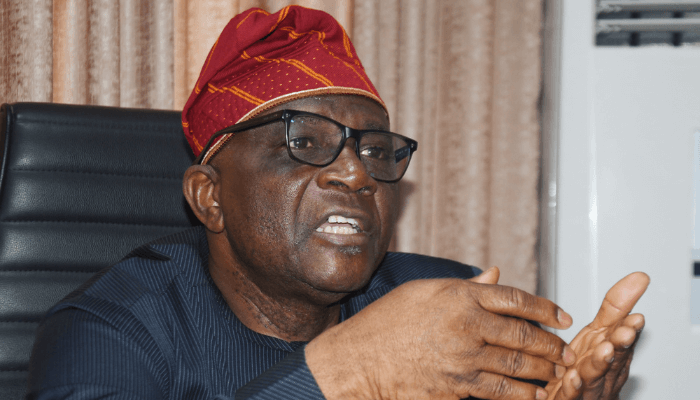
The Presidency has acknowledged that the Nigerian military made an error in an earlier claim regarding the killing of top ISIS commander, Abu-Bilal Al-Manuki.
US President Donald Trump had announced the killing of the commander whom he described as the “most active terrorist in the world”.
President Bola Tinubu also confirmed the killing, saying Al-Manuki was killed in a joint Nigerian-American counterterrorism operation.
The Nigerian leader had said he looked forward to more collaboration with the US.

However, Daily Trust spotted that two years ago, the Defence Headquarters listed Al-Manuki among terrorists neutralised between January and March 2024.
Addressing journalists at Defence Headquarters in Abuja, then Director of Defence Media Operations, Edward Buba, had described Minuki as head of Is-Al Furqan Province (ISGS and ISWAP).
According to Buba, Minuki popularly known as Abubakar Mainok among his criminal gang members, operated along Birnin Gwari Forest in Kaduna State as well as the Abuja Kaduna Highway.
The former Defence spokesman said the terror commander was killed on February 21, 2024.
Buba had claimed that over 50 combatants which included Kachallah Alhaji Dayi, Kachallah Idi (Namaidaro), Kachallah Kabiru (Doka), Kachallah Azarailu (Farin-Ruwa), Kachallah Balejo, Ubangida, Alhaji Baldu, among several others, were all killed within that period.
The public had expressed shock over the coincidence.
Responding to critics who questioned the credibility of the latest claim based on previous instances where insurgent leaders were wrongly declared dead, presidential spokesman, Bayo Onanuga, argued that intelligence gathering in counterterrorism operations was often imperfect and subject to evolving realities.
Onanuga said the latest operation was based on months of coordinated intelligence gathering and surveillance involving Nigerian and international security agencies.
“It is acknowledged within military and intelligence circles that Al-Manuki’s name had appeared among lists of suspected ISWAP/Boko Haram commanders reportedly killed in 2024 during operations around the Birnin Gwari forest axis in Kaduna State,” the statement said.
“However, security officials now clarify that the earlier listing was a case of mistaken identity or misattribution in the fog of sustained counterinsurgency operations.”
The statement further explained that intelligence authorities had since established that the Birnin Gwari area was never part of Al-Manuki’s known operational territory, thereby discrediting the earlier assessment.
“Importantly, intelligence now confirms that the Birnin Gwari theatre was never within Al-Manuki’s established operational sphere, which negates the accuracy of the earlier assessment,” it added.
Defending the latest claim, Onanuga maintained that security agencies were now “100 per cent certain” that the ISWAP commander had been neutralised following what he described as a highly coordinated intelligence-driven mission.
According to the statement, the operation followed “prolonged Intelligence, Surveillance, and Reconnaissance (ISR) efforts,” backed by communications monitoring and phone intercepts that reportedly commenced in December 2025.
“The intelligence trail, according to sources familiar with the mission, did not emerge overnight.”
“Rather, it was built over months of persistent tracking, digital surveillance, and human intelligence inputs to map Al-Manuki’s movements across key locations in northern Nigeria.”
He disclosed that security agencies initially sought to apprehend the commander alive before circumstances later led to the final operation.
“Security officials disclosed that efforts initially focused on capturing him alive rather than eliminating him,” it stated.
“This explains why he was reportedly under surveillance in multiple locations, including Abuja and Maiduguri, up to just days before the final operation.”
The statement stressed that unlike previous incidents where battlefield reports were later revised, the latest operation involved “a significantly higher degree of precision, target validation, and multi-source intelligence confirmation.”
“Officials maintain that multiple layers of verification were applied before authorisation of the final kinetic action, making this operation distinct from earlier incidents in which battlefield assessments later required revision,” it added.
“In their assessment, ‘this time, there is no ambiguity.’”
He cited global examples, including previous inaccurate reports surrounding former ISIS leader, Abu Bakr al-Baghdadi, before his eventual death was confirmed years later.
“For example, even in the global campaign against ISIS leadership, early reports of the death of Abu Bakr al-Baghdadi were later proven incorrect, with his actual death confirmed four years after the first successful killing was announced,” the statement noted.
Onanuga warned that dismissing military successes without full knowledge of operational details could weaken morale and public confidence in ongoing counterterrorism operations.(daily trust)
-

 Business21 hours ago
Refining Battle: Dangote calls for ‘level playing field’ as court deals Lagos refinery a blow
-
Metro21 hours ago
US death row inmate survives execution after two lethal injections
-
Business21 hours ago
Transport cost pain bites despite Tinubu’s Oct 1 promise
-
Social Media News21 hours ago
WhatsApp introduces parental controls for teens
-
World News21 hours ago
Trump admin revokes over 250,000 visas in broad immigration crackdown
-
Politics3 hours ago
Osuntokun accuses Atiku of affront, disrespect to Tinubu in Oct. 1 speech
-
Entertainment3 hours ago
Diddy thrown into solitary after VIP prison life exposed
-
News3 hours ago
Troops rescue 10 NYSC members, kill 16 terrorists, recover weapons