Business
Why companies are hesitant to list amid Dangote Refinery buzz

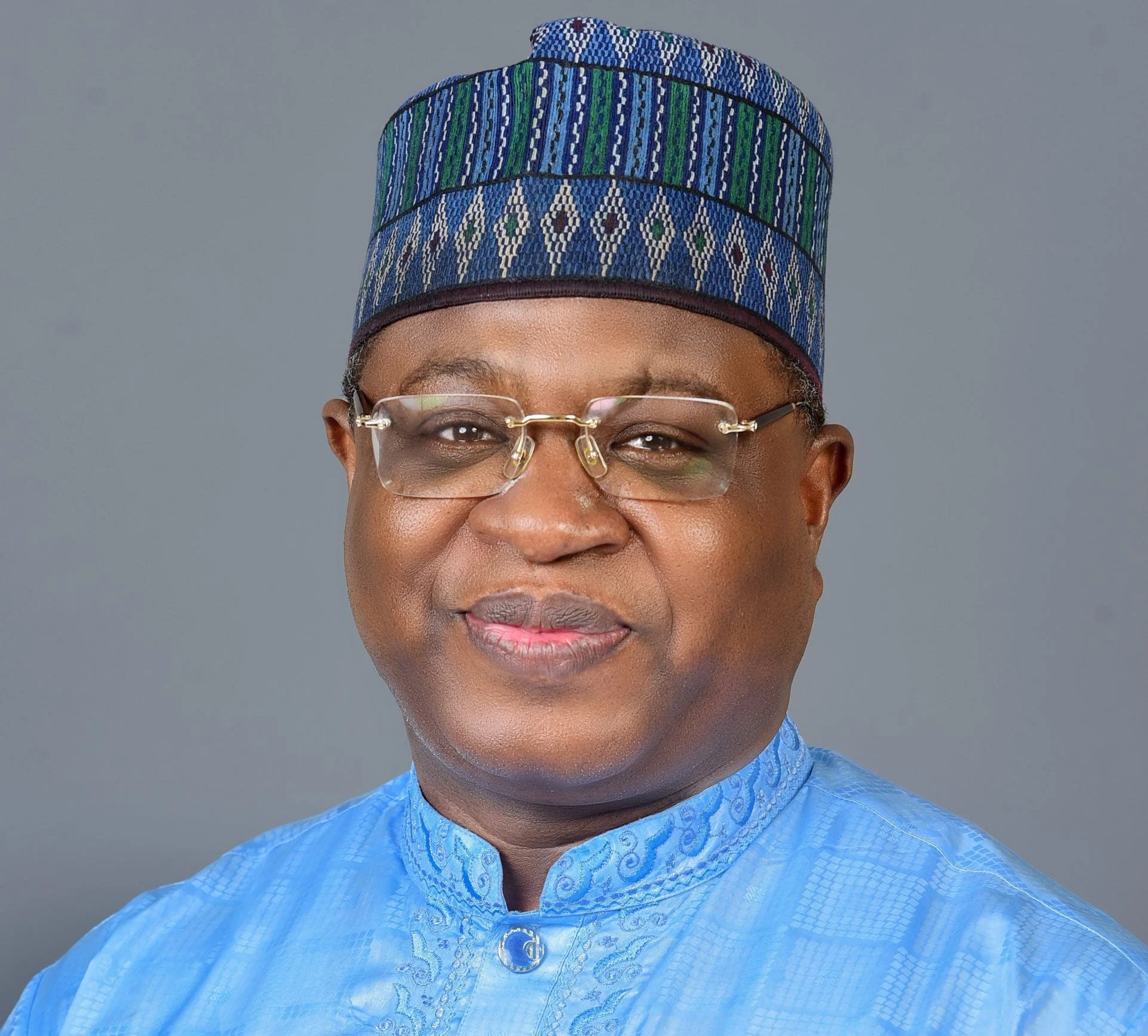
Several companies planning to list on the Nigerian stock exchange are delaying their share offerings for fear of being overshadowed by the highly anticipated listing of Dangote Petroleum Refinery, according to Umaru Kwairanga, chairperson of Nigerian Exchange Group (NGX).
“We believe most of the listings in the pipeline will come immediately after Dangote Refinery has come in,” he told The Africa Report on the sidelines of the Africa CEO Forum in Kigali on 14 May. “In fact, there are some fears from some of those companies.”
The hesitation stems from concerns that investor appetite will be entirely absorbed by what Kwairanga described as a transformative listing that could bring $5bn to market, representing just 10% of the refinery’s $50bn-plus valuation.
“Their fear is that they don’t want to come and start competing with the Dangote Refinery,” he said, adding that “they feel that investors will prefer to buy Dangote” over their shares if listings overlap.

Kwairanga pointed out that the NGX has been urging prospective issuers not to delay if their fundamentals are strong, arguing that there is sufficient depth of capital for multiple offers. “We have enough for the Nigerian market and Africa,” he said.
Preparing for 20-50 million new investors
The chair said the planned Dangote Refinery listing would be a landmark for the NGX and potentially one of Africa’s largest capital market events, with strong domestic and international demand expected.
“This is an African offer, not just a Nigerian one,” he said, noting that the listing is “unprecedented and will change the narrative of the exchange”.
NGX has been engaging the Dangote Group for more than a year and is working to market the deal beyond Nigeria by bringing other African exchanges into the effort, including in South Africa, Kenya, Rwanda and Ghana.
The exchange is also preparing for a potential surge in retail participation. With fewer than 10 million Nigerians investing in equities out of a population exceeding 200 million, Kwairanga said the refinery listing could attract “20 to 50 million new investors”.
He noted that the NGX has invested in technology upgrades, operator training and capacity expansion.
Kwairanga expects the process to be smooth, given Dangote’s familiarity with listing requirements through other group companies already quoted. The conglomerate already has three quoted entities in Lagos – Dangote Sugar Refinery, NASCON Allied Industries and Dangote Cement, accounting for over 13% of the total market value of N161.28trn ($117.4bn) as of 19 May.
The NGX’s priority, he adds, is ensuring market infrastructure, trading systems, investor education, broker readiness, disclosure standards and post-listing liquidity are adequate for an offer of that scale.
Market rally as domestic investors take the lead
Kwairanga said Nigerian equities have outperformed expectations this year, with market capitalisation rising from below N100trn at the beginning of the year to above N160trn, a gain of more than 60%. Average daily transaction values have climbed from below N10bn to above N70bn, he said, adding that the near-term target is to push the turnover to N100bn before year-end.
“We expect to double our market capitalisation this year,” he said, adding that crossing the N200trn mark is achievable even without the Dangote Refinery listing.
Kwairanga described the structural shift in the market’s investor base towards domestic capital as “a positive sign of market maturity”.
“Historically, foreign portfolio investors had an outsized influence on market direction,” he said. “Today, domestic pension funds, asset managers, insurance companies, proprietary investors and retail investors are playing a much more dominant role in sustaining market liquidity and stability.”
Foreign investors previously accounted for more than 60% of the market but are now below 30%. “That said, this does not mean foreign investors are no longer important. We are already seeing signs of renewed foreign interest as macroeconomic conditions gradually improve,” he said.
Kwairanga highlighted a policy shift by the National Pension Commission, which increased the maximum allocation pension fund administrators can deploy in the capital market from under 25% to 35%. NGX is pushing for an increase to 50%. “The primary concern for pension managers is the safety of those funds; returns come second,” he said, but added that equities are essential for preserving real value.
The Middle East conflict poses less risk
The Iran war has heightened global market uncertainty, prompting investors to shift towards safe-haven assets and reduce exposure to riskier frontier and emerging markets.
But Nigeria’s equities market has been insulated from the worst of the volatility, according to Kwairanga, who notes that the market is far less dependent on foreign portfolio inflows than it was a few years ago.
“If this were three to five years ago, when foreign investors made up over 80% of our market, the impact would have been much more significant.” He said that while the country continues to court foreign investors, a market anchored by local confidence is healthier. “To invite someone to invest in your country, you must first demonstrate local confidence; foreign investors should be an add-on.”
He adds that with oil prices elevated amid increased geopolitical tensions, the country is earning more per barrel, which is supporting foreign exchange reserves and providing comfort to foreign investors.
Reforms to boost listings and activity
Kwairanga said NGX is pushing reforms to attract high-growth companies, including state-owned enterprises and fintechs such as OPay, adding that listing requirements could be streamlined “without compromising our regulations”.
Recent changes include policy reviews, a push for faster settlement times – moving from T+3 to T+2, transitioning to T+1 and targeting eventually T+0 – and extended trading hours from 9am to 4pm (up from 2.30pm previously) to align with global markets.
The NGX Invest platform has also digitalised the investment process, evident in the bank recapitalisation, where 80%-90% of over 40 million accounts invested digitally, according to Kwairanga.
“We are seeing encouraging engagement across several sectors, including financial services, energy, infrastructure, telecommunications and consumer goods,” he said when asked about the pipeline of new listings in 2026 and next year.
He said the bank recapitalisation exercise has further underscored the capital market’s crucial role in long-term capital formation. “Our focus remains on building a market environment that is attractive, efficient, transparent and capable of supporting high-quality companies whenever they decide to access the market,” he added.
Kwairanga pointed out that the NGX has ranked among the world’s top-performing stock exchanges alongside a sharp rise in activity. Asked about his tenure, he said the market’s contribution to GDP has risen from under 10% when he took over in October 2022 to more than 30%.
His longer-term aspiration is for Nigeria’s market capitalisation to reach 70% to 100% of GDP – benchmarks he compared with South Africa and India: “We have the population, the resources and the technology.” (The Africa Report)







-

 Opinion22 hours ago
Lagos-Calabar coastal highway: When transparency takes the back seat, Nigerians pay the price
-
Politics33 minutes ago
2027: Nigerians Won’t Renew A Mandate Of Hardship – Atiku Tells Tinubu
-
News17 hours ago
Court remands alleged ISWAP ransom negotiator in Kuje prison
-
Sports31 minutes ago
CAF Hands NFF, Other Member Federations $175,000 Boost In Annual Subvention
-
News30 minutes ago
Experts caution as IMF offers fresh advice on subsidy
-
News24 hours ago
Nigerians still suffer high cost of living, despite economic growth — IMF
-
Sports22 hours ago
Netflix secures rights to air 2030 World Cup in Spain
-
News17 hours ago
BREAKING: EFCC probes Atiku, reopens alleged corruption file