Business
Sallah: Soaring ram prices dampen festive mood

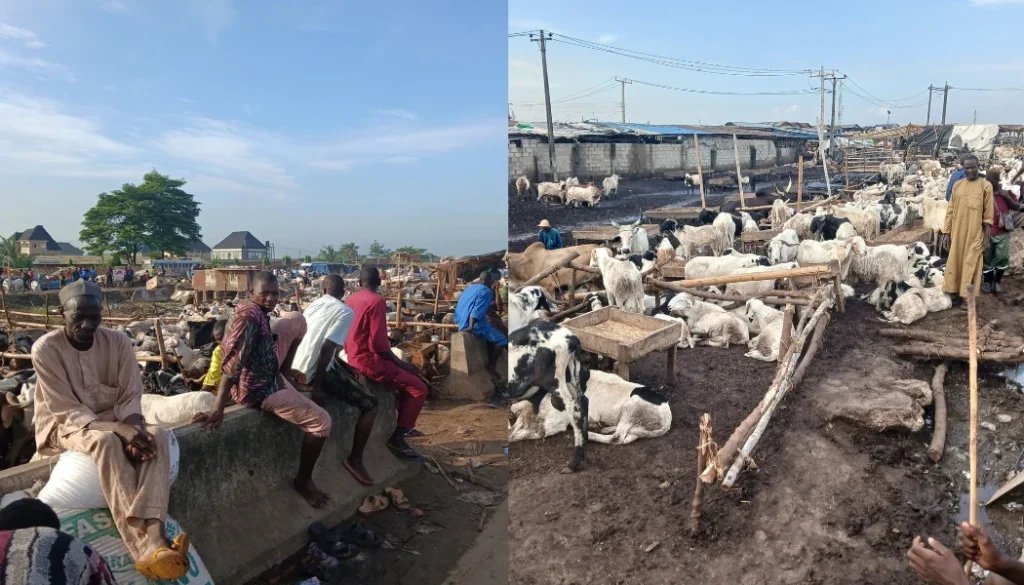
The Eid-el-Adha celebrations may be less exuberant across the country this year as soaring ram prices continue to frustrate many Muslim families preparing for the annual religious festival.
With only three days to the 2026 Eid-el-Kabir celebration, many households in Ogun, Kebbi and Sokoto states have expressed concern over the escalating cost of sacrificial rams, saying the prices were beyond the reach of average earners amid persistent economic hardship.
Market surveys conducted across major livestock markets, including the popular Kara Market along the Lagos-Ibadan Expressway in Ogun State, as well as Birnin Kebbi, Kalgo, Ambursa, Achida, Bodinga, Wamakko and Kara markets in Sokoto State, revealed that although rams are available in large numbers, patronage was low as buyers grapple with shrinking purchasing power.
At Ambursa and Kalgo livestock markets in Kebbi State, small-sized rams were sold for between N100,000 and N200,000, while medium-sized breeds ranged from N300,000 to N500,000. Bigger and exotic breeds were priced between N600,000 and N1m, depending on their size and quality.

A similar trend was observed in major livestock markets across Sokoto State, particularly at Kara, Achida, Bodinga and Wamakko markets, where traders said prices had risen sharply compared to the previous Eid-el-Kabir season.
Many prospective buyers were seen moving from one seller to another, engaging in prolonged bargaining without making purchases.
Speaking at Ambursa Market, a resident of Birnin Kebbi, Ibrahim Sulaiman, said the high prices had made preparations for Sallah difficult for many families.
“Honestly, this year is very difficult. We came to buy a ram but the prices are shocking. What we bought for about N250,000 last year is now close to N500,000. We are hoping prices will come down before Sallah,” he said.
At Kalgo Market, a civil servant, Umar Aliero, said he had delayed purchasing a ram because of competing financial obligations and the rising cost of living.
“School fees, feeding and transportation are already taking most of our income. Buying a ram now requires serious planning,” he lamented.
In Sokoto, residents who visited Kara and Wamakko markets also voiced concerns over the cost of sacrificial animals.
One of the buyers at Kara Market, Musa Abdullahi, said many households might be unable to afford rams this year.
“The prices are beyond what ordinary workers can easily afford. Some people may have to contribute money together to buy one ram for Sallah,” Abdullahi said.
Livestock dealers, however, attributed the surge in prices to rising transportation costs, expensive animal feed, insecurity along supply routes and multiple levies imposed during the movement of animals from neighbouring countries and various parts of northern Nigeria.
A trader at Ambursa Market, Alhaji Sale Unable, said sellers were also grappling with difficult business conditions.
“Transportation and feeding costs have gone very high. We are not happy increasing prices, but that is the reality of the market now,” Unable explained.
He added that temporary ram markets had sprung up across Birnin Kebbi and Sokoto metropolis, with traders displaying animals along major roads, residential areas and open spaces in a bid to attract buyers ahead of the festival.
Checks by our correspondents showed that several strategic roads and open spaces in both states had gradually transformed into makeshift livestock markets as traders intensified efforts to attract last-minute Sallah customers.
Despite the visible availability of animals across markets in Sokoto and Kebbi states, economic hardship continues to cast a shadow over the festive excitement usually associated with Eid-el-Kabir celebrations across the North-West.
At the popular Kara ram market along the Lagos-Ibadan Expressway in Ogun State, traders also lamented poor patronage despite having large numbers of animals available for sale.
A livestock dealer, Umaru Adamu, said he sold rams for between N200,000 and N1.5m, depending on the size and breed.
Another trader, Umaru Yusuf, blamed the increase in prices on rising logistics expenses and the cost of sourcing animals from neighbouring countries.
“We transport one ram for N20,000 and a cow for N50,000 from Maiduguri. We bring them in from countries like Chad to Maiduguri, which is another cost entirely,” he said.
Our correspondent observed that the market remained largely quiet, with only a handful of buyers moving around the stalls.
While some traders attended to their livestock, many others sat idly, waiting for customers.
Meanwhile, heavy traffic congestion paralysed sections of the Lagos-Ibadan Expressway inward Lagos on Saturday as commuters and traders flooded the state ahead of the Eid-el-Adha celebration.
Findings by Sunday PUNCH revealed that the gridlock was caused by increased movement of people travelling into Lagos for shopping and other activities associated with the festive season.
Motorists and passengers were stranded for several hours as vehicular movement slowed significantly along major stretches of the highway.
A check by our correspondent, who boarded a commercial bus from Magboro at about 3:01pm, showed that a journey that would normally take about 10 minutes to Berger lasted nearly two hours because of the traffic congestion.
Several stranded passengers resorted to trekking, while some motorists attempted to navigate narrow alternative routes, only to become stuck in muddy areas.
A commercial driver, Sodiq Olaire, said the recurring gridlock had become a familiar experience during festive periods.
“It has become a usual thing, especially during festive periods. Something should be done on this road,” he said.
A commuter identified simply as Alima lamented how the traffic disrupted her schedule.
“I entered from Magboro around 3pm heading to Oshodi. I have an appointment for 5pm and I am still here now,” she said at about 4:18pm, while her vehicle remained trapped before Kara Market.
Another commuter, Joy Adekunle, who was seen trekking towards Kara Bridge, said she had no option but to continue on foot in order to reach her destination on time.
-

 News14 hours ago
43 die, many missing after inhaling toxic fumes during fuel theft in Rivers
-
News14 hours ago
Presidency says Tinubu’s US FOIA case civil, not criminal
-
News14 hours ago
DSS bars operatives from arresting people over civil matters
-
Politics14 hours ago
FG counters Obi, Kwankwaso over Tinubu’s re-election chances
-
Politics13 hours ago
IPMAN Has Put Tinubu’s Subsidy Argument Into Shame – Atiku
-
Politics13 hours ago
‘My N500,000 electricity bill now N4m, Atiku’ll restore subsidy’ — Amaechi
-
News14 hours ago
Fubara signs N1.84tn Rivers 2026 appropriation bill into law
-
News14 hours ago
Court orders police, AGF to grant ‘fake PFIPC DG’ access to lawyers