Business
Malabu Oil court action clouds Tinubu’s ‘resolved’ OPL 245 deal

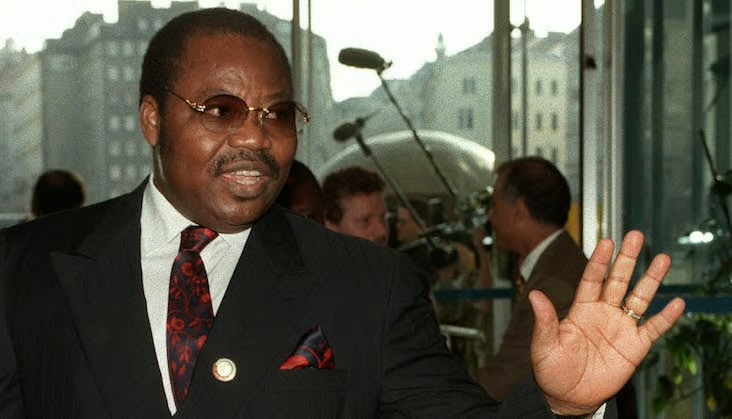
Malabu Oil & Gas has filed a motion at the Federal High Court in Abuja to challenge the Nigerian government’s March settlement of the long-running OPL 245 dispute, according to court documents seen by The Africa Report. It raises fresh uncertainty over President Bola Tinubu’s claim to have unlocked one of the country’s most important deepwater oil assets.
The company, whose founding shareholders included Mohammed Sani Abacha, Amafaga Kweku and Hindu Hassan, is seeking judicial review of the 5 March agreement under which the federal government moved to restructure the disputed block.
In court papers filed on 25 May, Malabu argues that the deal split OPL 245 into four separate assets and reassigned them to Shell Nigeria Ultra-Deep, Shell Nigeria Exploration and Production Company, Nigerian Agip Exploration Company and the Nigerian National Petroleum Company (NNPC) without the consent of its directors.
Nearly three decades of disputes
In his affidavit, Abacha says Malabu was allocated OPL 245 in April 1998 after paying the required fees and signature bonus, but the Olusegun Obasanjo government revoked the licence in 2001. Malabu challenged the revocation, leading to a 2006 out-of-court settlement and, Abacha says, the licence’s reallocation to Malabu in 2010.

He adds the block returned to dispute in 2017 under Muhammadu Buhari, when Malabu sued over a resolution agreement that it says excluded the company. With those cases and related appeals still pending, Abacha says Tinubu’s 5 March 2026 dispute-resolution deal was illegal.
The case is expected to return to court on 11 June.
The challenge comes less than three months after the presidency hailed the OPL 245 settlement as a “historic” resolution of a dispute that has shadowed Nigeria’s oil industry for more than two decades. The government said the agreement would clear the way for the Zabazaba-Etan development, which it says could add about 150,000 barrels per day to national production and protect Nigeria from more than $2bn in potential liabilities.
Dividing the block into four parts
Reuters reported in March that Nigeria had broken up OPL 245 into four new assets to be operated by ENI and Shell, potentially clearing the way for development of one of Nigeria’s largest deepwater reserves after nearly three decades of overlapping litigation. The block was first awarded in 1998 to Malabu, a company linked to former petroleum minister Dan Etete, before later becoming the subject of the $1.3bn Shell-ENI transaction that triggered corruption investigations in several jurisdictions. Shell, ENI and their executives denied wrongdoing and were acquitted in Italy in 2021.
ENI says the 5 March agreement with the Nigerian government provides for the conversion of OPL 245 into two petroleum mining leases (PML 102 and PML 103) and two petroleum prospecting leases (PPL 2011 and PPL 2012). It says Nigerian Agip Exploration will act as operator alongside NNPC and Shell Nigeria Exploration and Production Company.
Malabu’s filing contests that settlement architecture. The company is asking the court to declare that it retains exclusive possessory rights over OPL 245 and that no agreement affecting the block can be valid without its consent. It is also seeking orders restraining the government and regulators from giving effect to the March agreement, and compelling the authorities to act on its request for conversion under Nigeria’s Petroleum Industry Act.
Renewed court action delays ‘progress’
The company had earlier threatened to seek N1trn ($729m) in damages, alleging trespass on its rights, in a March pre-action notice addressed to the Nigerian Upstream Petroleum Regulatory Commission. In that notice, Malabu said it was “neither consulted nor involved” in the negotiations leading to the agreement and warned against any regulatory recognition of the settlement while related cases remained pending.
The filing has sharpened the political row over the deal. Former vice-president Atiku Abubakar accused the Tinubu administration of misleading Nigerians by presenting the dispute as finally resolved, saying Malabu’s legal challenge showed that the matter remained active before the courts. Atiku also questioned the transparency of any settlement reached without Malabu’s participation.
The federal government has rejected that criticism. Attorney General Lateef Fagbemi said the settlement brought closure to a dispute spanning almost three decades and argued that the 2011 resolution agreement had already dealt with Malabu’s claims. He said Malabu had relinquished its interests for valuable consideration and that subsequent proceedings in the US, UK and Italy had not established wrongdoing by ENI, Shell or the transaction as a whole.
Fagbemi also said the arbitration brought by ENI and Nigerian Agip Exploration at the International Centre for Settlement of Investment Disputes concerned Nigeria’s alleged delay in converting OPL 245 into an oil mining lease, rather than ownership disputes within Malabu. He said the case exposed Nigeria to N2. in potential liabilities.
The dispute now turns on whether Malabu can persuade the court that its claimed rights over OPL 245 survived the 2011 settlement and later litigation. For the Tinubu administration, the risk is that a deal presented as a clean break with one of Nigeria’s most notorious oil scandals becomes another stage in the same long-running battle – delaying the investment the government says the settlement was designed to unlock. (The Africa Report)
-

 News23 hours ago
Court Orders Wike’s Son Jordan to Produce American Passport in $2.1m Abuja Land Suit
-
Politics22 hours ago
Pantami wins PDP repeat governorship primary in Gombe
-
News23 hours ago
NEMA deploys rescue teams as floods ravage states
-
News22 hours ago
After 68 Days Vacation, Lawmakers Embark On Another Recess
-
Metro23 hours ago
Lagos teen detained over slippers freed after four years
-
Politics22 hours ago
2027: Which running mate brings the most votes – Shettima, Amaechi or Kwankwaso?
-
News23 hours ago
Mixed reactions as FG demarcates First Niger Bridge
-
Sports23 hours ago
AFCON Qualifier: Guinea-Bissau Humble Super Eagles 3-0