Politics
Tinubu’s 2027 advantage grows as Atiku, Obi and Kwankwaso split opposition vote

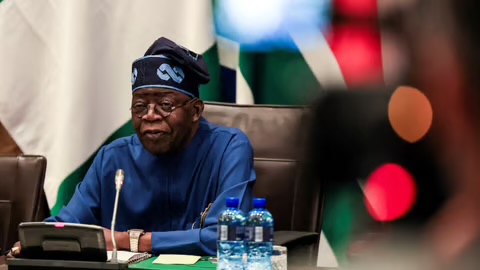
With 48 hours left before the official deadline, Nigeria’s political parties are rounding off primaries to choose candidates for the 2027 presidential election. The emerging field is shaping up as a contest among former allies, old rivals and familiar presidential hopefuls.
For incumbent President Bola Tinubu, the outlook is favourable. Once again, the opposition appears structurally divided – the same weakness that helped deliver his victory in 2023.
Tinubu’s coronation
Tinubu has comfortably secured the ticket of the ruling All Progressives Congress (APC) in a nationwide primary that looked more like a coronation than a contest. His little-known challenger, Stanley Osifo, polled just 16,503 votes. Tinubu secured 11.5 million.
The president is poised to face many of the opposition figures he outmanoeuvred in 2023, though the alliances and party platforms have shifted considerably since then.

Atiku’s seventh attempt
Former vice-president Atiku Abubakar, who finished second as the candidate of the Peoples Democratic Party (PDP) in 2023, has defected to the African Democratic Congress (ADC). He is gearing up for a seventh run at the presidency, cementing his status as the longest-standing presidential contender in modern Nigerian politics.
Unlike Tinubu, who enjoyed a smooth path to the APC ticket, Atiku emerged from a controversial ADC primary that is already being challenged by former transport minister Rotimi Amaechi and veteran banker Mohammed Hayatu-Deen. The party declared Atiku the winner with 1.8 million votes, ahead of Amaechi on 504,117 and Hayatu-Deen on 117,120. The losers alleged irregularities even before the result was announced, raising fears of internal fragmentation before the campaign can begin.
The ADC’s division into three factions further complicates Atiku’s path to 2027. Former presidential candidate Dumebi Kachikwu has declared himself the candidate of a rival faction, while multiple court cases continue to threaten the party’s stability.
This is the second time Hayatu-Deen has contested a presidential primary against Atiku. In 2022, he entered the PDP race but later withdrew, alleging that the process had been heavily monetised, before eventually backing Atiku’s candidacy. Amaechi also sought the presidency in 2023 under the APC, but lost the ticket to Tinubu in a crowded contest that included then vice-president Yemi Osinbajo and former Senate president Ahmad Lawan.
Tinubu and Atiku’s relationship has not always been adversarial. Blocked by his boss, former president Olusegun Obasanjo, from securing the ticket of the then-ruling PDP in 2007, Atiku turned to Tinubu’s Action Congress (AC) to pursue his presidential ambition.
The former vice-president has often claimed that he spared Lagos for Tinubu when Obasanjo allegedly instructed Atiku to reclaim all opposition-controlled states for the PDP. In recent years, however, the two men have drifted apart as their political ambitions and interests clashed.
Obi and Kwankwaso regroup
Peter Obi, the third-force candidate whose 2023 campaign disrupted Nigeria’s traditional two-party dominance, is returning under the newly formed Nigeria Democratic Congress (NDC) after leaving the Labour Party.
Obi finished third in 2023 with more than six million votes, powered largely by urban youth and first-time voters. The NDC has zoned its presidential ticket to the south, effectively clearing the path for Obi, who remains the party’s only declared aspirant.
A united Atiku-Obi ticket could have defeated Tinubu in 2023
He is expected to run on a joint ticket with Kano political heavyweight Rabiu Kwankwaso, marking one of the most consequential realignments ahead of 2027. The two men explored coalition talks in 2023, but negotiations collapsed over who would lead the ticket. They now appear to have resolved that impasse under a single-term arrangement: Obi would serve one four-year term before power returns to the north in 2031 – a strategic long game for Kwankwaso’s presidential ambition.
Both men were previously aligned with Atiku in the ADC until April, when they defected to the NDC. While they cited the ADC’s leadership litigation, party insiders say the move was also aimed at avoiding a bruising primary battle against Atiku’s financial and political machinery.
The development echoes Obi’s 2023 exit from the PDP to the Labour Party, when it became clear that Atiku would dominate the party’s primary.
Obi and Atiku share a long political history. In 2019, Obi served as Atiku’s running mate under the PDP and continues to refer to him as his leader. Opposition strategists argue that a united Atiku-Obi ticket could have defeated Tinubu in 2023. Their failure to reunite ahead of 2027 has again strengthened the incumbent’s path to reelection.
Tinubu and Kwankwaso’s failed rapprochement
Although Obi and Tinubu have never shared a political platform, Kwankwaso and the president maintained a more pragmatic relationship after the 2023 election. While Obi challenged Tinubu’s victory in court, Kwankwaso moved closer to the president amid talks over a possible government of national unity.
The rapprochement eventually collapsed, then deteriorated further in January after Tinubu poached Kwankwaso’s long-time protégé, Kano governor Abba Yusuf, in a move widely seen as an attempt to weaken Kwankwaso’s influence in Kano.
Familiar faces return
Several smaller-party candidates from previous election cycles are also returning to the race.
Omoyele Sowore, founder of the African Action Congress (AAC), will make his third presidential attempt after unsuccessful runs in 2019 and 2023. Sowore continues to position himself as an anti-establishment candidate, rejecting both the ruling APC and the mainstream opposition as corrupt political blocs.
Former Cross River governor Donald Duke has secured the ticket of the Peoples Redemption Party (PRP), marking his second presidential bid after contesting under the Social Democratic Party in 2019. Duke, a former PDP member, had harboured presidential ambitions as far back as 2007 before stepping down for Umaru Yar’Adua during the PDP succession process.
Duke belongs to the “Class of 1999” governors alongside Tinubu, though the two men have never shared a political platform. Duke and Atiku, however, share a long history within the PDP, the former ruling party now deeply fractured ahead of 2027.
One PDP faction, controlled by Federal Capital Territory minister and Tinubu ally Nyesom Wike, has put forward underdog candidate Sandy Onor, effectively neutralising the party’s ability to mount a serious opposition challenge to the president.
A rival faction led by Kabiru Tanimu Turaki has countered by drafting former president Goodluck Jonathan, though Jonathan has notably refrained from publicly entering the race.
Tinubu’s advantage
Tinubu enters the 2027 contest stronger and more politically advantaged than he was in 2023. The APC controls 31 of Nigeria’s 36 states, giving the ruling party one of the broadest political footprints in the country’s democratic history.
The president also benefits from the traditional advantages of incumbency: an unmatched federal war chest, leverage across security, electoral and judicial institutions, and a deeply fragmented opposition that has so far failed to sustain a united coalition.
People will believe their votes will not make a difference because the opposition vote has been split
The opposition’s greatest weakness remains the same factor that undermined it in 2023 – competing ambitions among politicians who agree on removing Tinubu but cannot agree on who should replace him.
Political analyst Liborous Oshoma foresees a six-horse race reminiscent of 1983. “I foresee voter apathy. People will believe their votes will not make a difference because the opposition vote has been split. That is why some people are angry with Atiku in the south, while others are angry with Obi in the north,” he says.
Oshoma adds that the political arithmetic favours Tinubu’s reelection: “When the president was out of power, he was able to win the election. How much more now that he commands the structures, including the Independent National Electoral Commission (INEC)?” (The Africa Report)
-

 Politics14 hours ago
2027: ADC campaign accuses Kwankwaso of working for Tinubu
-
News14 hours ago
DSS arrests fleeing Maina’s son in Abuja
-
Politics13 hours ago
2027: Tinubu afraid to face Nigerians – ADC
-
Politics13 hours ago
Buhari considered it distasteful for Osinbajo to contest against Tinubu – Babachir Lawal
-
 News13 hours ago
Tinubu approves lifetime pay for ex-immigration chiefs
-
Politics9 hours ago
‘Tinubu Must Go’ Vs ‘Tinubu Must Stay’: Forces Behind Campaigns
-
Metro13 hours ago
Two Nigerians nabbed with cocaine in Thailand
-
News14 hours ago
Obi of Onitsha urges end to hunger, insecurity