Business
Dangote becomes world’s top jet fuel exporter

…on Middle East crisis
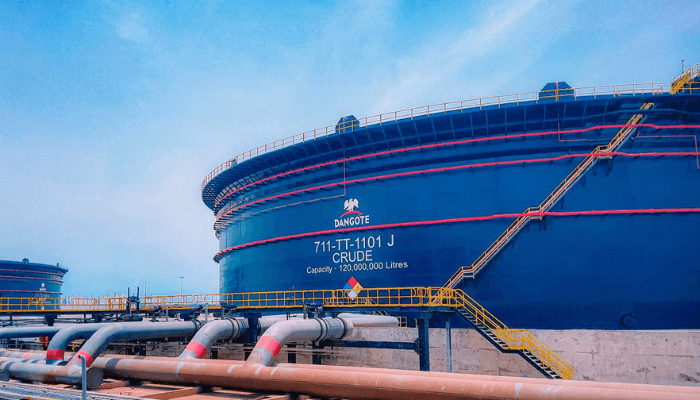
The Dangote Petroleum Refinery emerged as the world’s largest exporter of jet fuel in April, capitalising on disruptions to global fuel trade flows caused by the Middle East conflict and a rapid ramp-up in production at the facility.
According to a recent S&P Global Energy report, the refinery became the world’s single largest aviation fuel exporter after the conflict altered established supply routes and created opportunities for alternative suppliers.

“After the Middle East war began, Dangote shifted to ‘max jet mode,’ and in April it became the world’s single largest exporter of aviation fuel,” the report said, citing S&P Global Commodities at Sea data.
The achievement marks another milestone for the refinery, which has reached its full nameplate capacity of about 650,000 barrels per day following a gradual commissioning and ramp-up process.
The report quoted the refinery’s chief executive officer, David Bird, as saying the facility is increasingly positioning itself as a global refining and trading player rather than a refinery focused solely on Nigeria’s domestic market.
Jet fuel exports became a key driver of growth as supply disruptions in traditional Middle Eastern export hubs redirected aviation fuel demand toward alternative producers.
To maximise production flexibility, the refinery has been importing feedstocks such as GTL naphtha and Bonny condensate to boost gasoline and refined product yields beyond its base configuration.
Bird said maintaining production at scale requires greater sophistication in trading operations, logistics management and supply chain coordination as the refinery expands beyond local crude sourcing constraints.
The refinery is also broadening its crude slate beyond Nigerian light sweet grades, with the capability to process about 40 different crude types, including heavier grades and residue blends.
According to Bird, the company plans to increase the number of crude grades it can process over time as part of a strategy to become a major international trader of crude oil and refined products.
The refinery’s ambitions extend well beyond its current capacity. Bird disclosed that the company is targeting future refining capacity of 1.4 million barrels per day, a move that would require sourcing additional crude from markets including the United States, the Middle East and South America.
The company is also pursuing long-term supply and offtake agreements with governments, airlines and national oil companies as it seeks to reduce reliance on spot market sales.
Bird said the refinery ultimately aims to move closer to global refining benchmarks such as Pulau Bukom Refinery in Singapore, which processes more than 100 crude grades.
Beyond refining, the company is investing in regional logistics infrastructure, including proposed storage and distribution hubs in Namibia, pipeline projects under discussion in Zambia, and storage facilities across parts of Central and East Africa.
According to Bird, the long-term objective is to transform the Lekki Free Zone into a major industrial and energy hub anchored on refining, petrochemicals, logistics and export-oriented manufacturing.
The development underscores how geopolitical disruptions are reshaping global energy trade patterns, while also highlighting the growing influence of Dangote Refinery in international fuel markets.
(BusinessDay)
-

 News14 hours ago
King’s College Lagos concessioned to old boys’ association
-
Sports10 hours ago
FIFA, CAF suspend NFF election, to send joint mission to Abuja
-
News9 hours ago
Nigerians in UK lament delays, extra fees, poor organisation at NIS passport centres
-
News14 hours ago
FG moves to end conflicting economic projections
-
Politics14 hours ago
2027: Tinubu not stranger to me, he’s beatable – Makinde’s running-mate, Daura
-
Metro13 hours ago
Building Collapses In Abuja Hours After Sealing
-
Politics13 hours ago
2027 polls: Voter register nears 100m
-
Business14 hours ago
Trump threatens sales in US of Canadian aircraft maker Bombardier