Politics
Atiku’s hollow victory exposes deep cracks in Nigeria’s opposition

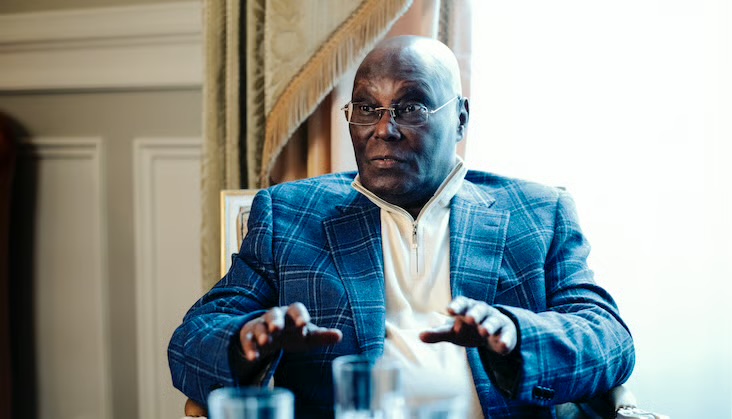
Atiku Abubakar has won the presidential ticket of the African Democratic Congress (ADC). But the victory that was meant to make him the main challenger to President Bola Tinubu has instead exposed the fragility of Nigeria’s latest opposition realignment.
The former vice president, 79, defeated former Rivers State governor Rotimi Amaechi and businessman Mohammed Hayatu-Deen in a nationwide ADC primary, according to Nigerian media reports.
The contest was meant to turn the ADC into the vehicle for a united anti-Tinubu challenge in the January 2027 election. Instead, it has triggered fresh allegations of manipulation and a public break with one of Atiku’s most prominent allies.
A ticket that failed to settle the race
Babachir Lawal, a former secretary to the government of the federation and a senior figure in the ADC coalition, said on 1 June that he was dumping the party after what he called a rigged primary.

“For me, working for Kachalla Atiku means giving Tinubu an automatic ticket to a second term,” Lawal said, adding that he would consult allies on how to stop Atiku from “coming close to the presidency”.
Atiku’s camp has rejected the allegation, saying Lawal had produced no credible evidence of manipulation. But the timing is damaging. Atiku wants to turn frustration over hardship and insecurity under Tinubu into a national campaign. His first task, however, is to stop the opposition platform behind him from falling apart.
The opposition unity project splinters
The ADC-led alliance was conceived as the most ambitious attempt in years to stop Nigeria’s opposition vote from splitting. Tinubu won the 2023 election with about 36% of the vote, while Atiku, Peter Obi and Rabiu Kwankwaso together attracted a much larger share. The logic for 2027 was simple: one candidate against Tinubu.
That plan is already in trouble. Obi and Kwankwaso quit the ADC-led alliance in May, citing internal party turmoil and legal disputes. Both moved towards the Nigeria Democratic Congress (NDC). Obi has since won the NDC nomination, setting up another multi-candidate race against Tinubu and reducing the chances of a single opposition ticket.
Adamawa slips from Atiku’s grip
The problem is not only national. Atiku is also losing ground in Adamawa, his home state and one of his safest bases in 2023, when he beat Tinubu there by 417,611 votes to 182,881. The biggest blow came in February, when Governor Ahmadu Fintiri formally defected from the Peoples Democratic Party (PDP) to the ruling All Progressives Congress (APC), taking cabinet members and lawmakers with him.
Fintiri’s departure matters because it deprives Atiku of state machinery in a place where local networks, patronage and governorship structures can shape turnout. Since crossing to the APC, Fintiri said that power should remain in the south until 2031 – a direct challenge to Atiku’s northern candidacy.
There are other signs of local strain. Atiku’s son, Abba Abubakar Atiku, has publicly backed Tinubu’s second term. The ADC structure in Adamawa has also been weakened by disputes involving Lawal, former senator Elisha Abbo and former governorship candidate Aishatu Binani. According to the draft, Abbo has moved to Labour while Binani has joined the NDC, further thinning the coalition Atiku hoped to rely on at home.
The legal position of the ADC is another risk. Opposition figures who left the alliance cited court cases, internal battles and mistrust. In a shortened electoral calendar, unresolved party disputes could become more dangerous: they can delay nominations, deter defectors and give rivals a chance to challenge candidate lists.
Tinubu’s advantage: A divided field
Tinubu’s camp has moved quickly to frame the crisis as proof that Atiku cannot hold his coalition together. Presidential spokesman Bayo Onanuga said the presidency had “not fired any bullet” against Atiku, but that one of his close allies had already damaged him.
That may be premature. Nigerian politics is fluid, and defections can reverse quickly. Atiku remains one of the country’s most durable opposition figures. He has reached the general election three times, finishing third in 2007 and second in both 2019 and 2023. His name recognition, northern networks and national fundraising base still make him a serious candidate.
But the lesson of 2023 is stark. Tinubu does not need a majority if his opponents divide the field. Atiku’s seventh bid is, therefore, beginning with a familiar problem: he must beat Tinubu, but first he has to hold together the forces that say they want Tinubu out.
(The Africa Report)
-

 African News23 hours ago
Nigeria Demands 2 Permanent UN Security Council Seats For Africa
-
 World News23 hours ago
Trump Bows To Pressure, Allows CNN, Others Into White House After Court Order
-
News23 hours ago
Nigerians Are Enjoying, Petrol Costs N3,000 Per Litre In UK – Okpebholo
-
Politics23 hours ago
Tinubu a friend of south-south, he would get maximum votes in region – Akpabio
-
Entertainment2 hours ago
Jay-Z rape accuser says she made ‘false accusations’
-
Politics2 hours ago
2027: Why Atiku named detained El-Rufai deputy campaign chairman — Dele Momodu
-
African News19 hours ago
How China took control of Africa’s lithium
-
News19 hours ago
BREAKING: U.S. DEA Tells Court Release Of Tinubu-Related Drug Records Could Expose Confidential Sources, Investigative Techniques