Politics
How Tinubu’s 2027 Survival Strategy Mimics Obasanjo’s Blueprint and the Evolution of Nigeria’s Electoral Capture

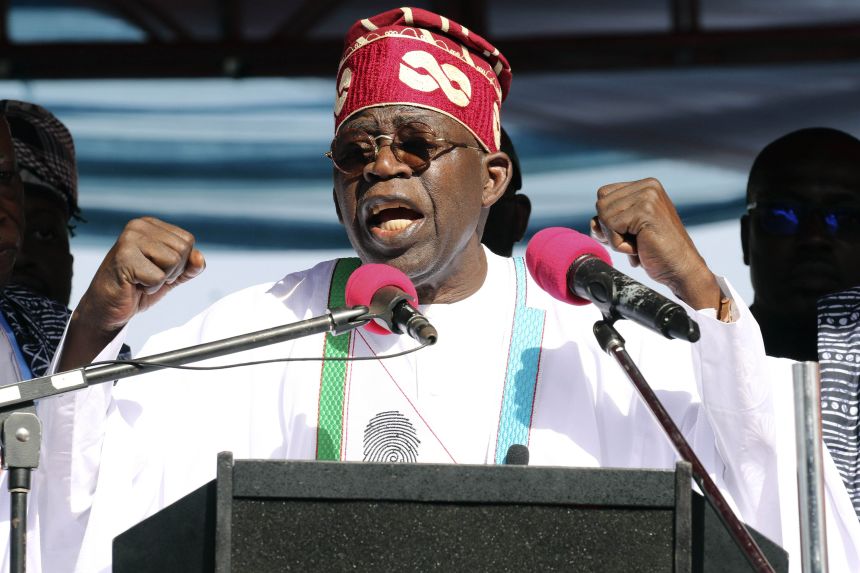
President Bola Ahmed Tinubu has initiated a comprehensive tactical review ahead of the 2027 general elections, weighing a sweeping overhaul of his campaign machinery and a restructuring of the Independent National Electoral Commission (INEC) high command to lock in a second-term victory.
The frantic re-strategizing follows classified internal polling from multiple highly respected firms showing that the President faces a devastating defeat in any free, fair, and transparent contest. According to these private assessments, opposition leader Peter Obi commands a clear lead, followed by Atiku Abubakar in a distant second, with Oyo State Governor Seyi Makinde and former Cross River State Governor Donald Duke trailing.
Facing an insurmountable popularity deficit, the Tinubu kitchen cabinet is currently engineering a survival blueprint that relies heavily on institutional capture. This strategy is not new; it is the modern refinement of an authoritarian playbook pioneered during the Olusegun Obasanjo era and perfected by Tinubu himself during his decades-long stranglehold on Lagos State.
The Obasanjo-Iwu Genesis: The Blueprint of Total Capture

To understand the current anxiety within the presidency, one must trace the history of Nigeria’s electoral subversion back to the Fourth Republic’s foundational years. Following the return to democracy in 1999, the ruling political class quickly realized that popular mandate was an unstable currency.
By the 2003 and 2007 election cycles, then-President Olusegun Obasanjo famously declared elections to be a “do-or-die” affair for the People’s Democratic Party (PDP). To guarantee total victory, Obasanjo weaponized INEC by appointing Professor Maurice Iwu as chairman—a man whose tenure became synonymous with the complete institutionalization of electoral fraud.
Under Iwu, INEC abandoned any pretense of neutrality. The 2007 general election, which brought Umaru Musa Yar’Adua to power, was so heavily engineered, marred by ballot-snatching, inflated figures, and the non-delivery of voting materials to opposition strongholds, that even Yar’Adua himself publicly admitted in his inaugural address that the election was deeply flawed. Obasanjo and Iwu proved that if a ruling administration controlled the electoral umpire and the security apparatus, the actual votes of the populace became entirely irrelevant.
The Anambra Crucible: How Peter Obi Defeated the Rigging Machine
While the federal government was solidifying its electoral capture, a historic counter-narrative was being written in Anambra State, establishing Peter Obi as a pioneer in the fight for electoral integrity. In the 2003 gubernatorial election, Obi ran under the banner of the All Progressives Grand Alliance (APGA). Although the domestic population voted overwhelmingly for Obi due to his grassroots appeal and technocratic blueprint, the PDP-led federal establishment, in collusion with local political godfathers, executed a massive rigging operation.
In March 2006, the Court of Appeal finally overturned Ngige’s victory and restored Obi’s mandate. This landmark judicial intervention demonstrated that when an election is conducted without rigging, the genuine will of the people favors organic leaders over imposed candidates. Obi’s experience in Anambra proved that the rigging machine is not invincible when confronted with unyielding legal scrutiny and verifiable mathematical evidence from the polling units. (247Ureports)
-

 Politics16 hours ago
If Buhari, A Retired General Could Not Wipe Out Insecurity, What Do You Expect Of Tinubu? – Yari
-
 Politics16 hours ago
Tinubu Campaign Spokesperson Breaks Silence On Wife’s Fresh Role At INEC
-
Business5 hours ago
FG targets ₦750tn capital market, seeks NNPC, NLNG listing
-
Politics16 hours ago
Stop sending money to relatives at home; tell them to vote for competent leaders – Obi tells Nigerians abroad
-
Business6 hours ago
I’d rather go to prison than lose my phone – Dangote
-
News16 hours ago
FCT Residents Make ‘Tough’ Adjustments Over Rising Cost Of Living
-
Politics16 hours ago
INEC Mum Over Rejection Of Tinubu Spokesperson’s Wife As Head Of Electoral Operations
-
 News6 hours ago
Tinubu Extends Tenures Of Immigration, Prison CGs