Politics
Nigeria 2027: Six key races to watch

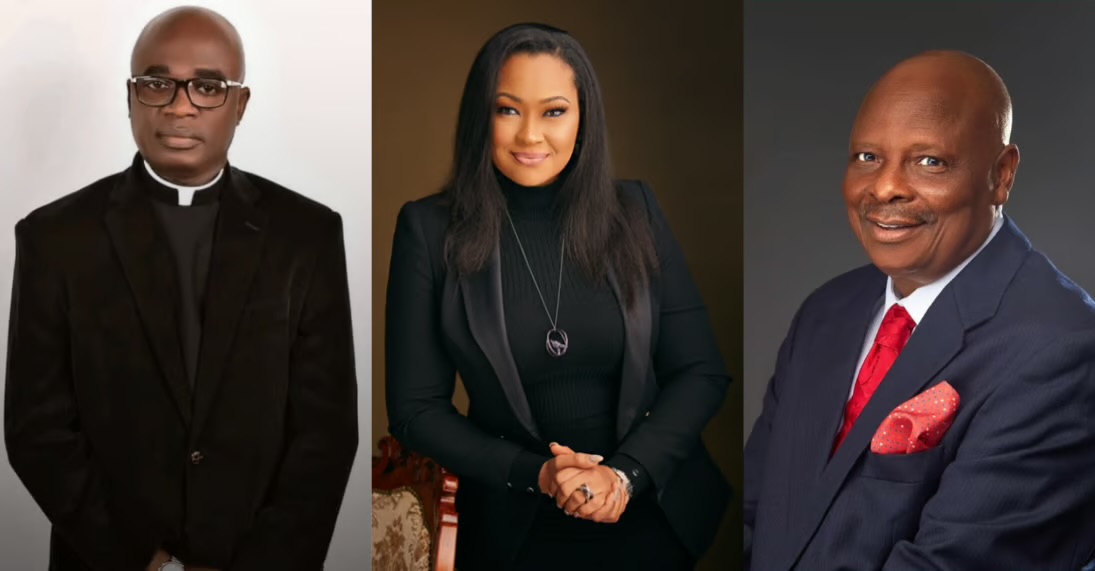
Nigeria’s 2027 general election is already taking shape, after party primaries over the weekend set up some of the country’s most closely watched contests.
In Kano, for example, Rabiu Kwankwaso and his estranged protégé, Governor Abba Yusuf, are fighting over the future of the Kwankwasiyya machine. Meanwhile, in Kogi Central, Natasha Akpoti-Uduaghan faces a possible rematch with former governor Yahaya Bello, a rivalry marked by court battles, assassination allegations and fraud charges.
The presidential race remains the headline act – crowded, familiar and dominated by old hands. But several state-level battles may prove just as revealing. They will test the reach of political godfathers, the durability of opposition movements and the ability of defectors to carry voters with them.
Here are six contests to watch.

Kano: Can Kwankwasiyya survive without Abba Yusuf?
Kano may be the most consequential state race of 2027. It will test whether the Kwankwasiyya movement remains loyal to its founder, Kwankwaso, or has shifted towards the governor who rose under his patronage.
The alliance between Kwankwaso and Yusuf fractured after the Kano governor defected from the New Nigeria People’s Party (NNPP) to the ruling All Progressives Congress (APC). The move brought him closer to President Bola Tinubu and to Abdullahi Ganduje, the former Kano governor and one of Kwankwaso’s fiercest rivals.
Kwankwaso helped Yusuf win the governorship in 2023, when the NNPP displaced the APC in Kano. Kwankwaso also carried the state in the presidential election, underlining the strength of his red-capped political movement in Nigeria’s most populous northern state.
That machine is now split. The APC in Kano has adopted Yusuf as its consensus governorship candidate. Ganduje has promised to back his re-election. Kwankwaso, meanwhile, has described Yusuf’s defection as a mistake and vowed that the governor will not return for a second term.
The former governor has thrown his weight behind Yusuf’s former deputy, Aminu Gwarzo, who refused to follow the governor into the APC and later resigned from the cabinet. Gwarzo is now positioning himself as the main challenger backed by the Kwankwasiyya base.
The race will matter far beyond Kano. If Yusuf wins, Tinubu’s APC will have absorbed one of northern Nigeria’s most powerful opposition structures. If Kwankwaso’s candidate prevails, it will prove that Kwankwasiyya remains a movement, not merely a vehicle for defectors.
Kogi Central: Bello and Akpoti-Uduaghan renew old rivalry
Kogi Central is shaping up as one of Nigeria’s most personal and bitter races.
Akpoti-Uduaghan, the senator representing the district, has emerged as the consensus candidate of the Peoples Democratic Party (PDP). She is expected to face Yahaya Bello, the former Kogi governor, who won the APC ticket after defeating two challengers.
The two politicians have a long history of hostility. In April, Bello won a N1bn ($734,457) defamation suit against Akpoti-Uduaghan after she alleged in 2025 that he had plotted to assassinate her.
Akpoti-Uduaghan became Kogi’s first female senator in 2023 after a long legal battle. The Independent National Electoral Commission had initially declared Abubakar Sadiku-Ohere, the APC candidate backed by Bello, the winner of the 25 February 2023 senatorial election. Akpoti-Uduaghan challenged the result and was later declared the rightful winner.
She also accused Bello’s administration of obstructing voting in her stronghold by digging up the road leading to her hometown on the eve of the poll. The state government denied that the move was designed to suppress voters, describing it as a security measure.
Since entering the Senate, Akpoti-Uduaghan has become one of Nigeria’s most visible female opposition politicians. Her clashes with Senate president Godswill Akpabio, whom she once described as a dictator, culminated in a controversial six-month suspension from the chamber.
Bello remains an entrenched force in Kogi. A two-term governor, he installed a successor and has retained a strong grip on the state’s APC structure. Since winning the party ticket, he has begun grassroots mobilisation across the district.
He is also facing N110bn fraud charges in Abuja, where the Economic and Financial Crimes Commission is prosecuting him. He denies wrongdoing, and Nigerian law does not bar an accused person from standing for office. Bello is a close ally of Tinubu, whom he has described as a mentor and role model.
The race is therefore more than a Senate contest. It is a proxy war between one of Nigeria’s most prominent opposition women and the Bello machine.
Benue: Can Alia survive without Akume?
Benue offers one of the clearest tests of whether an incumbent governor can survive without his godfather.
Governor Hyacinth Alia, a Catholic priest turned politician, won the APC governorship ticket after outmanoeuvring George Akume, the secretary to the government of the federation and his former political patron. Akume has long held sway over the Benue APC structure, but Alia’s allies swept many of the party’s tickets for the state House of Assembly and National Assembly elections, tightening the governor’s grip on the local machinery.
Akume’s camp has rejected the outcome and is challenging both the conduct of the primaries and the list of candidates submitted to the Independent National Electoral Commission.
The rupture followed a long dispute over automatic tickets for serving lawmakers. Akume had pushed for an arrangement that would have preserved the influence of his allies. Alia insisted that aspirants should test their strength in primaries. Efforts by Tinubu and Vice President Kashim Shettima to broker peace have produced little more than temporary restraint.
But Alia’s problem is not confined to the APC.
The PDP has settled on Michael Aondoakaa, a former attorney general of the federation and a senior advocate, as its governorship candidate. He is backed by Samuel Ortom, Alia’s predecessor, who has teamed up with FCT minister Nyesom Wike. Also in the race are Herman Hembe of the African Democratic Congress, law professor Sebastine Hon of the SDP and university professor Terhemba Shija of the NDC.
The anti-Alia camp is not yet a coherent coalition. Akume and Ortom remain divided by personal ambitions and party lines. But both are close to Tinubu’s orbit, and both have an interest in weakening Alia. Wike and Akume also sit in Tinubu’s broader federal power structure.
If Benue’s anti-Alia forces coordinate, the governor could face a formidable re-election fight. If they fail, his victory over Akume in the APC primaries may mark the start of a new power centre in the state.
Delta: Omo-Agege’s revolt threatens APC calculations
Delta shows the danger of APC expansion: every new heavyweight can displace an old one.
Former deputy Senate president Ovie Omo-Agege has emerged as a potential spoiler for the APC after a bitter fallout over the Delta Central senatorial primary. He sought the party’s ticket but lost to the incumbent senator, Ede Dafinone. The APC said Dafinone polled 116,252 votes against Omo-Agege’s 3,643. Omo-Agege rejected the result, declared himself the rightful winner and defected to the Nigeria Democratic Congress.
He has since aligned himself with the opposition presidential ticket of Peter Obi and Kwankwaso, a move that could complicate Tinubu’s calculations in Delta and parts of the South-South.
The rupture marks a sharp reversal for Omo-Agege, once the APC’s most influential figure in Delta. In 2023, he was the party’s governorship candidate but lost to Sheriff Oborevwori of the PDP.
His route back to the governorship narrowed after Tinubu persuaded Oborevwori to defect to the APC. The move effectively handed the governor the party’s 2027 ticket and elevated him as the dominant figure in the Delta APC.
Omo-Agege first tried to accommodate the new order. He shifted his ambition to Delta Central and sought a Senate return. That truce has now collapsed.
Even if he fails to win under the NDC banner, Omo-Agege could still hurt the APC. He remains one of Delta’s most recognisable opposition figures and could draw enough votes from the ruling party to reshape the state’s 2027 contest.
FCT: Can Kingibe survive Wike’s machine?
The Federal Capital Territory will test whether the protest vote that reshaped Abuja politics in 2023 can survive the force of Wike’s political machine.
Philip Aduda, Wike’s preferred candidate, is seeking a comeback to reclaim the FCT senatorial seat he lost to Ireti Kingibe of the Labour Party in 2023. Aduda had represented the FCT in the House of Representatives and the Senate for 20 years before Kingibe unseated him.
Wike, the FCT minister, has openly backed Aduda and vowed to prevent Kingibe from returning to the National Assembly. His relationship with the 71-year-old senator – the estranged wife of Baba Gana Kingibe, the former secretary to the government of the federation and veteran diplomat – has been marked by open hostility.
In 2024, Kingibe accused Wike of behaving like an emperor and insisted that he could not stop her from seeking a second term.
“I know that I will win in a landslide victory, bigger than the last one,” she said. “The last one – bear in mind – was one in which I went to the Senate with one of the highest, if not the highest, votes of any legislator.”
Kingibe has since defected to the African Democratic Congress. That move leaves her without the Labour Party platform that benefited from the Obidient surge in the FCT in 2023.
The warning signs are clear. In recent FCT area council elections, the APC won five of the six available seats, including the populous Abuja Municipal Area Council. The PDP, backed by Wike, secured the remaining seat. Kingibe’s new party failed to make a strong showing.
Those results are not a perfect guide to 2027. But they suggest that Kingibe faces a harder race than in 2023. The question is whether her personal brand and Abuja’s anti-establishment vote can withstand Wike’s patronage network.
Katsina: Can Buhari’s son inherit the family vote?
Yusuf Buhari, son of the late President Muhammadu Buhari, is one of the newest entrants into Nigerian politics.
The 34-year-old has secured the APC ticket for the Daura/Sandamu/Mai’adua federal constituency seat in the House of Representatives. He initially appeared set for an automatic ticket, but was later challenged in the party primary by Auwalu Daura. Backed by influential party figures, Yusuf won heavily, though Daura alleged irregularities.
His selection appears to rest heavily on his father’s legacy. Buhari’s name remains powerful in Katsina, especially around Daura, his hometown. Governor Dikko Radda framed his endorsement of Yusuf as an act of loyalty to the late president.
“I can never betray Buhari’s family. I have been a beneficiary of his good reputation since the days of the CPC to date,” the governor said.
Yusuf is a graduate of the University of Surrey in the UK. He is married to Zahrah, an architect and daughter of Nasir Ado Bayero, the deposed Emir of Bichi in Kano State. He was turbaned as Talban Daura in December 2021 and appointed district head of Kwasarawa in the Daura Emirate, a role that gives him a local governance profile.
But the political test is simple: can the Buhari name still move votes without Buhari himself?
The constituency has long been regarded as friendly terrain for the Buhari brand. Whether Yusuf reaches the House of Representatives will depend on whether the opposition can turn a dynastic coronation into a competitive race. (The Africa Report)
-

 World News22 hours ago
Trump Bows To Pressure, Allows CNN, Others Into White House After Court Order
-
 African News22 hours ago
Nigeria Demands 2 Permanent UN Security Council Seats For Africa
-
News22 hours ago
Nigerians Are Enjoying, Petrol Costs N3,000 Per Litre In UK – Okpebholo
-
Entertainment1 hour ago
Jay-Z rape accuser says she made ‘false accusations’
-
Politics1 hour ago
2027: Why Atiku named detained El-Rufai deputy campaign chairman — Dele Momodu
-
Politics22 hours ago
Tinubu a friend of south-south, he would get maximum votes in region – Akpabio
-
African News18 hours ago
How China took control of Africa’s lithium
-
News18 hours ago
BREAKING: U.S. DEA Tells Court Release Of Tinubu-Related Drug Records Could Expose Confidential Sources, Investigative Techniques