Business
Nigerian banking elites shift wealth to London property market

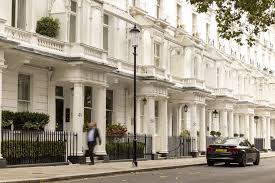
Nigeria’s corporate elite and leading bankers are quietly accelerating their investments in London real estate, underscoring a widening disconnect between the country’s harsh economic realities and the offshore wealth strategies of its richest citizens.
Over the past year alone, a string of high-profile purchases has brought renewed scrutiny to Nigerian capital flowing into the UK property market. Notable disclosures include reports linking the late Herbert Wigwe, former Group CEO of Access Bank, to over 100 London properties through offshore entities. Meanwhile, Roosevelt Ogbonna, current Access Bank CEO, reportedly secured a £15 million estate on Hampstead’s Billionaires’ Row, and billionaire Femi Otedola finalised the purchase of a £53 million mansion in St John’s Wood.
This massive flight of capital took place against a backdrop of severe domestic turbulence. While Africa’s most populous nation grappled with crippling inflation, soaring poverty, and tight liquidity, its ultra-rich continued to confidently park their wealth abroad—seemingly undeterred even by rising property taxes in the United Kingdom.
For Wigwe, investigations published in March did not identify a single mansion purchase date but instead linked the late banker through offshore structures to a broad portfolio of London properties.

Beyond Wigwe and Ogbonna, several prominent Nigerian bankers and founders of financial institutions are also widely known to hold significant UK property exposure, although many transactions remain privately structured and undisclosed.
FX windfall fuels banking profits
“The poverty level may not necessarily affect Nigerian bankers’ exposure to the UK market. In fact, disproportionate growth in an economy can imply overall economic improvement but rising inequality,” said Temitope Omosuyi, head of research and strategy at VNL Asset Management.
Omosuyi noted that Nigerian banks benefited significantly from the depreciation of the naira beginning in 2023 through substantial foreign exchange revaluation gains.
“Improved capitalisation of banks has also enhanced profitability in absolute terms, which means more compensation and rewards for bank leadership,” he said.
The sharp devaluations of the naira and aggressive interest rate hikes significantly boosted Nigerian banks’ profits in 2023 and 2024. Banks recorded large foreign exchange revaluation gains after the naira weakened, while higher interest rates increased income from loans and government securities, although the impact began moderating last year.
Before the naira devaluation cycle began in 2023, the combined profit after tax of the country’s five biggest banks stood at N851.9 billion in 2022. That figure surged to N2.75 trillion in 2023 and nearly doubled again to N4.12 trillion in 2024 before easing to N3.2 trillion in 2025.
Between 2022 and 2025, profit of Nigeria’s biggest banking group by assets, Access Holdings, rose from N152.2 billion to N743.1 billion. First HoldCo’s profit climbed by 386.7 percent but dropped to N147.3 billion last year.

According to Adeola Adenikinju, immediate past president of the Nigerian Economic Society, even before that, some banks were already benefiting from foreign exchange trading activities. “So they profited from both situations and were able to take advantage of the system.”
The professor of energy economics added that bankers also benefit from privileged access within the financial system.
“Bankers undeniably have advantages because of their access to funds and influence within the financial system. Historically, some have abused those positions through insider dealings, preferential access to loans, or other governance violations,” he said.
“We have seen allegations of such issues across parts of the banking industry over the years. The governance structures within some institutions have also been questioned in the past, especially around insider transactions and weak internal controls.”
Flight to hard-currency safety
Analysts say the growing appetite for London property reflects rising concerns among wealthy Nigerians over the naira’s long-term stability and the broader macroeconomic outlook.
What was once largely viewed as a prestige purchase is increasingly becoming part of a broader wealth preservation strategy driven by currency volatility, inflation and declining confidence in domestic economic stability.
“If oil prices rise and government revenues increase, nobody says the government should be punished for benefiting from higher crude prices,” said Ayokunle Olubunmi, head of financial institutions ratings at Agusto & Co. “In the same way, businesses and investors will naturally take advantage of opportunities created within the economy.”
Olubunmi argued that the broader responsibility for economic outcomes lies with policymakers rather than private investors.
“The people managing the economy are the ones making the key decisions. Investors simply observe those conditions and position themselves accordingly. If someone sees an opportunity within the economy and has the resources to take advantage of it, they will naturally make money from it.”
Otedola’s growing international wealth footprint has also drawn attention. Nigeria’s fourth-richest man re-entered Forbes Africa’s billionaire list in 2024, with his net worth rising from $1.3 billion in March to $1.4 billion by May.
Nigeria’s economic pressures deepen
Africa’s third biggest economy recorded average inflation of 23.3 percent last year, down from 33 percent in 2024. However, inflation remains among the highest on the continent as naira devaluations, fuel subsidy removal, and rising food prices continue to squeeze household incomes and weaken consumer demand.
In April, Nigeria’s annual inflation rate rose for a second straight month to 15.69 percent from 15.38 percent in March, according to the National Bureau of Statistics. The increase reflected continued pass-through effects from higher fuel prices and exchange rate pressures.
In its latest Nigeria Development Update report, the World Bank said disinflation has been supported by tighter monetary policy, improved exchange rate stability, and stronger agricultural output. However, inflation remains elevated relative to peer economies such as Ghana, Kenya, and South Africa.
Although the economy expanded by 3.9 percent in 2025 from 3.4 percent in 2024, growth has remained uneven and insufficient to offset worsening poverty and rising living costs.

According to the multilateral lender, more than 129 million Nigerians now live below the poverty line, with inflation and currency weakness continuing to erode purchasing power across both urban and rural households.
The poverty rate rose to 63 percent in 2025 from 58 percent in 2024 and is expected to remain elevated in the near term, highlighting the slow transmission of reforms to households.
The widening gap between macroeconomic hardship and elite offshore wealth positioning reflects how Nigeria’s wealthy increasingly view foreign assets as safer stores of value than domestic investments.
“Across major economies, structural inflation is eroding idle capital, forcing the wealthy everywhere to seek stable, high-yield safe havens. This is not uniquely Nigerian,” said Cheta Nwanze, lead partner at SBM Intelligence.
“From Lagos to London, affluent individuals are urgently deploying capital across borders into resilient assets and private structures that preserve purchasing power while maximising real returns. The challenge is identical; only the geography changes.”
London retains a prestige appeal
Property consultants say affluent Nigerians are increasingly prioritising international diversification and hard-currency assets as confidence in the naira weakens.
“The naira has significantly reduced purchasing power,” property firm Mercy Homes said in a recent report. “As a result, more Nigerians are looking for stable, high-yield investment opportunities, and UK real estate is emerging as a top choice.”
The naira weakened sharply from around N480/£1 in 2020 to nearly N1,895/£1 in 2025, accelerating the shift toward offshore wealth preservation.
For many wealthy Nigerians, London property now serves not simply as luxury real estate but as a hard-currency store of value offering legal protection, rental income potential and easier intergenerational wealth transfer under a more predictable regulatory environment.
“What is happening is that more high-profile names are now attracting public attention,” said Temidayo Oloyede, chief executive officer of Edala Developments.
“You would actually be surprised at how many Nigerians own properties in the UK, the United States and Canada, even though many of those investments are not publicised.”

London property also continues to carry strong symbolic and social value among Africa’s ultra-wealthy.
“Many billionaires and ultra-high-net-worth individuals prefer to live in exclusive neighbourhoods surrounded by people within similar wealth circles,” said Tony Brown, a UK-based financial and investment analyst.
“A significant number of wealthy global investors already own properties in the UK, particularly in prime London locations.”
Brown noted that the trend is notable because it comes at a time when some wealthy global residents are reconsidering their exposure to Britain due to rising taxes and tighter regulations.
“That is why it is interesting to now see more Nigerian buyers acquiring high-end properties in some of London’s most expensive neighbourhoods,” he said.
“For some buyers, owning property in prime London locations is also about prestige and global status. There is symbolic value attached to seeing Black investors and African business elites owning assets in some of the world’s most exclusive streets.”
Rising UK taxes fail to deter buyers
The growing Nigerian appetite for London property comes despite rising taxes and a broader slowdown in Britain’s luxury housing market.
Data from His Majesty’s Revenue and Customs show UK homebuyers paid £15.4 billion in stamp duties in 2025, an 18 percent increase from the previous year following changes to tax thresholds. Britain is also preparing to introduce a new mansion tax on homes valued above £2 million from 2028.
Yet analysts say those higher costs are doing little to deter wealthy Nigerians because hard-currency stability and wealth preservation now outweigh tax considerations.
The trend also coincides with the growing internationalisation of Nigerian banking groups.
Last month, BusinessDay reported that Access Holdings’ UK subsidiary overtook its Nigerian operations as the group’s largest earnings contributor for the first time, reinforcing how Nigerian banks are increasingly generating profits and expanding wealth exposure outside the domestic economy.
Profit after tax at Access Bank UK rose by 73.5 percent to N83.8 billion in the first quarter of 2026 from N48.3 billion a year earlier, while profit from the Nigerian business declined to N52 billion from N79.9 billion over the same period.
A broader shift in African wealth management
The trend mirrors a broader transformation in African wealth management, where elite investors are increasingly using offshore real estate markets to hedge against domestic economic shocks, currency depreciation and political uncertainty.
“There is a growing flight to safety among wealthy Nigerians and businesses,” Oloyede said. “People do not want all their assets concentrated in one market.”
Adenikinju said economic uncertainty naturally pushes investors toward safer hard-currency assets.
“When the domestic economy is facing significant uncertainty, investors naturally look for ways to hedge against those risks and protect their wealth. That is why markets like London become attractive,” he said. (BusinessDay)
-

 Politics4 hours ago
BREAKING: Police summon APC senator over threat to ‘kill Accord members’
-
News4 hours ago
‘It’s a crime’ — NCAA to investigate blockage of Lagos airport airside by bus
-
Politics4 hours ago
Osun election: 10 battleground LGs that may decide Adeleke, Oyebamiji race
-
Business20 hours ago
Nigerian tycoon Eruani Azibapu’s $1 billion Niger Delta refinery is nearing completion
-
Sports3 hours ago
Mikel trolls Arsenal over Vinicius signing
-
Politics4 hours ago
‘Kill Accord’ Remark: Fadahunsi Backtracks, Says He Meant Votes
-
News4 hours ago
Fubara, lawmakers battle stalls Rivers N1.85tn budget
-
Business3 hours ago
Tinubu unveils framework to unlock $50bn offshore investment