Opinion
Africa’s Growing Markets and Lagging Micro-Economies: The Disconnect We Must Address

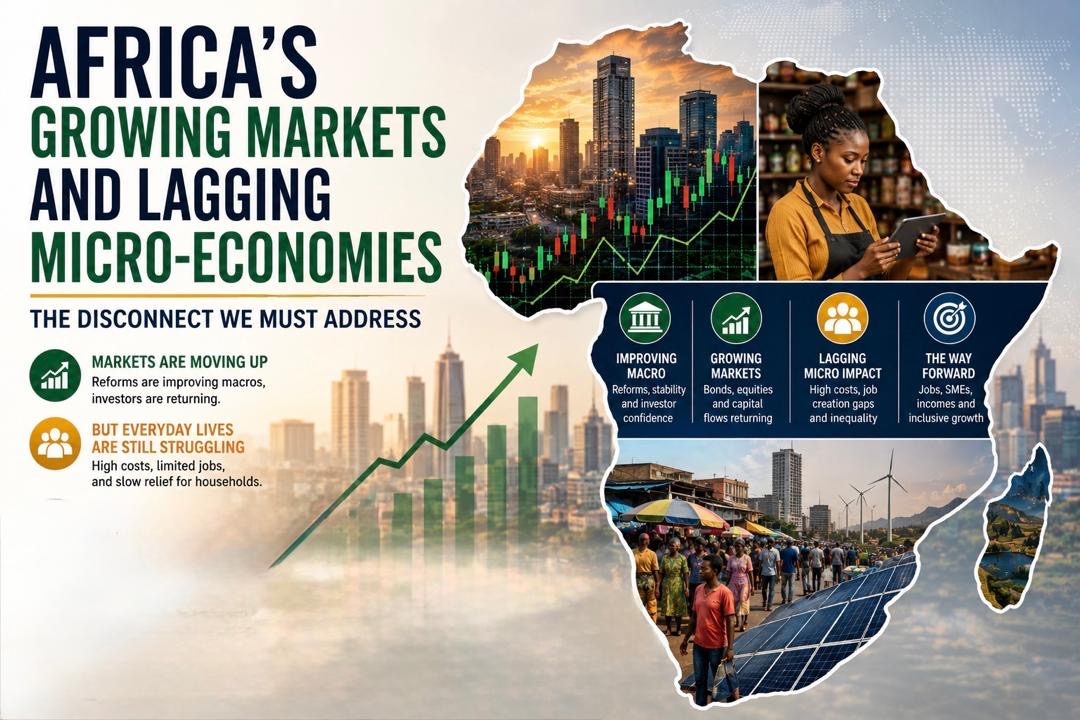
For much of the last decade, conversations about Africa have been dominated by debt, inflation, currency weakness and governance challenges.
Yet beneath these headlines, some African countries macroeconomic story is improving faster than many realize.
Stock markets are recovering. Inflation is easing in several economies. Investor confidence is returning and reforms are attracting fresh capital.
However, for millions of Africans, daily economic realities remain difficult.

The question is simple: Why are improving economic indicators yet to translate into better living standards?
Nigeria, Kenya and South Africa provide useful examples.
Nigeria has undertaken significant fiscal and foreign exchange reforms. Kenya continues to record relatively strong growth despite global uncertainty. South Africa is seeing improved inflation figures while reforms in energy and infrastructure attract new investment.
As a result, investors are gradually returning to African bonds and equities, and confidence in many markets is improving.
Yet the benefits remain lagging.
In Nigeria, economic stability is improving, but households continue to struggle with high food prices, rising energy costs and reduced purchasing power.
In Kenya, growth remains resilient, but concerns around taxation, living costs and job creation persist.
In South Africa, strong financial markets coexist with stubbornly high unemployment and social pressures.
This disconnect is not unusual.
Financial markets often respond faster to reforms than households. Investors return before wages rise. Stock markets recover before small businesses expand. Economic reforms frequently create short-term pain before long-term gains emerge.
Yet there are reasons for optimism.
Africa remains the world’s youngest continent. Urbanization is accelerating. Digital adoption is transforming commerce and finance. AfCFTA is creating larger markets and new opportunities for regional trade and investment.
The challenge now is ensuring that macroeconomic gains translate into real improvements in living standards.
Growth must move beyond stock market performance and economic statistics. It must create jobs, support entrepreneurship, improve access to finance and raise household incomes.
The next phase of the continent’s development will be judged not by how much capital enters its economies, but by how effectively that growth improves the lives of its people.
If that bridge can be built, the coming decade could become one of the most transformative periods in Africa’s economic history.
•Written By Akintunde Odeyemi
-

 News22 hours ago
UK universities withdraw admission offers to Nigerians over visa crackdown
-
News22 hours ago
Why kidnappers target NYSC members — Security experts
-
Politics22 hours ago
2027: Protest, relief as INEC releases final candidates’ list
-
News23 hours ago
Benue: Suspected herdsmen kill nine in fresh Ukum attacks
-
Politics22 hours ago
2027: Opposition, APC clash over campaign funding
-
World News23 hours ago
US gunman shoots dead 7 relatives, family friend
-
Business22 hours ago
Fitch revises Nigeria’s outlook to positive, affirms ‘B’ rating
-
Opinion22 hours ago
Did Obi actually win in 2023?