Opinion
The taxi driver who smuggled Abiola’s children past Abacha

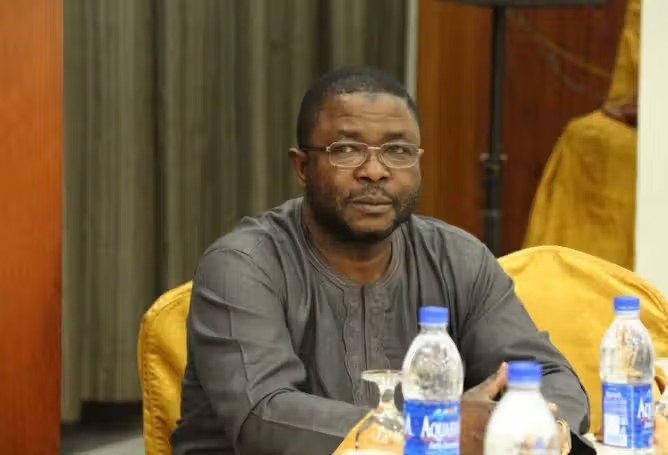
BY SHOLA ADEBOWALE
It was past midnight, and Lagos was holding its breath. Streetlights flickered and died along stretches of road that, in daylight, hummed with the ordinary chaos of a city that never quite stops. Patrol vehicles slid past corners, their headlamps cutting the dark like knives looking for something soft. The air smelled of fuel fumes and the particular variety of fear that comes not from imagination but from knowledge, the knowledge of what these soldiers had already done to people whose only crime was believing in a ballot.
Inside a battered taxi, Adebayo Sikiru Osinowo, “Pepper” to everyone who mattered, kept his eyes on the road and his hands steady on the wheel. In the backseat, children slept fitfully, unaware that every checkpoint ahead was a coin toss, and that the man driving them had essentially wagered his life on his ability to look like nobody important. He was not a spy. He was not a soldier. He carried no diplomatic passport, no NADECO letterhead, no foreign correspondent’s press card. He was a grassroots man from Ogudu in Kosofe, the kind of man Lagos produces in abundance and history forgets in equal measure, who had decided, with the quiet ferocity of the deeply committed, that if the Abacha regime wanted blood, it would have to come through him first.
One wrong turn. One curious soldier with too much time and too little conscience. One lifted boot, one overheard name. And the Abiola children would vanish into the gulag alongside their mother, erased into the machinery of a dictatorship that had perfected the art of making people disappear. So he drove. Through backstreets that only a man who had spent years learning the city’s hidden grammar could navigate. Through fear that had a texture and a smell. Through a night that pressed down like a lid, mile after mile, while Lagos slept and history, restless and unrecorded, waited at the border.

That drive did not make headlines. No camera caught it. No embassy cable immortalised it. It happened in the negative space of the June 12 struggle, the vast, undocumented terrain where the real survival work was done, away from podiums and prison memoirs and the retrospective limelight of Democracy Day ceremonies. But without it, June 12 would have lost its children before it ever gained its democracy.
To commemorate June 12, 2026, President Bola Tinubu honoured approximately fifty Nigerians who, in his words, fought for the democratic ideals symbolised by that stolen mandate. The ceremony was, by any measure, a worthy act of national reckoning. But one conspicuous name was missing from the citation list: the late Senator Adebayo Sikiru Osinowo. The omission is not merely a bureaucratic oversight. It is a symptom of a deeper cultural failure, our persistent inability to honour the unglamorous, unnarrated labour that makes heroism possible.
Walk into Osinowo’s private sitting room in his country home in Ijebu Ode, and the wall tells you everything about the architecture of his loyalties. Three life-size portraits, from floor to ceiling, announce themselves before you can sit: MKO Abiola, Bola Ahmed Tinubu, and Babatunde Fashola. This was not a man who hedged his devotions. He arranged his life around a set of convictions and wore them like a second skin.
When Nigeria marks June 12, the spotlight naturally gravitates toward its most legible figures, Abiola with his mandate and his martyrdom, Kudirat with her ferocious courage and her blood on a Lagos street, the NADECO leaders who argued the struggle in foreign capitals, the journalists who went to prison clutching their notebooks. These are the faces the nation has learned to put on the struggle. They deserve every honour they receive.
But democratic history is not made only at the level of the legible. It is made in the capillaries, in the decisions of ordinary people who, given a reasonable excuse to do nothing, chose instead to do something reckless and necessary. Senator Adebayo Sikiru Osinowo, born 28 November 1955, died 15 June 2020 while serving his constituents as Senator for Lagos East Senatorial District, was exactly that kind of person. His nickname, “Pepper,” was not decorative. It captured a temperament: sharp, bracing, not easily ignored, with a tendency to sting anyone who tried to smooth over what should not be smoothed over.
His political geography, Kosofe, Amuwo Odofin, Lagos East, was the geography of the working city, of communities where politics is not an abstraction but a daily negotiation over who gets what and who gets protected. He understood these streets not as a strategist studies a map but as a native reads his own neighbourhood.
After General Ibrahim Babangida annulled the June 12, 1993 election, an election so clean that even the regime’s own monitors could not find the fraud necessary to justify overturning it, Nigeria entered a period of managed repression that would sharpen, under Sani Abacha, into something closer to outright terror. Many of the struggle’s most prominent figures fled into exile or were swallowed by detention. The ones who remained operated in the fissures, in the gap between what the regime could surveil and what it could not.
Osinowo occupied that gap. According to Comrade Ayodele Adewale, former Chairman of Amuwo Odofin Local Government Area and a man with intimate knowledge of those years, Osinowo played a vital and largely unacknowledged role in keeping the Abiola family physically alive. At the height of the crackdown, when the Abacha security apparatus had identified MKO Abiola’s children as potential instruments of pressure or punishment, Osinowo reportedly disguised himself as a taxi driver, a disguise that required nothing more elaborate than the occupation he had mastered, and moved through Lagos undetected.
When an attempt was made on the lives of Kudirat Abiola’s children, it was Osinowo who extracted them from their apartment, installed them in his vehicle, and drove through the night with the particular combination of local knowledge and raw nerve that no intelligence briefing can manufacture. That drive ended at the border. From there, the children reached Ghana, and eventually Europe, where they built lives that the regime had decided they should not be allowed to have. Adewale’s summation is stark and unimprovable: “If any of the late MKO’s children are still alive today, it is by the grace of God and the effort of Osinowo, who drove them through the night.”
He later returned for Alhaja Kudirat herself. He was too late. She was assassinated on 4 June 1996, shot in her car on a Lagos street in broad daylight, the most brazen expression of the regime’s contempt for consequences. Osinowo arrived to find that history had already moved on without him, in the worst possible direction.
For his defiance, the state collected its due. He was picked up by the DSS and deposited into Abacha’s detention system, that archipelago of holding cells and psychological torment where time was stripped of meaning, and the law had been quietly replaced by Decree 2, the instrument of detention without trial that gave the regime the ability to warehouse inconvenient people indefinitely and without explanation.
What he endured in those cells, those who knew him describe only in fragments. The experience left marks that did not fade. He carried something from that period into the rest of his life, a particular quality of wariness that men who have been genuinely at the mercy of a state acquire and never entirely lose. He was still there when Abacha died in June 1998 and General Abdulsalami Abubakar began the cautious business of releasing political prisoners. The releases proceeded in batches. Osinowo’s name was somehow missed. He sat in detention while the democratic transition ticked forward around him, until someone, accounts differ on who, reminded the incoming administration that a June 12 activist remained behind bars. He was promptly freed.
The title that was attached to him afterwards, “Last Man Standing”, the last of the June 12 activists to be released, has an accidental poetry to it. There is something both absurd and entirely fitting about the idea that the man who stayed longest at the wheel also stayed longest in the cell. Pepper, it seemed, was constitutionally incapable of being the first to leave.
June 12 was not only protests and newspaper columns and defiant speeches in foreign capitals. It was also logistics. It was the granular, unglamorous work of moving targeted families, hiding activists, passing messages through networks that existed because someone had spent years building relationships in places that elites do not visit. As a Lagos grassroots leader, Osinowo had access to the city’s connective tissue, the informal networks of local knowledge, neighbourhood trust, and street-level loyalty that NADECO’s more prominent figures, for all their courage and eloquence, could not replicate. The DSS and the military were looking for movement at the obvious level. He operated below it.
There is a taxonomy of courage in struggle movements that we rarely articulate clearly. At the top sits the heroism of public sacrifice, the person who stands at the microphone and says the thing that will get them arrested. Below it, less celebrated but no less essential, sits the heroism of the enabler: the person who makes it possible for others to survive long enough to matter. Osinowo belonged to the second category. He did not write the manifesto. He drove the children who might one day tell their father’s story. That is not a lesser contribution. In many ways, it is a harder one, because it requires courage without the compensating voltage of public visibility.
After the return to democracy, Osinowo transitioned into elected politics with the naturalness of a man moving from one form of public service to another. He served in the Lagos State House of Assembly from 2003 to 2019, representing Kosofe Constituency II, sixteen years of legislative work, the daily grind of constituency politics, the kind of service that rarely generates biography-worthy moments but is the actual substance of governance. In 2019 he was elected Senator for Lagos East. He was still serving when he died on 15 June 2020, at 64, just three days after June 12 Democracy Day, a timing that, if you are disposed toward such readings, carries its own weight.
Tributes after his death resurfaced the June 12 stories. People who had known him in those years spoke in the past tense about things that had never been fully spoken in the present. And then the tributes faded, as tributes do, and the stories settled back into the unofficial record, present for those who know where to look, absent for everyone else.
President Tinubu’s 2026 Democracy Day awards honoured fifty June 12 heroes for “persecution, exile, incarceration”, the very vocabulary of what Osinowo experienced. The irony that his right-hand man, the man whose portraits share his sitting room wall, was not on that list is not lost on those who knew “Pepper”. It is not necessarily a deliberate slight. It may simply be that the mechanisms of official commemoration are better at recovering the documented than the operational, better at honouring those who left paper trails than those who deliberately left none.
But the historical record, if it is to be honest, must make room for men like Adebayo Sikiru Osinowo. Not out of sentiment, but out of accuracy. If MKO Abiola’s children are alive today, and they are, part of the reason they are alive is that one night in Lagos, a man from Kosofe put children in a taxi, looked straight at soldiers, and drove. He did not hijack a plane, as the legendary “MAD boys” of the June 12 struggle did. He hijacked something more improbable: the certainty of a brutal regime that it had accounted for every variable.
He drove them through the night and into history. The least history can do is remember his name.
Shola Adebowale can be contacted via sola4debo@yahoo.com
-

 News22 hours ago
UK universities withdraw admission offers to Nigerians over visa crackdown
-
News23 hours ago
Benue: Suspected herdsmen kill nine in fresh Ukum attacks
-
News22 hours ago
Why kidnappers target NYSC members — Security experts
-
Politics22 hours ago
2027: Protest, relief as INEC releases final candidates’ list
-
Politics22 hours ago
2027: Opposition, APC clash over campaign funding
-
World News23 hours ago
US gunman shoots dead 7 relatives, family friend
-
Opinion22 hours ago
Did Obi actually win in 2023?
-
Business22 hours ago
Fitch revises Nigeria’s outlook to positive, affirms ‘B’ rating