Business
Nigeria offers television for free, but viewers may not come

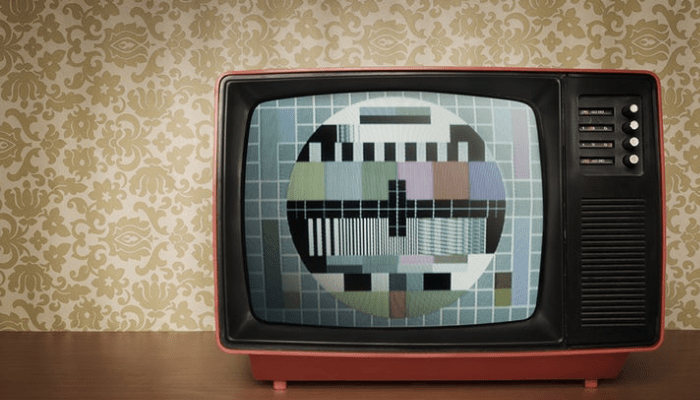
Nigeria’s launch of FreeTV marks the latest attempt to reshape the country’s television landscape. Backed by government and positioned as a cornerstone of the long-delayed digital switch-over programme, the platform promises access to more than 100 television channels without monthly subscription fees.
At first glance, the proposition appears compelling. Millions of Nigerians are under intense economic pressure. Households are cutting discretionary spending, downgrading subscriptions, and searching for cheaper alternatives across entertainment, telecommunications, and consumer services. In theory, a television platform that eliminates recurring subscription costs should be an instant winner.
But history suggests that affordability alone rarely guarantees success in the media business.
The fundamental challenge facing FreeTV is that it is entering a market where television is no longer competing primarily against other television platforms. It is competing against an entirely different consumer behaviour.

The battle is no longer about subscription fees. It is about attention.
Over the past decade, Nigerians have gradually shifted from scheduled television viewing to on-demand consumption. YouTube, TikTok, Instagram Reels, Facebook Watch, and streaming platforms have fundamentally altered how audiences engage with content. Viewers increasingly want content when they want it, on the device they choose, rather than according to a broadcaster’s schedule.
This creates a structural problem for FreeTV.
A consumer who spends three hours daily on TikTok is unlikely to switch to traditional television simply because it is free. The service may eliminate the cost barrier, but it does not solve the convenience gap.
The same challenge applies to younger audiences. Generation Z consumers have grown up in an ecosystem dominated by short-form video, personalised algorithms, and mobile-first entertainment. Many consume little traditional television at all. For this demographic, free access to 100 television channels may have less appeal than a smartphone and a data bundle.
The second challenge is content.
Globally, successful media businesses are built around exclusive content rather than distribution infrastructure. Consumers subscribe to Netflix because of its original programming. They pay for DStv because of premium sports rights. They watch YouTube because creators produce content unavailable elsewhere.
FreeTV currently offers scale, but scale is not necessarily differentiation.
A platform can have hundreds of channels and still struggle if viewers perceive little unique value in its programming. Quantity does not automatically translate into audience engagement.
This is particularly important in sports, arguably the most powerful driver of television subscriptions globally. Premium football rights remain concentrated among established pay-TV operators. Unless FreeTV can secure highly sought-after content categories, many viewers may continue maintaining existing subscriptions despite the availability of a free alternative.
A third challenge lies in equipment adoption.
While officials have emphasised that there will be no monthly subscription fees, viewers still need compatible receiving equipment. For many households, the upfront cost of decoders, antennas, satellite installations, or smart devices could become a barrier.
This is a lesson Nigeria has encountered before.
The country’s digital migration journey has repeatedly been slowed not by policy announcements but by adoption realities. Launching a platform and achieving nationwide usage are two very different objectives.
The fourth challenge concerns sustainability.
Every media platform ultimately requires a business model.
If viewers are not paying subscriptions, revenue must come primarily from advertising, sponsorships, content partnerships, or government support. This creates a difficult balancing act.
Advertising revenue follows audience attention. Audience attention follows compelling content. Compelling content requires investment.
Read also
The risk is that FreeTV could find itself trapped in a cycle where limited revenue constrains content investment, which in turn limits audience growth and advertiser interest.
This is not a uniquely Nigerian problem. Free-to-air television operators globally have struggled against streaming giants whose subscription revenues provide larger budgets for content acquisition and production.
The broader issue may be that FreeTV is solving yesterday’s problem rather than tomorrow’s opportunity.
When Nigeria first conceived digital migration, television access was the primary policy objective. Today, however, media consumption has evolved far beyond traditional broadcasting. The average consumer increasingly values personalisation, interactivity, mobility, and on-demand access.
The question is no longer whether television is free.
The question is whether it is relevant.
This does not mean FreeTV is destined to fail. The platform could still attract significant audiences in underserved regions, lower-income households, educational segments, and communities with limited broadband access. It may also expand access to local-language programming and public-interest content that commercial broadcasters often overlook.
But policymakers and investors should resist equating free access with guaranteed adoption.
Nigeria’s media history is filled with ambitious platforms that launched with considerable fanfare only to discover that consumer behaviour is harder to change than technology.
The true test of FreeTV will not be the number of channels available at launch or the absence of subscription fees. It will be whether Nigerians choose to spend their most valuable resource on the platform: their time.
In today’s attention economy, free is merely the starting point. Sustained relevance is the real challenge. (BusinessDay)
-

 News9 hours ago
State Police Bill: Five Assemblies say yes, 31 yet to decide
-
News9 hours ago
Sanwo-Olu orders immediate repairs of Lagos roads
-
News9 hours ago
No plan to increase electricity tariffs – FG insists
-
News9 hours ago
Umahi reopens First Niger Bridge adorned with Tinubu’s pictures
-
Politics9 hours ago
2027: INEC debunks report on voter register display in Lagos
-
News9 hours ago
Tinubu orders rescue of kidnap victims, safe 2027 polls
-
World News9 hours ago
Multiple victims as gunman opens fire at elementary school in US
-
Metro9 hours ago
50 houses razed, scores injured as explosion rocks Rivers community