News
Alakija, Adele, Coker… The Who’s Who of Lagos families

Lagos, located in the southwest of Nigeria, is traditionally home to the Yorubas. But commercial capital Lagos is the most ethnically-diverse city in the country.
Traditional leaders — the Ologun Kutere Ruling House of Lagos
In Nigeria, traditional royal families still hold a significant place in the political landscape. Although a democracy, politicians in Nigeria often go to traditional rulers to gain favour, as many citizens still look towards their kings for support, guidance…. and votes.
Ajose
Prince Emmanuel Esugbayi Ajose of the Ologun Kutere Ruling House of Lagos was one of the wealthiest entrepreneurs in Lagos during the colonial period. He founded two Methodist churches, and at the time of his death in 1949, he was the vice lay president of the United African Methodist Church Organisation.

His son, Oladele Adebayo Ajose, born on 21 September 1907, was the first black and Nigerian professor and Vice-Chancellor at the then University of Ife (now Obafemi Awolowo University).
A strong public health advocate, he was the founder of the British Red Cross Society in Nigeria and the first president of the Nigerian branch of the British Medical Association (renamed the Nigerian Medical Association).
Akitoye
Oba Akitoye, a son of Oba Ologun Kutere and brother to Obas Osinlokun and Adele, was another king of Lagos that reigned twice, from 1841-5 and then again from 1851-3. His second time on the throne came after he overthrew his nephew, with the help of the British.
He passed away on 2 September 1853, and his son, Oba Dosunmu, believed that he was poisoned by a rival. He is further discussed in the Dosunmu chapter of this piece.
Kosoko
The Kosoko family can be traced back to Oba Kosoko, another member of the Ologun Kutere Lagos Royal Family who ruled from 1845-51. He passed away in 1872.
Prominent Kosoko family members today include father and daughter Jide and Sola Kosoko (married name: Kosoko-Abinna), who are both in the acting industry. They are renowned as two of the best Yoruba actors of our time.
The Adele family is also member of this house, but due members’ involvement in modern politics, they are featured below.
Political families
In Nigeria, elections are held every four years. While entering political life would ideally be open to all, in Nigeria, as in many countries worldwide, certain families hold power for generations.
Some of these families even marry into each other, such as the Ojoras and Sarakis, further increasing their political grip.
Adele
Oba Adele Ajosun reigned as Oba of Lagos twice – from 1811-21, and from 1835-7. His father was Oba Ologun Kutere, and he was a brother to the Obas Osinlokun and Akitoye.
Adeniji Adele was the Oba of Lagos from 1 October 1949 until his death on 12 July 1964. His son, Ademola Adeniji-Adele was at the heart of the resistance over the annulment of the 12 June 1993 elections that had originally declared Moshood Kashimawo Olawale (MKO) Abiola as the winner.
Adeniji-Adele’s political career started with a position as a councillor in the Lagos Island Local Government before becoming the chairman at the age of 33. In 2007, then governor of Lagos Babatunde Raji Fashola appointed him as the commissioner for youth, sports and social development. He was to be kept on for Fashola’s second gubernatorial term, but he opted out due to health reasons. His first son, Sultan Adeniji-Adele, became a member of the Lagos State House of Assembly at the age of 30.
Coker
The Cokers are a large family from Lagos Island. A key figure in this family today is Folorunsho Coker, the DG of the Nigerian Tourism Development Corporation and Baba Eto of Lagos.
He is the son of Chief Nathaniel Folarin Coker, who died in 2020 aged 97. He served as a senior assistant in the ministry of justice and became the deputy permanent secretary in the Western Nigerian Ministry of Education in April 1964.
Influential historical figures in the family include Justice G.B.A Coker, Justice of the Supreme Court of Nigeria from 1964-75, and S. Alfred Coker, the grandfather of Chief Nathaniel. S. Alfred Coker was a merchant of Balogun Square Ereko in the Olowogbowo area of Lagos.
One cannot discuss the Coker family without mentioning the late George Baptist Coker, father to G.B.A Coker, who was the first Asiwaju of Lagos.
Dosunmu
The original Dosunmu (1823-55), referred to in British pre-colonial documents as Docemo, was the Oba of Lagos from 1851. He succeeded his father, Oba Akitoye. Dosunmu was responsible for signing the (Lagos) Treaty of Cession on 6 August 1861 with the British Empire, which ceded Lagos Island to Britain. However, he only did this under the threat of military intervention. He was able to keep his title and powers of Oba, subject to British laws.
The most famous living member of the family is Abiola Dosunmu, the Erelu Kuti IV, or Queen Mother of Lagos. This is the highest female royal position in the state. Born in 1947 to Omoba Adewunmi Dosunmu and Olori Adejoke Dosunmu, she was crowned in 1980 by the late Oba Adeyinka Oyekan II and always has to be seen wearing white clothes.
Ojora
The Ojora family consists of notable names in the Lagos traditional ruling circles such as Omoba Abdulaziz Ojora, the Olori Omo-Oba of Lagos, and Oloye Adekunle Ojora, the Otunba of Lagos and former chairman of the board of oil company AGIP Nigeria (1971-2002).
Otunba literally translates from Yoruba to ‘right-hand of the king (Oba)’, but this is a strictly Ijebu term, and it is unclear how a Lagosian royal came to hold this title. The Otunba is married to Erelu Ojuolape Ojora, who comes from the prominent Akinfe family in Ondo State.
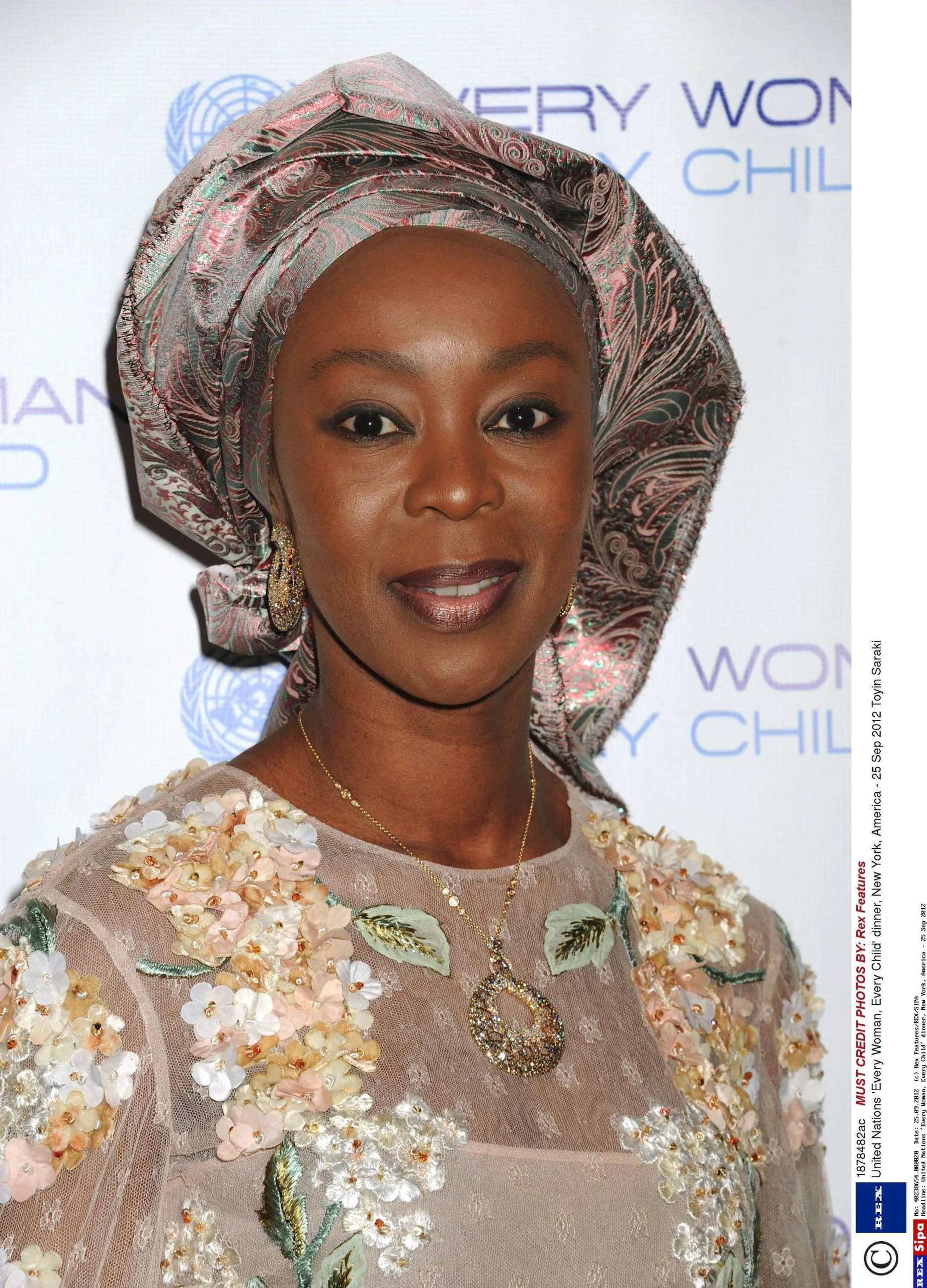
This couple had four children, although two, unfortunately, passed away. Their only daughter is Toyin Saraki, the former first lady of Kwara State, and wife of former senate president Bukola Saraki. She is the founder and president of the Wellbeing Foundation Africa, an NGO focussing on maternal and child healthcare.
Oniru
Prominent members of the Oniru family include Oba Idowu Abiodun Oniru, the immediate past Oniru of Iruland, and the current Oniru, Oba Gbolahan Lawal.
The story goes that the founder of settlements on Lagos Island was Aromire. He then invited his Idejo brothers to take up lands in other parts of the island. These included Oniru (owner of Iruland), Onikoyi (who founded Ikoyi), Elegusi (founder of Ikate), and others. Oniru became the sovereign of about 18 villages.
The Oniru family has been in the national news in the past couple of years due to fighting within the family. In 2020, a palace official of Oba Lawal was caught on camera fighting with Tijani Oniru, one of the sons of Oba Lawal’s predecessor. However, some reports said Tijani was actually the attacker, and palace officials simply reacted.
Returnees from Brazil
During the Atlantic slave trade, the Portuguese took many slaves from Nigeria to Brazil.
As a result there are Brazilians that practice the Yoruba religion and speak the language, and there are many families in Nigeria with Portuguese surnames, whose ancestors were returnee former slaves.
Alakija
The Alakija family is originally from Abeokuta, Ogun State. During the slave trade it ended up in Brazil, and then settled in Lagos upon their return. The Alakijas are descendants of freed slaves Marculino and Maxmilliana Assumpçao.
Folorunso Alakija, the richest woman in Nigeria, who made her billions through oil, is an Alakija by marriage. She is the founder of Flourish Africa, an NGO for women. As of 2020, her net worth stood at $1bn.
Bank-Anthony
Another prominent family that were returnees from Brazil are the Bank-Anthonys, descendants of Alfred Bank-Anthony. The most notable name from this family is Mobolaji Bank-Anthony, the late philanthropist and businessman.
He was crucial in Nigeria’s industrial development from the 1950s-80s.
As a young man, he joined the fight against colonialism with the Lagos Youth Movement (which later changed its name to the Nigerian Youth Movement). However, his activist life was short-lived, and he focussed more on business, acquiring vast amounts in his lifetime. His death in 1991 led to fighting within his family surrounding his wealth. His granddaughter, Funmi Bank-Anthony, is a Nollywood actress.
Cardoso
The Cardoso family, as the name suggests, are also returnees from Brazil. The family is survived by promiment members of Lagos society today. One example is the current CBN Governor, Olayemi Cardoso, who is a former chairman of the board of directors of Citibank Nigeria, and a former board member of Chevron Oil Plc.
Another is Bankole Cardoso, entrepreneur and founder of Easy Taxi Nigeria. Bankole, who was named in the 2014 Forbes list of the 30 most promising young entrepreneurs in Africa, is the son of Afolabi Emmanuel Cardoso and the late Ameyo Adadevoh, the doctor that is renowned in Nigeria for sacrificing her life in the fight against Ebola.
Adadevoh placed patient zero, Patrick Sawyer, in quarantine despite claims from Liberia that Sawyer had not arrived with the virus. Many hold her responsible for stopping the wider spread through West Africa.
Da Rocha
Senhor Joao Esan da Rocha was another returnee ex-slave from Brazil who settled in Lagos. He had been captured and taken there in 1840 at a mere 10 years old from his original hometown of Ilesa, Osun State. He returned a free man about 30 years later. Although he did return to Ilesa, he also bought various properties in Lagos. Candido Da Rocha, his son, was one of the most successful merchants of his time.
The family has a reputation for being extremely wealthy. ‘Omo Da Rocha’ or ‘Olowo bi Da Rocha’ are Yoruba sayings translating to ‘Da Rocha’s child’ or ‘someone who has money like da Rocha’ respectively.
Although not as popular nowadays, the terms are used to describe someone who enjoys the expensive things in life. (The Africa Report)
-

 News15 hours ago
Court Orders Wike’s Son Jordan to Produce American Passport in $2.1m Abuja Land Suit
-
News15 hours ago
NEMA deploys rescue teams as floods ravage states
-
Politics14 hours ago
Pantami wins PDP repeat governorship primary in Gombe
-
News14 hours ago
After 68 Days Vacation, Lawmakers Embark On Another Recess
-
Metro15 hours ago
Lagos teen detained over slippers freed after four years
-
News15 hours ago
Mixed reactions as FG demarcates First Niger Bridge
-
Sports15 hours ago
AFCON Qualifier: Guinea-Bissau Humble Super Eagles 3-0
-
Politics14 hours ago
2027: Which running mate brings the most votes – Shettima, Amaechi or Kwankwaso?